






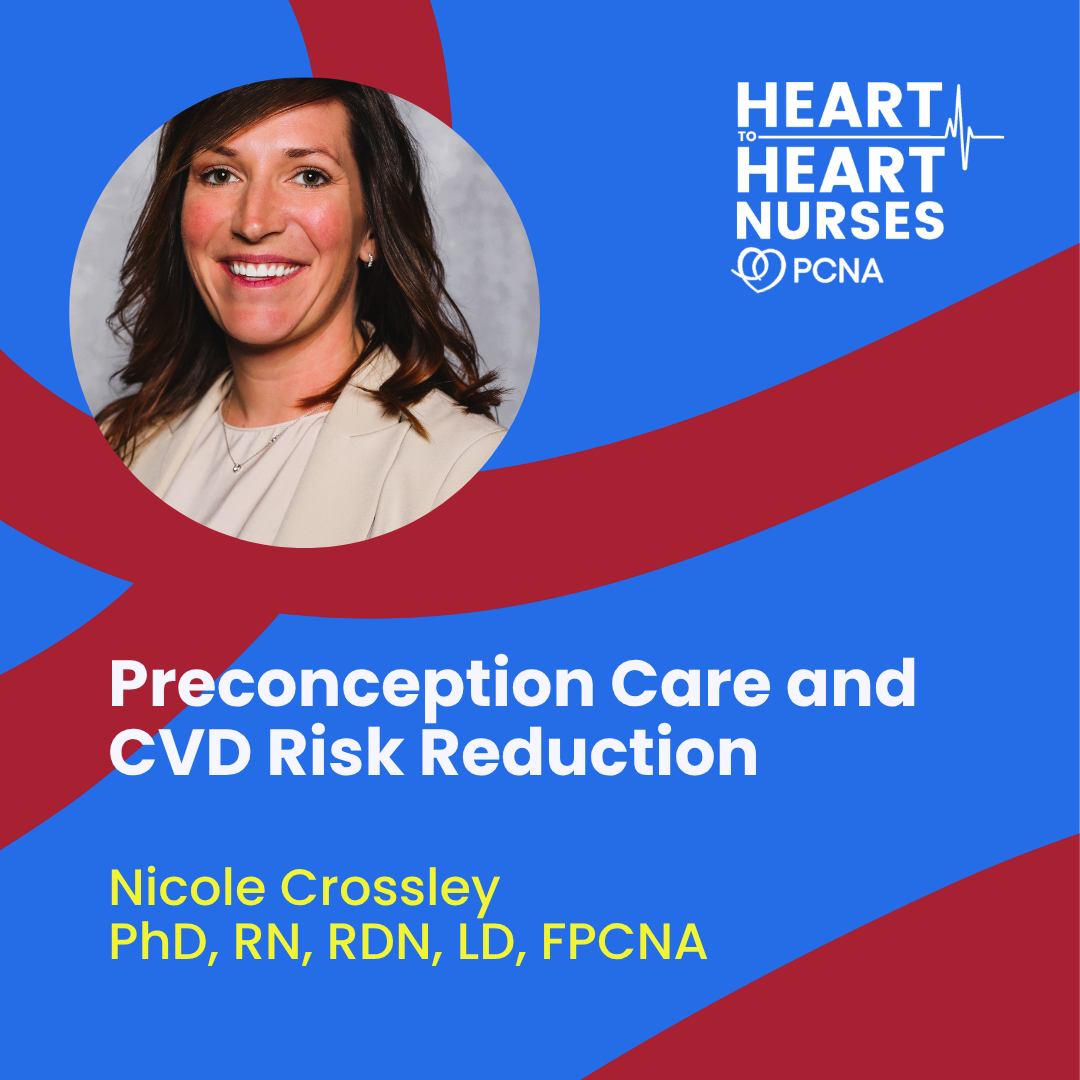
Preconception care is an important strategy for reducing lifelong CVD risk in women. Nicole Crossley, PhD, RN, RDN, LD, FPCNA, shares strategies for implementing trusted, culturally relevant care for all ages, especially high-priority populations that are most at risk.
Related Resources
- Primary prevention of CVD in women (ESC)(opens in new tab)
- 2019 AHA/ACC Primary Prevention Guideline
- PCNA courses on women and heart disease

[00:00:00] I’m Yvonne Commodore-Mensah, Board President for PCNA. I’d like to welcome you to Heart to Heart Nurses. PCNA supports your professional journey with accessible continuing education, practical patient resources and a vibrant community that understands the unique challenges and rewards of cardiovascular nursing. Together, we’re advancing the knowledge that defines excellence in cardiac care while celebrating the difference you make every day.
Geralyn Warfield (host): (00:31)
I’d like to welcome our audience to today’s episode and Nicole Crossley is our guest. Nicole, could you introduce yourself to our audience, please?
Nicole Crossley (guest): (00:38)
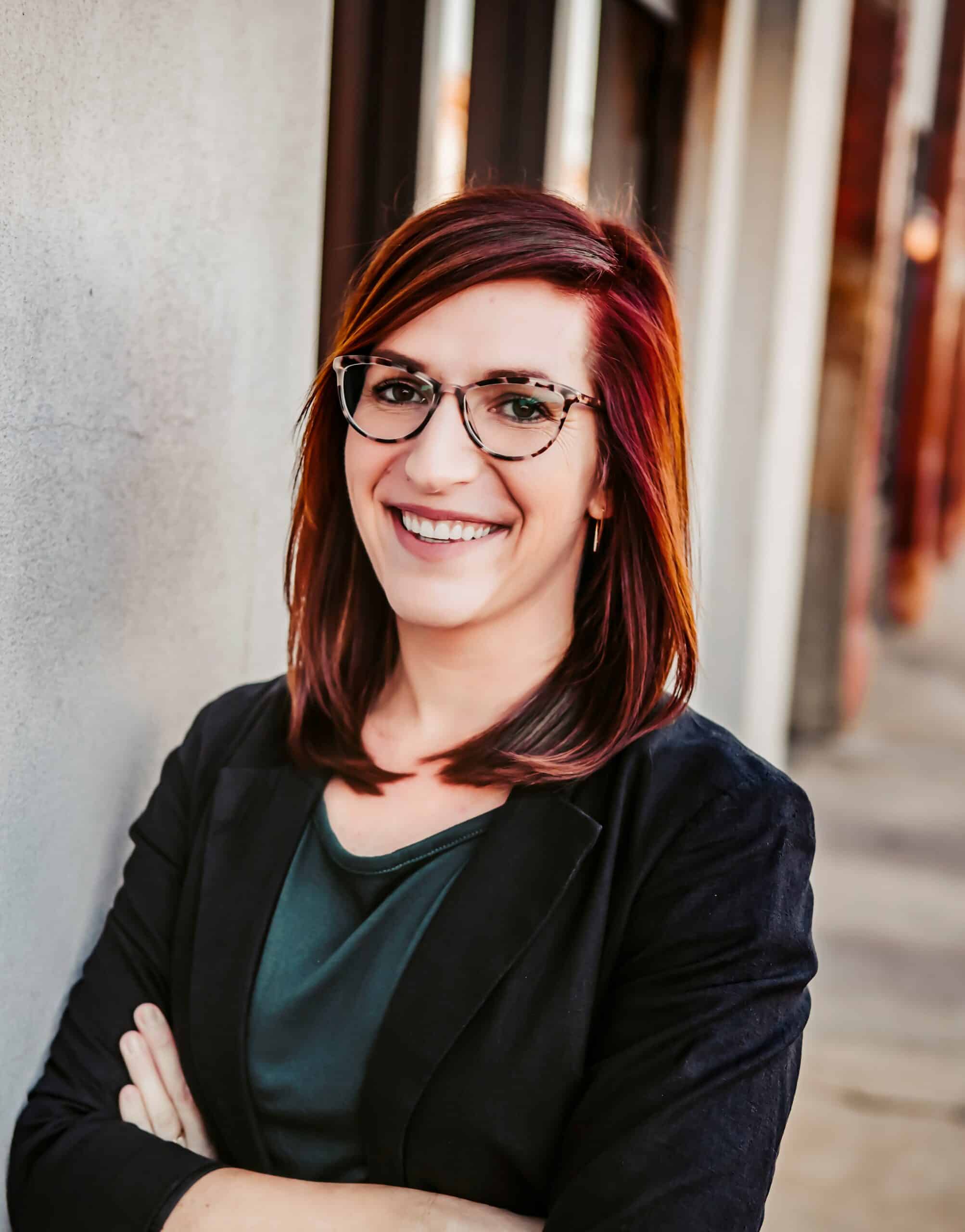
Of course. Thank you for inviting me. This is such an honor to join. I’m Nicole Crossley. I’m an Assistant Professor at the University of Oklahoma Health Campus in the Fran and Earl Ziegler College of Nursing. I’m a nurse scientist there. I do research in preconception care and reproductive health. And what I’m really hoping to do is bring this attention of prevention-focused care to promote health and prevent disease.
So, I really want to think about how to address risk factors and promote health earlier in life.
Geralyn Warfield (host): (01:10)
Well, let’s talk a little bit about why cardiovascular nurses should be focused on this or have it as a consideration.
Nicole Crossley (guest): (01:15)
It’s a great question because so often we think of cardiovascular disease later in life or those things that come after—so, heart failure, hypertension. But really the risk doesn’t just develop overnight. It happens earlier. A lot of times it can happen before pregnancy, even during pregnancy or between pregnancies.
And so, thinking through when that risk is occurring and how we can address it at those points, what does that look like?
We all know that pregnancy can sometimes serve as this stress test, or it kind of brings about these underlying issues, if you will. It tells us if there’s been chronic inflammation, maybe insulin resistance or weight-related issues. And women have this underlying layer of these reproductive health considerations if they are impacted by polycystic ovary syndrome [updated name since this recording: polyendocrine metabolic ovarian syndrome (PMOS)] or if they’re impacted by adverse prenatal outcomes like gestational diabetes or preeclampsia. Sometimes, that tells us they might have a higher risk and that trajectory might be impacted.
So, preconception care is this idea of prevention. Early on, we address those things that are related to smoking. We tell them the risks of smoking. We talk about weight and healthy lifestyles. And we talk to them about how we can help them achieve their health goals.
So, for cardiovascular nurses, it’s not just treating it, it’s how can we prevent it as well.
Geralyn Warfield (host): (02:50)
Are you seeing in any particular populations where there’s a great gap in this consideration?
Nicole Crossley (guest): (02:55)
So, I’m born and bred Oklahoman, and in Oklahoma, we have very high rates of maternal morbidity and mortality. It’s much higher than the nation, and in fact, our populations, we see higher rates of maternal morbidity and mortality in non-Hispanic Black women, as well as American Indian and Alaska Natives. So, we hope to address those issues and really work with those communities to see how we can best serve them in a respectful way.
We think about Oklahoma as a whole, I think it’s probably more than 1/3 are impacted by obesity and/or are impacted by a chronic disease. And so, we really hope to address those issues.
And for Native American women in particular, we see fewer healthcare visits in the 12 months prior to pregnancy. So, we may be missing preconception risk in general, but these gaps are widening in Native American women.
Geralyn Warfield (host): (03:53)
We are going to take a quick break, and we will be right back.
Geralyn Warfield (host):
I’d to welcome our audience back to our conversation with Nicole Crossley.
And I’d love for us to talk a little bit more about moving from identifying risk to actually implementing prevention because you’ve spoken about both. But I want to make sure we give our audience kind of that marching orders. What are our calls to high action when it comes to those?
Nicole Crossley (guest): (04:15)
That’s a great question and a key challenge, moving from identifying or observing risk to what are we actually going to do about it?
And so, we need to find ways to connect with people when they’re still in that prevention stage, not when something has already established. And so, this may look like things reinforcing health screening and messaging to high risk and priority populations, having these intentional conversations about what their health goals are.
Preconception care really is for everybody, not just for those planning a pregnancy, but for anyone interested in promoting health and preventing disease. So, thinking through small sustainable changes around physical activity, nutrition, stress management, those are all important.
And encouraging follow-up after pregnancy complications is also essential to make sure that we’re bridging those gaps of continuity of care so that we’re addressing cardiovascular risk.
So even though we understand the risk, we also still aren’t meeting those gaps that we talked about. And that’s especially true in our communities, like I mentioned, in Oklahoma. So, looking forward to bridging those.
Geralyn Warfield (host): (05:22)
Where do you see this field going in the next 5-10 years?
Nicole Crossley (guest): (05:25)
I think really over the next 5-10 years, the field will do that shift from identifying to figuring out how we can implement and provide preconception care in real life.
There’s been a push to really understand how to reach people before pregnancy. So, we know that there may be unplanned pregnancies. So, there’s a real push to determine when we can reach out to people if they’re not planning a pregnancy. Historically, preconception care has been about providing care so that moms would have a healthy pregnancy and ultimately a healthy baby, but there’s a lot of misunderstanding about what preconception health really is.
Now there’s more of this lifespan approach where we can help individuals of reproductive age obtain the health status that they hope for through these interventions that matches what they’re hoping. So that’s what we’re looking at closer.
And especially how preconception health and preconception care is being communicated, maybe through digital platforms where a lot of people are obtaining their health information from. So that’s another place.
And then finally, a bigger gap, and especially in Native American communities, we want to make sure preconception care is culturally relevant and trustworthy. So often, the preconception care model has been taken from the medical model, but this may not fully encompass beliefs or attitudes or knowledge about preconception care. So, I think when communities don’t see themselves in that, they may not engage in it. So, there’s a real need for research focused on attitudes and perceptions to determine if we can work together in community-based interventions.
Geralyn Warfield (host): (07:08)
You talked a little bit about the lifespan kind of view of prevention. And do you see some of these things happening in teens and young adults as some of those individuals might be facing some of these same issues when it comes to prevention?
Nicole Crossley (guest): (07:22)
Yes, that’s a great point. This is one of those key questions about timing. When do we reach out? Because risks can occur any time across the lifespan. So, identifying what is appropriate and developmentally staged preconception care to meet those needs.
So, our adolescent population is a big interest, as well as our young adults. So, reaching out to them, I think, will be a really essential key piece to this.
Geralyn Warfield (host): (07:48)
Do you have one key takeaway you would like to leave with the audience?
Nicole Crossley (guest): (07:51)
I think my key takeaway would be if we really want to move the needle in cardiovascular and cardio-metabolic health in women, we need to start earlier, before pregnancy, and we have to make sure that we’re reaching those high priority populations that will be impacted. That’s the key question and where we need to move forward, but I think there’s a lot of promise and that’s where real change will happen.
Geralyn Warfield (host): (08:14)
Nicole, thank you so very much for being with us today and for sharing your expertise.
Nicole Crossley (guest): (08:17)
Thank you very much for having me. It’s been great.
Geralyn Warfield (host): (08:20)
Wonderful. This is Geralyn Warfield, your host, and we will see you next time.
Thank you for joining us for this episode of Heart to Heart Nurses. We invite you to visit pcna.net for education and resources that will empower you to provide preventive cardiovascular care with confidence and expertise.
Topics
- Atherosclerotic Cardiovascular Disease (ASCVD)
- Health Equity
- Women and Heart Disease
Published on
September 29, 2026
Listen on:
RN, BSN, RDN/LD
Related Resources