






Join guest Emily Brown, a Cardiovascular Genetic Counselor who has worked with ATTR-CM patients for over a decade. Emily dives into the role of genetic testing in diagnostics and personalized therapies. Emily shares practical strategies and examples of team-based care with a multidisciplinary care team to tackle turning the tide on ATTR-CM. Emily shares suggestions for resources and support for genetic testing for patients.
Related PCNA Resources
- The Role of Artificial Intelligence in Cardiovascular Care: ATTR Case Study (CE Course)
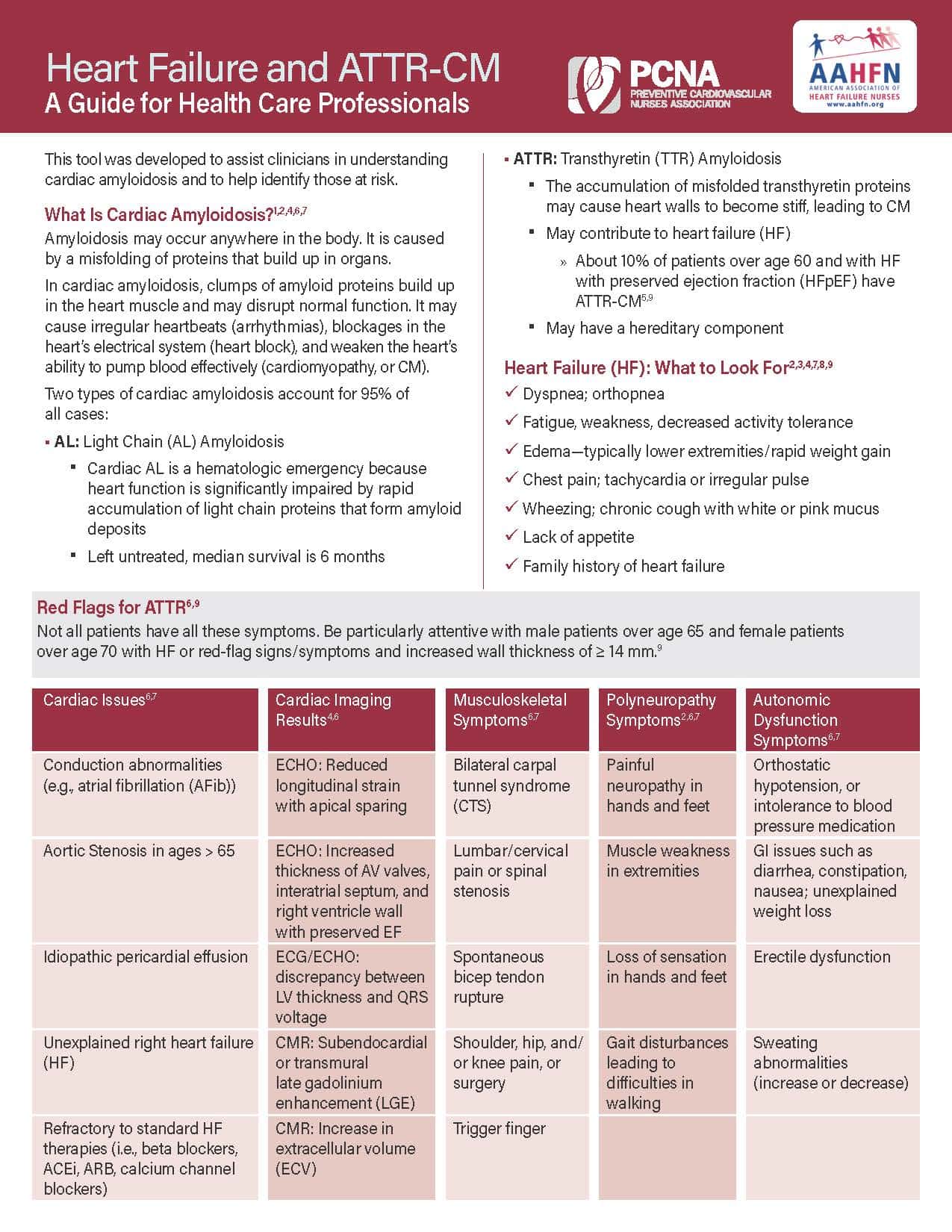
- Heart Failure and ATTR-CM: A Guide for Health Care Professionals
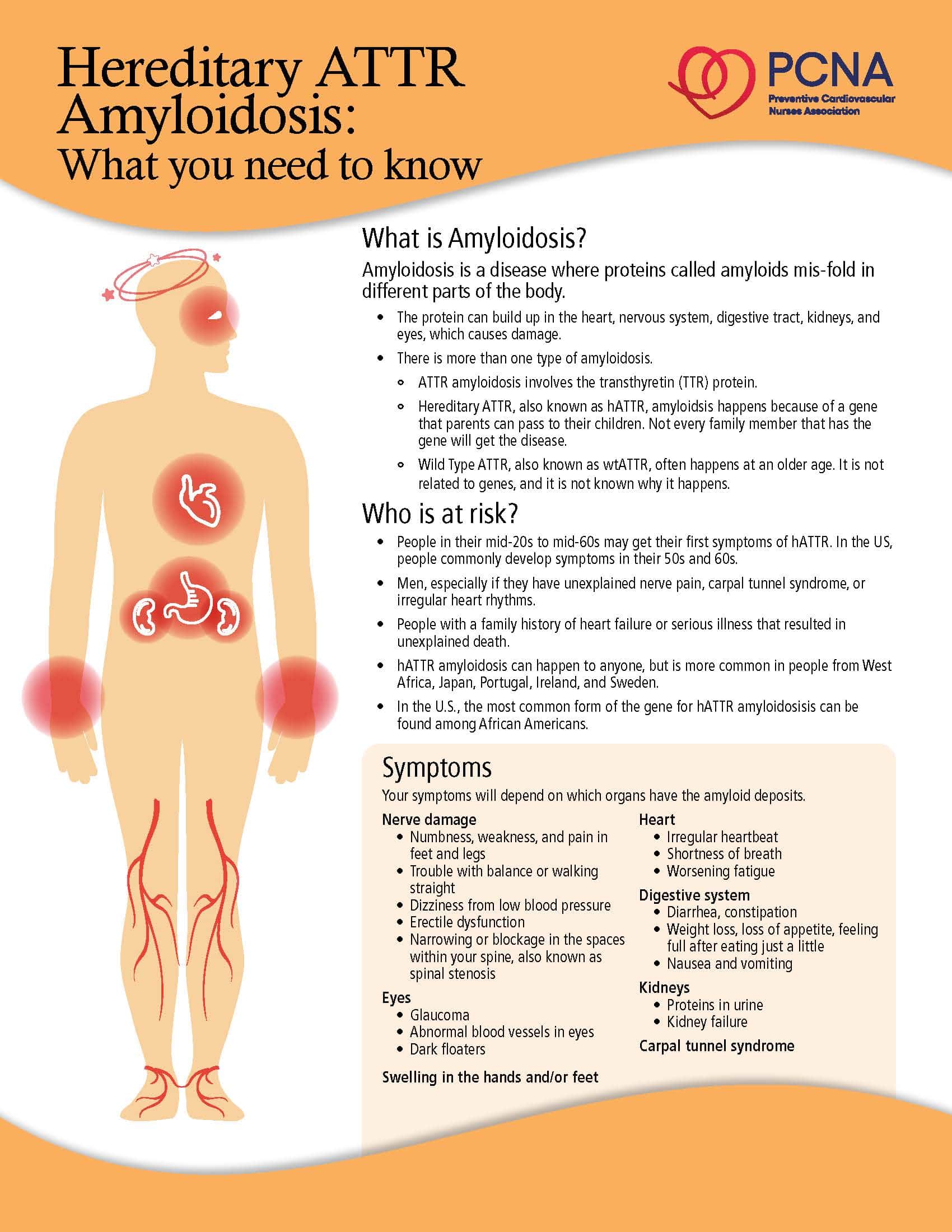
- Hereditary Amyloidosis: What you need to know fact sheet
Related Episode Resources
Thank you to BridgeBio for their independent medical education support for this podcast episode.

[00:00:00] I’m Yvonne Commodore-Mensah, Board President for PCNA. I’d like to welcome you to Heart to Heart Nurses. PCNA supports your professional journey with accessible continuing education, practical patient resources and a vibrant community that understands the unique challenges and rewards of cardiovascular nursing. Together, we’re advancing the knowledge that defines excellence in cardiac care while celebrating the difference you make every day.
Geralyn Warfield (00:31)
Welcome to today’s episode one of three where we’re going to be discussing Transthyretin Amyloid Cardiomyopathy or ATTR. Today my guest is Emily Brown, and Emily, could you please introduce yourself to our audience?
Emily Brown (00:45)
Hi Geralyn, thanks for inviting me to be on the podcast. I’m a genetic counselor specializing in cardiovascular disease, and I’ve worked at Johns Hopkins in the Center for Inherited Heart Disease for the last 12 years, primarily seeing patients with amyloidosis. And I’ve had the opportunity to work on the research side with clinical trials and also in the clinic itself with patients and families.
Geralyn Warfield (01:12)
Well, we are so excited to have you here today to be able to share your expertise and your experience with us. And I’m hoping you could get us started by making sure that we’re all on the same page and really just talk about prevention of ATTR-CM. And I know that prevention looks different in different families and different groups, but what does that look like?
Emily Brown (01:32)
Absolutely. So as a broad overview, ATTR-CM is caused by the transthyretin protein misfolding and forming amyloid plaque. There are two subtypes, wild type and the hereditary form. In individuals with the hereditary form, the protein ends up misfolding due to a mutation or pathogenic genetic variant in the TTR gene itself.
Whereas in the wild type form, there’s no genetic cause we know of. We don’t actually know why patients end up developing this type. Tends to develop at later ages and is more common in men. At this time, there’s no proven way or approved by the FDA, no medication to prevent the development of amyloidosis, although there are ongoing clinical trials looking into this.
One of the best options we have right now, especially for the genetic form, is doing cascade or family screening. So we know other individuals in the family who are at risk and can then do clinical evaluations, have them see the cardiologist or nurse practitioner, get echoes, blood work, even a PYP scan, and follow that over years. And then once we start seeing signs can start the treatment early. The earlier we start the treatment, often the better the outcomes.
Geralyn Warfield (03:05)
You mentioned cascade screening being a genetic test, and let’s talk a little bit more about genetic testing for ATTR. What does that look like if we are in clinic and we have someone in our setting that we have suspected ATTR?
Emily Brown (03:22)
So, genetic testing in general can be done by blood or saliva or a buccal sample. It’s pretty easy to do right there in the clinic if you have the swabs, the buccal swabs with you. And it just involves swabbing the cheek. The typical test that I recommend for ATTR is just testing that one gene. If you know the patient has this diagnosis and you’re just trying to determine the subtype, there is no need to do a larger panel that would end up potentially giving you variants of uncertain significance and just muddying the waters further. The nice thing with TTR genetic testing is it’s a small gene. It’s only four exons. We’ve studied it for many, many years. So usually the results are very clear. It’s going to almost always be a yes or a no. Very, very unfrequently, or infrequently, do we get a variant of uncertain significance.
Geralyn Warfield (04:24)
Genetic testing has become more prevalent in practice, but I’m hoping you might have some tips for insurance coverage for this particular type of test.
Emily Brown (04:34)
Absolutely. And this is a question patients and families always come into clinic with. You always hear about stories of people having very high costs for genetic testing. And I think as a society, we assume it’s going to be very costly. But for ATTR, it’s covered by many insurances, including Medicare. They just updated their policy to include genetic test coverage for genetic testing for ATTR.
And if your insurance doesn’t happen to cover it or there’s a large out-of-pocket cost because of a copay or a deductible, there are programs that offer free genetic testing. Some of the pharmaceutical companies do offer to cover the cost of genetic testing. They do get an anonymous copy of your results or the patient’s results, but it’s potentially a way, if the patient’s okay with it, to access testing at no cost.
Geralyn Warfield (05:34)
So Emily, I really like this idea of genetic testing, but I’m wondering how long it takes to get some of these results back.
Emily Brown (05:42)
Yeah, it’s a good question. Typically we get the results back pretty quickly, especially in terms of genetic testing. The results usually take about two to three weeks to come back from the date the kit is sent in.
Geralyn Warfield (05:58)
Thank you so much for following up with that. And speaking of new innovations, how is artificial intelligent making waves in ATTR diagnosis and management?
Emily Brown (06:10)
The main way I see AI being used in ATTR is by increasing the diagnosis rate. So you’ll see, or if you look in the literature, you’ll see a lot of reports of machine learning models looking through electronic medical records, trying to identify patients who have red flags for amyloidosis, who maybe have been missed otherwise. There’s some technology looking at ECGs, trying to read the ECG and just flag it for amyloidosis automatically, things like that.
Geralyn Warfield (06:50)
With all of these advances in clinical care, in research, in the development of new drugs or new treatments for these kinds of diseases, what kind of precautions or ethical considerations would you offer in terms of what the healthcare team needs to be considering?
Emily Brown (07:09)
I think the important thing to remember is the big picture, and that detection is just one piece of the puzzle. So once we detect or diagnose someone with the condition, we need to make sure they can get access to the treatment. And right now, treatments are very expensive. Depending on insurance coverage, it may not be feasible for someone to get access.
Diagnosing them only does so much if then they can’t afford the medication. So it’s important for us to keep in mind we want to not only diagnose someone, but also hopefully get them timely and affordable treatment.
Geralyn Warfield (07:50)
We are going to take a quick break and we will be right back.
We are back to continue our conversation with Emily Brown about prevention in ATTR-CM. Now that our audience knows a little bit more about personalized therapies that might be taking place in this disease state, let’s take another look at how the role of the nurse might help along the way in this patient journey from diagnosis all the way through treatment. So, what are some best practices that you have seen work in clinic settings where you are or elsewhere about how cardiovascular nurses can help in ATTR management.
Emily Brown (08:27)
So I think a multidisciplinary team is such an important aspect of patient care, especially in amyloidosis. And the nurse, of course, is a key player in that. And I’ve seen nurses incorporated in many different ways in the clinic. One is just working behind the scenes, helping with insurance authorizations. I alluded to the fact that many of these medications are very expensive and as you would expect, there can be a lot of red tape regarding pre-authorization and insurance coverage. And so having someone like a nurse with the medical acumen to help with that insurance approval can definitely speed up the process and improve patient care.
It can also be helpful to have a nurse just help guiding someone as more of a patient navigator role. This diagnosis can take a long time to make in terms of there can be many steps of the diagnostic odyssey and just going through the different tests. You know, there’s lab work, there’s multiple imaging, there could be a biopsy. And I often see patients getting fatigued and tired and kind of lost. And so having a nurse there to help walk them through where they are and what’s next and how this next test is helpful, can be very valuable. And I also see Nurse Practitioners in our clinic playing a very valuable role. They see patients in our heart failure bridge clinic and see them much more frequently than the heart failure cardiologist is able to, and so are able to provide that continuity of care. And also, you know, if there’s changes in someone’s health status and they need to be seen quickly, they’re able to often do that. In our bridge clinic, they often will diurese a patient in clinic to keep them out of the hospital if possible. Can adjust medications, things like that. So just really helpful to keep that continuity of care going.
Geralyn Warfield (10:43)
I have one final question for you, and that is based on our conversation or our topic today of prevention and ATTR-CM, what one key takeaway would you have for our audience?
Emily Brown (10:54)
The most important thing I hope you remember from this discussion is that if you’re seeing a patient with hereditary amyloidosis or they have a family history of amyloidosis, please encourage cascade testing and screening, whether that’s genetic testing or at least cardiac evaluations, the earlier we can diagnose someone with this condition, the better they will do.
Geralyn Warfield (11:22)
We invite our audience to learn more about this topic in our other episodes, and we also will have information in our show notes and at pcna.net. We were very grateful to have Emily Brown with us today, and thank you so very much for sharing your expertise with us. We’d also like to thank BridgeBio for their independent medical education support for this particular episode.
And this is your host, Geralyn Warfield, and we will see you next time.
Thank you for joining us for this episode of Heart to Heart Nurses. We invite you to visit pcna.net for education and resources that will empower you to provide preventive cardiovascular care with confidence and expertise.
Topics
- Cardiomyopathy
- Heart Failure
Published on
September 1, 2026
Listen on:

MGC, CGC
Related Resources