








Understanding Your Heart Disease Risk
Atherosclerotic cardiovascular disease, or ASCVD, is a health problem that affects the heart and blood vessels. ASCVD happens when there is a buildup of plaque inside
your blood vessels.
ASCVD includes diseases such as coronary artery disease, heart attacks, strokes, transient ischemic attacks (TIA), and peripheral arterial disease (PAD).
Risk Factors for Heart Disease
Why Measiuring Risk Matters
Risk Calculators
Tests That Measure Your Risk
Next Steps
Changes You Can Make
Risk Factors for Atherosclerotic Cardiovascular Disease

Major Risk Factors for ASCVD
- High blood pressure
- High cholesterol
- High blood sugar (prediabetes or diabetes)
- Smoking or using tobacco
- Not getting enough exercise
- Unhealthy eating habits
- Being overweight
Other Risk Factors That Increase Your ASCVD Risk
- Family history of ASCVD for men less than 55, or women less than 65
- Sleep apnea
- Chronic kidney disease
- Ongoing inflammation or infection: lupus, psoriasis, rheumatoid arthritis, gout, HIV
- High lipoprotein(a), apolipoprotein B, or high-sensitive C-reactive protein (hs-CRP)
- Depression and anxiety
- Ankle brachial index (ABI) less than 0.9
- *South Asian ethnicity (e.g., Bangladesh, Bhutan, India, Maldives, Nepal, Pakistan, and Sri Lanka)
Women can have unique risk factors that can raise their chances of ASCVD
This includes:
- Starting your period before the age of 12, or after the age of 17
- Polycystic ovarian syndrome (PCOS)
- Pre-eclampsia or eclampsia (high blood pressure in pregnancy)
- Pregnancy loss or multiple births
- Gestational diabetes (diabetes in pregnancy)
- Menopause before age 45

Learn More
Explore these topics further to learn more about calculating your risk.
Why Measiuring Risk Matters
Risk Calculators
Tests That Measure Your Risk
Next Steps
Changes You Can Make

Why Measuring Risk Matters
Think of measuring your heart disease risk like checking the weather before planning your week. You would not plan a beach day without knowing if a storm is coming, right? The same goes for your heart health. Knowing your risk helps you and your healthcare professional make the best plan for your heart health.
The good news?
Even if your risk is higher than you would like, you have the power to change it!
What is a Risk Calculator?
Risk calculators are tools that look at your risk factors, like your age, blood pressure, cholesterol levels, and lifestyle habits to estimate your chance of having a heart attack or
stroke.
What Risk Calculators CAN Do:
- Give you an idea of your ASCVD risk today
- Tell you which medicines might help lower your risk
- Track whether your risk is getting better
What Risk Calculators CANNOT Do:
- Show if you will have a heart attack or stroke
- Give you a full picture of your heart health and risk
- See how risk factors like stress and family history change your risk
Think of it this way: A risk calculator can be helpful for you and your healthcare team to get a snapshot of your heart health, but it is not the whole story.
Your Action
Ask your healthcare professional to walk through your risk with you at your next visit. Bring a list of questions, like the one at the end of this booklet.
What Your Risk Score Actually Means
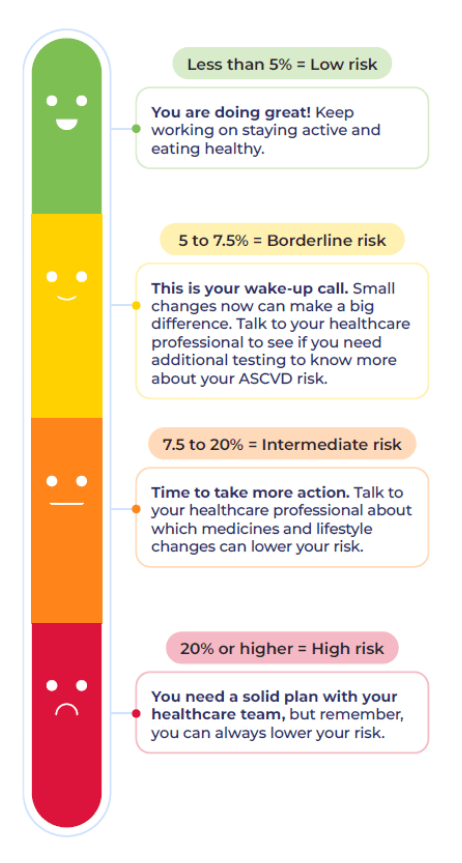
Risk scores are usually given as a percentage over a set time, such as 10 years.
Learn More
Explore these topics further to learn more about calculating your risk.
Risk Factors for Heart Disease
Risk Calculators
Tests That Measure Your Risk
Next Steps
Changes You Can Make
Risk Calculators
Risk calculators are tools that look at your risk factors, like your age, blood pressure, cholesterol levels, and lifestyle habits to estimate your chance of having a heart attack or stroke.
PREVENT Risk Calculator
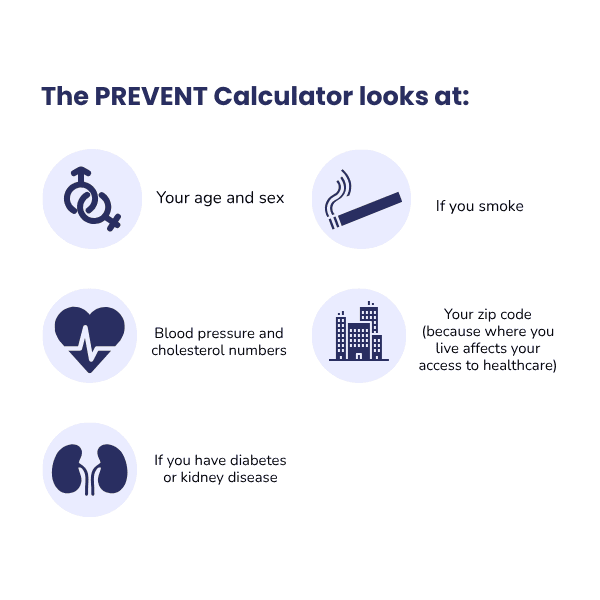
PREVENT is the newest risk calculator to be created. What makes it different from other calculators? It is the first tool to combine heart health, kidney health, and metabolism along with information about the environment you live in. This gives a more complete picture of your heart health.
(opens in new tab)
Want to Explore it Yourself?
You can go online and check your risk.
Note: This is best done WITH your healthcare professional so they can help you understand what the numbers mean for YOU.
(opens in new tab)
Other Risk Calculators
Different calculators show different things. Your healthcare professional might use other calculators such as:
- Reynolds Risk Score: includes family history and inflammation
- ASCVD Risk Estimator Plus: adds more information about cholesterol types
- MESA Risk Score: takes into account how much plaque you have
The Missing Pieces: What Numbers Do Not Show
Risk calculators do not capture everything that matters. In addition to the risk factors listed on page 1, other things impact your ASCVD risk that are not in the calculators.
These include:
- Your life stress: Stress affects your heart.
- Your daily life: Working three jobs? Living in an area where grocery stores are not close to you? Taking care of a loved one? These affect your health.
- Your community support: Having people who care about you makes a difference.
Your Action
Share your story with your healthcare professional. It is more than just the numbers.
Learn More
Explore these topics further to learn more about calculating your risk.
Risk Factors for Heart Disease
Why Measiuring Risk Matters
Tests That Measure Your Risk
Next Steps
Changes You Can Make
Tests That Can Measure Your Risk
In addition to risk calculators, your healthcare team can order tests and imaging to give a fuller picture of your heart health and risk. These tests can help see if you need medicine and/or if you should make some changes to your lifestyle, such as diet and exercise.
Lab Tests
Lab tests that your healthcare professional can order for you include:
Lipoprotein a or Lp(a)
Lp(a) is a type of cholesterol that is like LDL cholesterol (also known as “bad” cholesterol). Lp(a) is stickier than LDL and makes your blood more likely to clot, which makes it a risk factor for ASCVD.
Important things to know about Lp(a):
- It is common
- 1 in 5 people have a high Lp(a)
- Lp(a) is inherited; you would get this from one or both of your parents
- Because of this, African American and South Asian individuals can have higher Lp(a) levels
- You should have your Lp(a) checked once in your life.
Your Lp(a) levels are high if they are more than 50 mg/dL or 125 nmol/L.
If your Lp(a) is high, there are medicines and lifestyle changes that can help lower your overall cholesterol.
You can get a free Lp(a) test through the Family Heart Foundation(opens in new tab).
hs-CRP
hs-CRP or high sensitivity C-reactive protein, can show small increases of inflammation that are linked to heart health.
- Less than 1.0mg/L= low risk for ASCVD
- 1.0 to 3.0 mg/L= average risk for ASCVD
- greater than 3.0= high risk for ASCVD
Things that can raise your hs-CRP:
- infections like the flu or a cold
- chronic inflammatory diseases (such as lupus or rheumatoid arthritis)
- obesity
- pregnancy
- smoking
You can track hs-CRP to see how your inflammation is changing with lifestyle and medicine.
Urinary albumin-to-creatinine ratio (uACR)
Urinary albumin-to-creatinine ratio (uACR) is a urine test that measures how much albumin (a small protein) is in your urine.
This can help show your risk because the test:
- Gives us information about the health of your kidney blood vessels.
- Can look for kidney damage, which happens more often in people with high blood pressure (hypertension) or high blood sugar (diabetes).
If you have high blood pressure or diabetes, you should check this yearly. There are medicines that can help lower your uACR if it is high.
Imaging Tools for ASCVD Risk
Your healthcare professional can order tests to look at your heart to see if you already have plaque (ASCVD). Two common tests are the coronary artery calcium scan (CAC Scan) and coronary computed tomography angiogram (CCTA). These scans tell your healthcare professional different things about the plaque in your arteries.
Coronary Artery Calcium (CAC) Scan
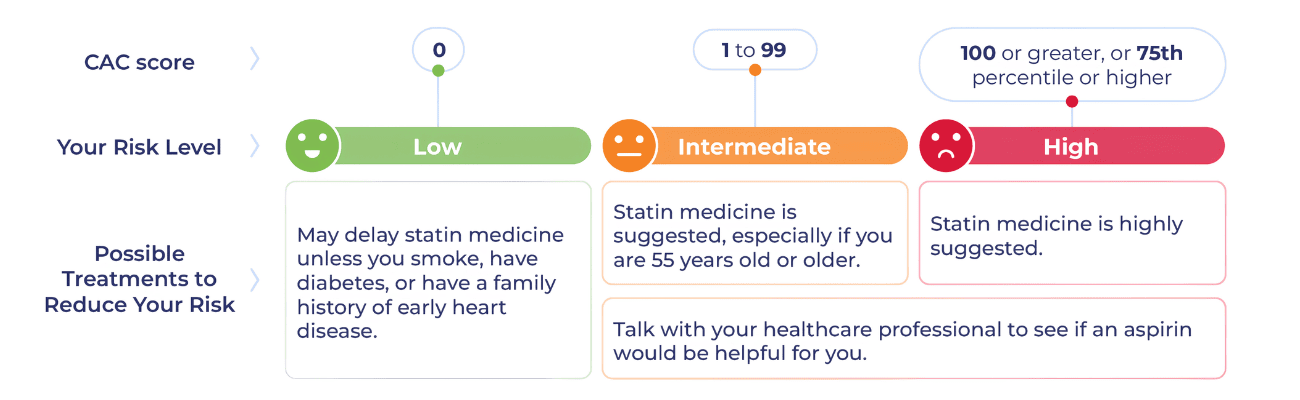
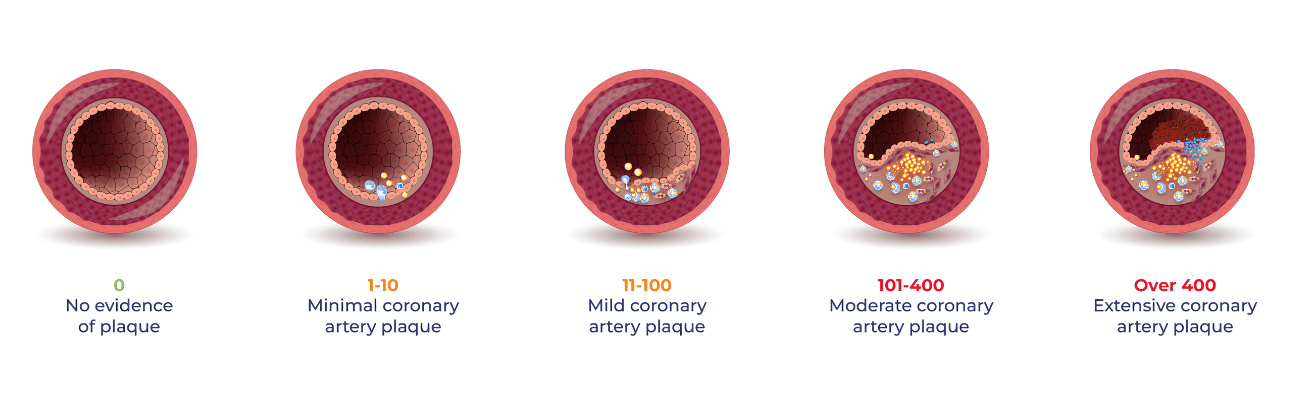
A CAC scan uses a small amount of radiation to see how much plaque is in your arteries. This scan helps create your CAC Score and can help find heart disease early.
What a CAC score can tell you:
- About how much plaque you have
- What artery your plaque is in
- Your risk level
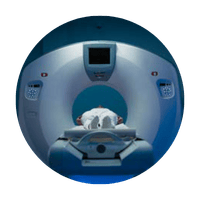
Coronary Computed Tomography Angiogram, or CCTA
CCTA uses a dye called contrast to provide a picture with more information about the plaque in your arteries. Your healthcare professional may order this if you are having symptoms of a heart attack or are at a higher risk.
A CCTA can show you more details than your CAC score, including:
- What type of plaque you have
- Where in your artery your plaque is
- How blocked an artery is
Learn More
Explore these topics further to learn more about calculating your risk.
Risk Factors for Heart Disease
Why Measiuring Risk Matters
Risk Calculators
Next Steps
Changes You Can Make

Next Steps
Knowing your risk for heart disease can help you and your healthcare team make the best choices for your overall health. You can take tiny steps this week, this month, and this year to make a difference for your health!
This Week
- Know your numbers. Ask your healthcare team what labs and/or tests you are due for and when: blood pressure, cholesterol, blood sugar, hs-CRP, Lp(a), CAC, CCTA.
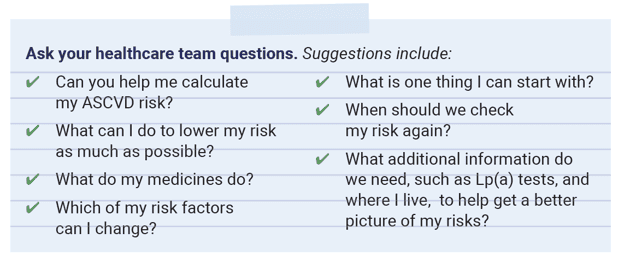
- Write down questions. Use the list below or add your own.
- Bring a support person. An extra set of ears at your visit helps!

This Month
Now that you know your numbers, work with your healthcare team to get (or keep) your numbers in normal range. Do this by:
- Pick ONE healthy change. Not ten. Just one.
(Add a 10-minute walk? Swap soda for water at lunch? Get a blood pressure (BP)
device and check your BP regularly?) - Track it. Use your phone, a calendar, whatever works best for you.
- Celebrate it. Small wins matter!

This Year
Keep making changes for a healthy heart:
- Recheck your risk. See how your changes are working.
- Build your care team. Includes your healthcare professional, family, friends who support your health, and YOU!
- Keep learning. Your heart health journey is ongoing.
Learn More
Explore these topics further to learn more about calculating your risk.
Risk Factors for Heart Disease
Why Measiuring Risk Matters
Risk Calculators
Tests That Measure Your Risk
Changes You Can Make
Changes You Can Make
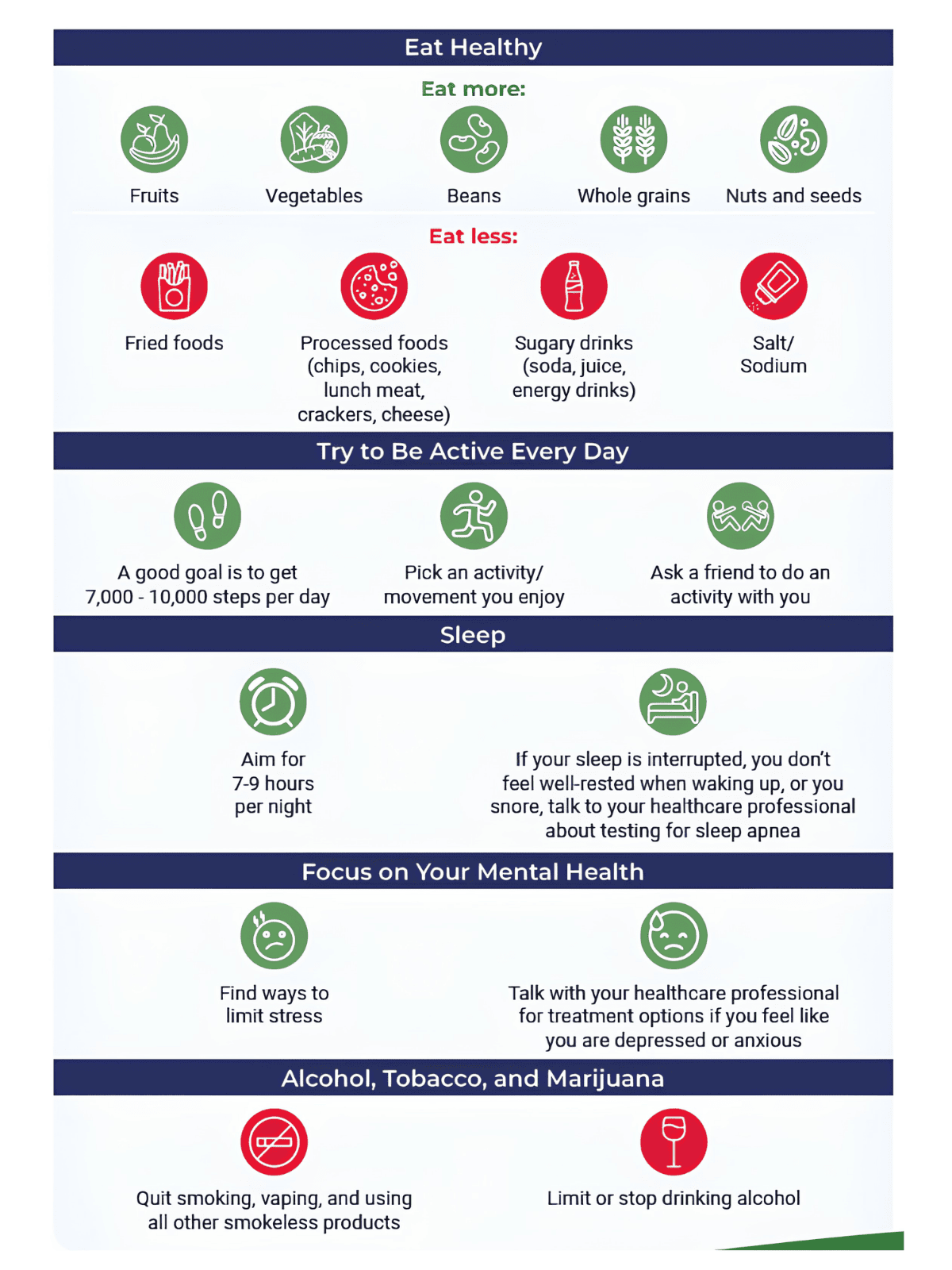
Your lifestyle can have a big impact on your heart health.
Make Healthy Choices
Your lifestyle can have a big impact on your heart health. Some things you can do are:
Take Medicine When Recommended
If your healthcare professional prescribes medicine, use it as directed. If you’re unsure why it’s needed or how it helps, ask!
Check Your Risk Regularly
Make sure to follow-up with your healthcare team to check how you are doing. They can help you figure out if your risk factors have changed and lowered your chances of ASCVD!
You are not trying to be perfect. You are trying to be healthier than you were yesterday.

Disclaimer: While PCNA strives to provide reliable, up-to-date health information, this and other PCNA education materials are for informational purposes only and not intended as a substitute for professional medical care. Only your healthcare provider can diagnose and treat a medical problem.
