






Join guest Morgan Lewis, an Amyloid Nurse Clinician, to learn about how ATTR-CM impacts patient’s quality of lives. Morgan describes the variants of ATTR-CM as well ad dives into the ongoing unmet needs of patients with ATTR-CM. Morgan also shares practical examples to overcome challenges to patient care and optimal health outcomes using team-based care strategies.
Related Resources
- The Role of Artificial Intelligence in Cardiovascular Care: ATTR Case Study (CE Course)
- Heart Failure and ATTR-CM: A Guide for Health Care Professionals
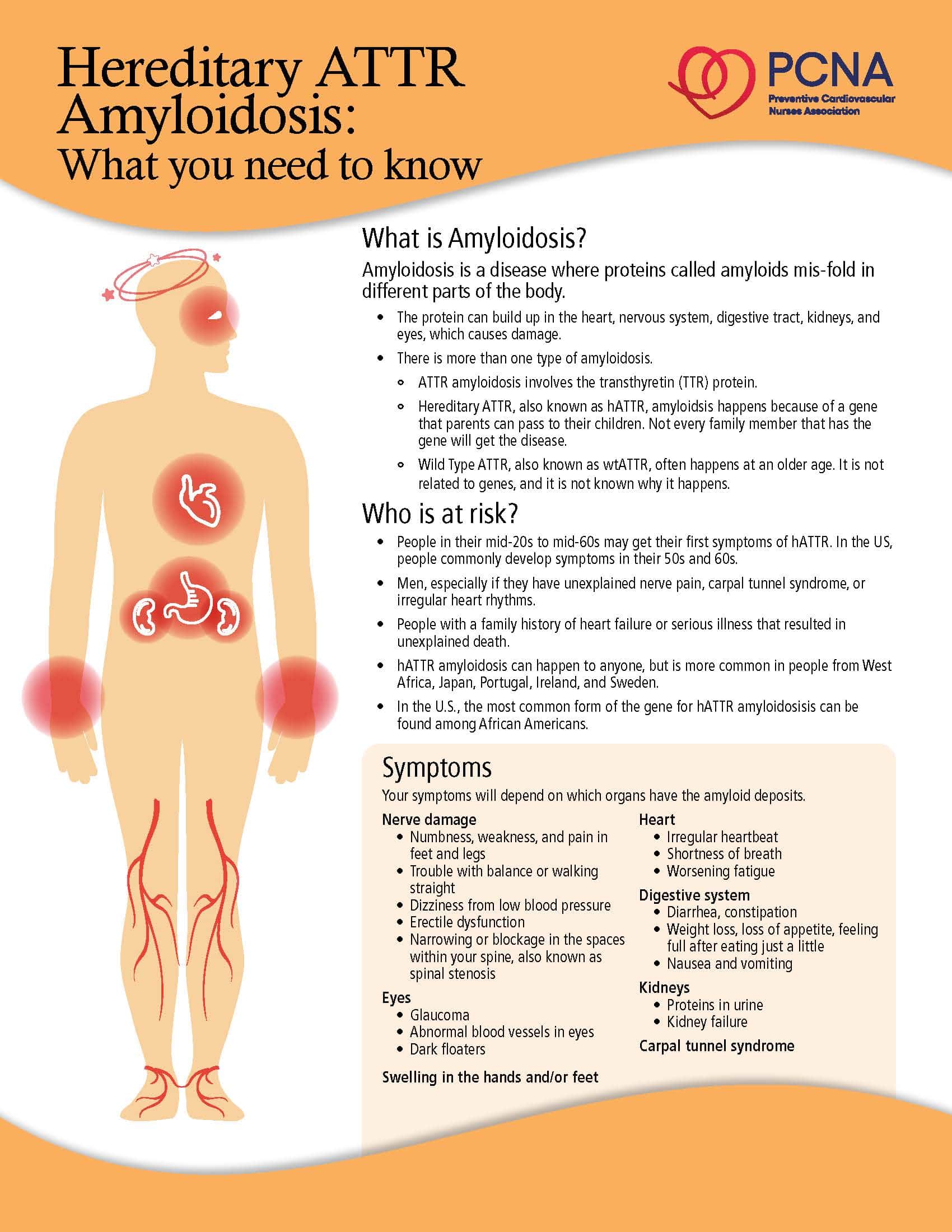
- Hereditary Amyloidosis: What You Need to Know patient education sheet
Thank you to BridgeBio for their independent medical education support for this podcast episode.

[00:00:00] I’m Yvonne Commodore-Mensah, Board President for PCNA. I’d like to welcome you to Heart to Heart Nurses. PCNA supports your professional journey with accessible continuing education, practical patient resources and a vibrant community that understands the unique challenges and rewards of cardiovascular nursing. Together, we’re advancing the knowledge that defines excellence in cardiac care while celebrating the difference you make every day.
Geralyn Warfield (00:31)
I’d like to welcome our audience to today’s episode where we are going to be discussing transthyretin amyloid cardiomyopathy or ATTR.
Today’s guest is Morgan Lewis. Morgan, could you introduce yourself, please?
Morgan Lewis (00:45)
Yeah, thanks so much for having me. I am a nurse at Duke where I’ve spent most of my career as a nurse. I started off working as a general medicine nurse and then transferred into the cardiac ICU where I really started getting interested in heart failure. and then the opportunity came along to work with Dr. Khouri in our amyloid clinic. And so that’s been my primary role for about three years.
And mostly I am following patients throughout their whole amyloid journey from diagnosis to treatment and then their ongoing management. I also do a few other things. So I wear a few different hats. I work with just a couple of the other general advanced heart failure providers, so work within that space, and then our acute heart failure program. And recently I’ve been involved in launching our heart failure remote monitoring program.
Geralyn Warfield (01:40)
The other thing that we’d like to mention about Morgan is she is a recent recipient of an excellence award from Duke. And we’re so honored to have the recipient of the Nan and Hugh Coleman Heart Center Award for Excellence in Nursing Practice on today’s episode. So congratulations about that.
Morgan Lewis (01:56)
Thank you so much.
Geralyn Warfield (01:58)
We’re looking forward to learning from you more about this disease that might not be as rare as we once thought. And I’m wondering if you could start us off talking about ATTR just in general. What is it? what does an ATTR diagnosis mean for patients?
Morgan Lewis (02:14)
Yes, absolutely.
To keep it short, ATTR is transthyretin amyloidosis.
The condition is when protein called transthyretin becomes unstable and misfolds. This leads to the formation of what we talk about of amyloid deposits, and they can build up in different parts of the body. The most common places we see these deposits are in the nerves, heart, kidney, and GI tract. When amyloid deposits in the heart, we call this ATTR, cardiac amyloid, or cardiomyopathy, and that’s what we are going to be talking about today.
There are two types of ATTR, we have the wild type or senile cardiac amyloid. This is when as we age the protein becomes naturally unstable over time and becomes to form and then it deposits in the different organ organs that we previously just talked about. The other kind is hereditary ATTR, and on that hand, this is when it’s caught by a mutation in transthyretin gene that’s passed down through families.
An amyloid diagnosis can be incredibly overwhelming and scary. Many patients have never even heard of amyloidosis before. In fact, when I first started, I rarely even knew anything about amyloid, and what I was reading was a little unnerving. And so patients often feel the same. They wonder what this diagnosis means for their future, what their new daily life will look like. The first question I often get asked in clinic is: should I have my affairs in order?
The good news is the landscape for ATTR has changed dramatically over the past several years and even over the last three years where I’ve been involved in this landscape. Even during my short time, there’s been new treatments that have been approved, including acoramidis in in future for cardiomyopathy. We now have different research going on into the disease process that continuously is working to expand our therapy options. So one thing I would note about ATTR is that while it can be life-changing, it’s not a diagnosis without hope anymore.
Geralyn Warfield (04:20)
I think one of the reasons that patients come to you with this dire outlook is because diagnosis often takes quite some time. Could you talk a little bit about that delay and how that is a challenge both for patients and for healthcare professionals?
Morgan Lewis (04:35)
Of course. So, when we often see patients, they have had symptoms going on for quite a bit of time. And when I talk about symptoms, I’m talking about pretty significant heart failure symptoms, shortness of breath, decreased activity intolerance, swelling, they’ve often been to many doctors and have been started on, you know, a diuretic, a little bit of GDMT, Jardiance®, but they’re not seeing significant improvement. And the problem is we’re not looking at the red flags. Those red flags can in the beginning be very subtle. And so patients often go months, even years without getting a diagnosis.
And unfortunately when we delay diagnosis, we often see a more significant progression in the disease. We often can see patients at a more of an advanced stage. Which takes a lot of time and a lot of treatment to really get them at a stable point when we meet them. But it is important to mention that it’s not, when I say, it’s not without hope, is that we can get there. It’s just not as simple as we’ll see you in three months, do this, take this medication. It’s a lot of follow-up, close monitoring, and a lot of weekly phone calls.
Geralyn Warfield (05:53)
A colleague has shared that you are the quote unquote control center for amyloid evaluation at your organization. And I hope you could share with us more about the program that you’re part of and what types of support you offer to patients.
Morgan Lewis (06:09)
I actually do love that description because in many ways that is exactly what my role is. However, I don’t always think of myself as that way. But as the amyloid nurse clinician at Duke, I’m often the central point of contact for patients and providers throughout the entire evaluation, treatment, and ongoing management process.
Providers from other institutions will often reach out via email and I’ll be combined on those emails. They’ll ask me to get the patient seen. So our system here at Duke is all of our new amyloid referrals go directly to me and that’s so that we can quickly evaluate the referral and determine how soon the patient needs to be treated. Some patients are getting referred for a potentially new diagnosis, where there’s suspicion, but those centers don’t have the capabilities to work that up appropriately. Some of them are patients who have had the workup but need to get started on treatment. Or they’re seeing a provider who doesn’t really understand how to manage amyloid and they need more specialty input. And then other patients are coming to us for research trials. They want to be involved in, you know, new generation treatment. So just depending on what that patient is being referred for depends on how quickly we get them in.
So from the start I expedite the referral into the appropriate scheduling. And then from the moment there’s a suspicion for amyloid, I help coordinate the initial appointment and the diagnostic workup. I’m making sure that the appropriate tests are getting completed. I work closely with our multidisciplinary team, including cardiology, hematology, neurology, our genetic counselors, and our pathology department. And I help get those patients to a more accurate diagnosis as efficiently as possible.
Once the diagnosis is made, my role more shifts to helping patients navigate what comes next. That encompasses a big variety of things, including educating them about the disease, discussing treatment options, helping with medication access, insurance approvals, coordinating follow-up testing, monitoring for disease progression. And I’m really just serving as a consistent point of contact whenever questions or concerns come up.
One of the things I enjoy most about this role is building long-term relationships with our patients. Because of the nature of amyloid, many patients need very close follow-up as we’ve mentioned before. Their care doesn’t stop when they leave the clinic and then pick up in three months when we see them at their next appointment. There’s often a lot happening in between. There is phone calls, medication adjustments, lab review, symptom management, and helping these patients navigate new questions as they come up. I spend a lot of time talking with patients outside of their clinic visits and that’s really one of the most rewarding parts of my job. It gives me the opportunity to get to know who they are beyond their ATTR diagnosis and to support them through every stage of this journey. I think that continuity of care helps build trust and ultimately that’s what allows us here at Duke to provide the best care possible.
Geralyn Warfield (09:20)
You mentioned earlier about the differences between wild type and hereditary ATTR. And I’m hoping you could dive a little bit deeper into those variants and how many patients you see that are presented with each of those so we have a better understanding of those differences.
Morgan Lewis (09:35)
Absolutely. So understanding the different types can really help patients make sense of their own diagnosis. Broadly speaking, we see those two types of ATTR that we previously discussed. There’s that wild type, and then there’s hereditary or variant ATTR. In our program, I estimate that we see about 70% of our patients have wild type, and roughly maybe about 25-30% have hereditary ATTR.
When we talk about wild type, we talk that there is no genetic mutation. So instead the transthyretin protein naturally becomes unstable over time and begins to form amyloid deposits as we age.
One of the exciting changes we’ve seen over the past several years is that we’re identifying these patients much earlier than we used to. It’s becoming much more common for amyloid to be found in tissue removed during carpal tunnel surgery. And that is often the first clue that a patient has ATTR. At that stage, they usually have little to no cardiac involvement, so we often follow those patients with yearly evaluations to monitor for disease progression or determine if or when the treatment is needed. Hereditary ATTR, on the other hand, is caused by a mutation in the transthyretin gene that’s passed down through families. There’s actually more than a hundred known disease-causing mutations, but in the US we predominantly see about three. Those three would be V122I, V30M and T60A. the most prominent mutation we see is V122I.
One important concept for patients and clinicians to understand is that there is often a relationship between genotype, the genetic mutation, and the phenotype, which is how the disease presents clinically. Some mutations primarily affect the heart, some affect the nerves, and others have a mixed phenotype involvement. I’d like to talk a little bit about V122I first, because that is the most predominant mutation that we see.
V122I is primarily a cardiac phenotype and is seen mostly in African Americans. It presents in one in 30 black Americans, although it is important to remember that not everyone who carries the mutation will develop ATTR. Population studies suggest that the risk of developing the disease increases after the age 50. In our practice, we most commonly diagnose men in their 60s. Women are a bit later, they’re more often in their 70s. Since the mutation is primarily a cardiac phenotype, these patients typically present with symptoms that we talked about progressive heart failure, shortness of breath, fatigue, lower extremity edema, atrial fibrillation, or decreased exercise intolerance.
Moving on to T60A and V30M, they’re much less common in our patient population, but we still see a fair bit, amount. The T60A mutation, which is commonly associated with a British and Irish ancestry, that typically presents as a mixed phenotype. That means that patients may develop both ATTR cardiomyopathy and ATTR peripheral neuropathy. So how they present may be a little bit different. We may see a patient with much more significant neuropathic symptoms or cardiac symptoms. The V30M mutation is more often seen in individuals of European ancestry, has traditionally been considered a neuropathy-predominant mutation, particularly when it presents earlier in life. So we can see them as young as 30s, 40s. However, when the disease onset occurs later in life, we more primarily see this as a mixed phenotype, presenting with more cardiac involvement.
One unique aspect of caring for patients with hereditary ATTR is that we’re often able to identify additional family members who may be at risk. Sometimes we’ll diagnose one patient and then through our genetic testing and our cascade screening, we’re able to evaluate the siblings, the children, and other relatives. So we end up getting to be able to diagnose some of these hereditary patients a bit earlier now through this cascade screening, because we do frequently monitor them for disease progression. So for example, if we have a patient and they have a brother, we may do cascade screening with the brother who comes up positive for the variant. That does not mean that that brother has ATTR. So what we’ll do is we’ll start with just a screen. We’ll do an echo just to see if there is any concern for cardiac involvement. And then we’ll also do biomarkers, a pro-BNP, a troponin, and prealbumin. And if all of that is normal, we’ll typically see the patient every year, maybe every six months, just depending on their age. Typically, when they’re over the age of 70, especially if they have V122I, we’re probably going to see them every six months so we can catch it early.
Geralyn Warfield (14:41)
We are going to take a quick break and we will be right back.
We are back to continue our discussion about turning the tides on ATTR with our guest, Morgan Lewis. From a population level perspective, how do the social determinants of health affect ATTR recognition, diagnosis, and treatments?
Morgan Lewis (15:01)
Social drivers play a huge role in the treatment, diagnosis, and even recognition of ATTR than clinicians realize and even just the general population realize. We have made tremendous progress in recognizing and treating this disease, but not every patient has the same opportunity to benefit from these advances.
One of the biggest challenges is access to specialty care. There’s only about thirty-five to fifty academic amyloid centers within the US. That sounds like a lot when there are fifty states, but we talk about big states. So we’re talking about not a lot of amyloid centers when you think even one city may have four, five, six big hospital systems. Many patients may see multiple providers over several years, as we discussed, because they had symptoms going on for quite a long time before receiving the correct diagnosis.
For patients who live in rural areas or far from an amyloid center, getting to a specialist can require significant travel, time off of work, reliable transportation, and overall just a lot of cost to get here. So those barriers alone often delay diagnosis and treatment. The coordination to get here may take a patient three or four months, and then you have to get diagnostic workup. Then you have to get them medication.
We can see even when there’s that suspicion for amyloid growing, it may even take six months to nine months to even really get down to that diagnosis from when that referral comes into us. At a population level, we also have to recognize that hereditary ATTR has historically been underrecognized in certain communities. For example, the V122I variant is relatively common among individuals of African ancestry, yet many patients have historically been diagnosed lay or misdiagnosed altogether. Increasing awareness among clinicians and ensuring equitable access to appropriate diagnostic testing are essential to reducing these disparities.
Health literacy also plays an important role. ATTR is a very complex disease, and patients are often hearing unfamiliar medical terms while trying to process a life-changing diagnosis. Education, as I mentioned, doesn’t happen in a single visit. It often requires multiple clinic visits, follow-up phone calls, and even ongoing conversations to help patients understand the disease, the treatment options, and what to expect over time.
I mentioned before cost when trying to get to an amyloid center is a significant barrier. I also want to mention that it’s a big factor when we’re talking about therapies that we use for TTR. The therapies we use are very effective, but they are incredibly expensive. Even when patients have insurance, navigating a prior authorization, a copay, or foundational assistance, or a financial assistance program, it can be frankly very difficult. I had a hard time navigating that when I first started. There are a lot of terms you don’t understand with insurance companies. There are a lot of steps into getting a prior authorization. So that plays a big part in our social drivers because a lot of these patients don’t understand what their insurance companies are telling them or how to fill out a patient assistance application.
So a big part of my role is helping patients overcome that barrier so they can actually access the treatment we’ve recommended. Because we always see that there is a small delay, sometimes, in getting on treatment, even after we’ve made the diagnosis.
And for hereditary ATTR, there can be emotional and family considerations. Learning you have a genetic condition often means thinking about children, siblings, and other family relatives, and that can be a difficult conversation. So we work very closely with our genetics team to provide counseling, facilitate the cascade screening, to support their families to understand the risks and options.
Ultimately, improving outcomes in ATTR isn’t just about developing new therapies, it’s also about improving awareness, expanding the accessibility to specialty care, reducing disparities in diagnosis, and ensuring every patient has the support they need to receive timely evidence-based treatment.
Geralyn Warfield (19:38)
You touched a little bit on education and what types of education and awareness best practices can you share with our audience?
Morgan Lewis (19:49)
The best approach right now is simply increasing awareness of the disease. Awareness is a big reason we no longer think of ATTR amyloidosis as being as rare as it once was. It’s not that the disease suddenly became more common. It was likely under recognized and underdiagnosed for many years. As awareness has grown, we’re diagnosing more patients, and more importantly, we’re diagnosing them earlier. That said, early recognition remains one of the
biggest challenges we face.
ATTR is most commonly seen in patients with heart failure with a preserved ejection fraction, but it’s also now becoming more common in patients with heart failure with a reduced ejection fraction. The key is maintaining a high index of suspicion by recognizing the cardiac and extracardiac red flags that tend to cluster around the disease.
So from a cardiac standpoint, the initial screening tools we use are EKG and an echocardiogram. On EKG, we’re looking for a low voltage or a voltage that seems disproportionately low compared to the degree of left ventricular wall thickening seen on an echocardiogram or maybe a cardiac MRI. On echocardiogram, we’re looking for that increased left ventricular wall thickness, diastolic dysfunction, we’re looking for reduced global longitudinal strain and then that classic apical sparing pattern. Those are all findings that can point us toward ATTR, amyloidosis, or really raise that suspicion in somebody.
It’s also important to recognize that atrial fibrillation or conduction disease as well as aortic stenosis are common initial presentations of ATTR. So patients who have aortic stenosis or slow atrial fibrillation in particular, we should be more attentive to those red flags and put amyloid on our radar.
And then we don’t want to overlook those extra cardiac manifestations. A history of carpal tunnel syndrome, lumbar stenosis, trigger finger, spontaneous bicep tendon rupture, or MGUS should prompt clinicians to consider amyloid as part of the differential diagnosis. And none of these findings alone is a diagnostic, but when they occur together, especially with heart failure or unexplained ventricular wall thickness, they should significantly increase clinical suspicion and prompt additional evaluation.
Once those red flags are recognized, having a standardized diagnostic pathway is very critical. The first step is always ruling out AL amyloidosis with serum free light chains, serum immunofixation, and a urine immunofixation.
If those studies are negative and ATTR still remains as a suspicion, moving quickly to a PYP scan, along with obtaining biomarkers previously mentioned, a ProBNP, a troponin, and a prealbumin helps us establish the diagnosis and stage the disease so we can start treatment as soon as possible.
If on the contrary a monoclonal protein is found in the blood work, an endomyocardial biopsy should be pursued as we have to rule out AL. And I just want to note that a cardiac biopsy or the endomyocardial biopsy is still the gold standard for diagnosis. So if you can’t get a PYP scan within a few weeks, you should just move to an endomyocardial biopsy as soon as possible. As those are sometimes easier to obtain for most centers.
From a program perspective, we have found that having a multidisciplinary team is essential. Equally important is having a clear diagnostic and treatment pathway, as well as a dedicated point person, myself in our program, who can help coordinate care, keep patients from falling through the cracks, and serve as a resource for both patients and referring providers.
Amyloidosis can be overwhelming and having someone guide patients and even providers through suspicion, a diagnostic workup, and treatment makes a tremendous difference.
Ultimately, awareness leads to recognition, and recognition leads to early diagnosis, and early diagnosis gives patients the best opportunity to benefit from the therapies we have available today. The field of ATTR has changed dramatically, as we’ve already mentioned. So continuing to educate both healthcare providers and patients is how we’ll keep improving our outcomes.
Geralyn Warfield (24:27)
Morgan, you have so capably covered a lot of content for our audience today. And I’m hoping you could pinpoint one key takeaway that you would like to leave with us.
Morgan Lewis (24:36)
We’re in a new era of ATTR. When I first started with the program, we had very limited treatment options, and those options were Vyndamax® or Vyndaqel®. And now today we don’t even offer Vyndaqel® because it’s no longer being manufactured. Today we have multiple treatment options. We have Vindamax®, acoramidus, and Amvuttra® now for cardiomyopathy. So, and then we also have exciting research into next generation treatments.
Patients are living longer and maintaining a better quality of life than they have before. And so we have the biggest opportunity right now is to recognize the disease and recognize it earlier. It’s no longer something we should think about in the sickest patients or patients that have significant advanced heart failure. We need to recognize the constellation of cardiac and those extra cardiac red flags that should signal us this could be amyloid, let’s look into this.
Geralyn Warfield (25:34)
Morgan, thank you so very much for being here today and sharing your expertise with our audience. We’re really grateful to you.
Morgan Lewis (25:40)
Thank you so much for having me.
Geralyn Warfield (25:42)
We’d like to invite our audience to learn more about ATTR in by listening to our other episodes in this mini-series and also checking out the show notes and also referring to pcna.net. We’d also like to thank Bridge Bio for their independent medical education support of this podcast episode. This is your host, Geralyn Warfield, and we will see you next time.
Thank you for joining us for this episode of Heart to Heart Nurses. We invite you to visit pcna.net for education and resources that will empower you to provide preventive cardiovascular care with confidence and expertise.
Topics
- Cardiomyopathy
- Heart Failure
Published on
September 1, 2026
Listen on:
BSN, RN
Related Resources