






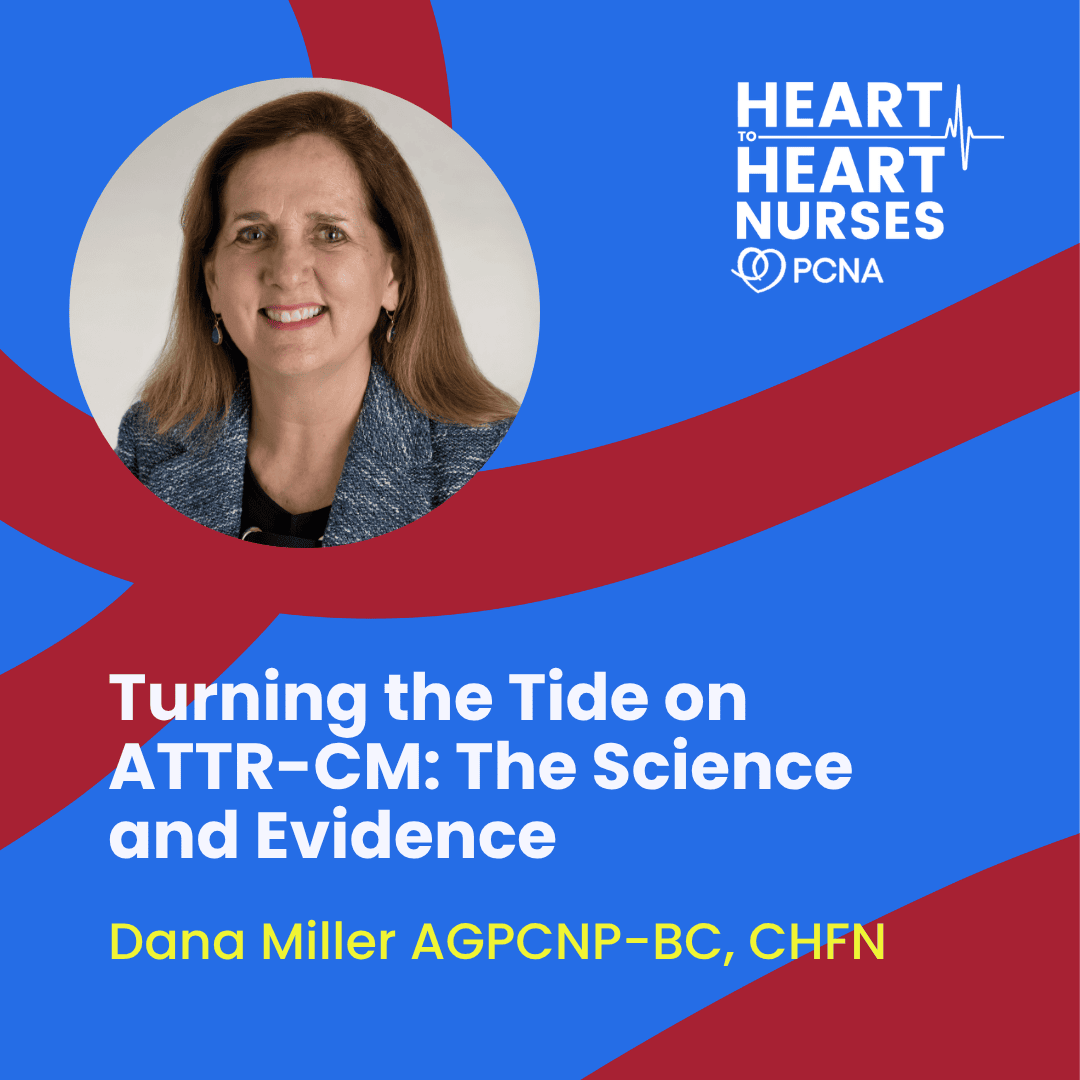
Join guest Dana Miller, Advanced HF Nurse Practitioner, to discuss the science and evidence to turn the tide on ATTR. Dana provides an overview of recent clinical trials and how an ATTR-CM diagnosis impacts the rate of hospitalization, mortality, and quality of life. Dana shares resources and recommendations to continue to learn more about the ever-evolving ATTR-CM treatment and management strategies.
Related PCNA Resources
- The Role of Artificial Intelligence in Cardiovascular Care: ATTR Case Study (CE Course)
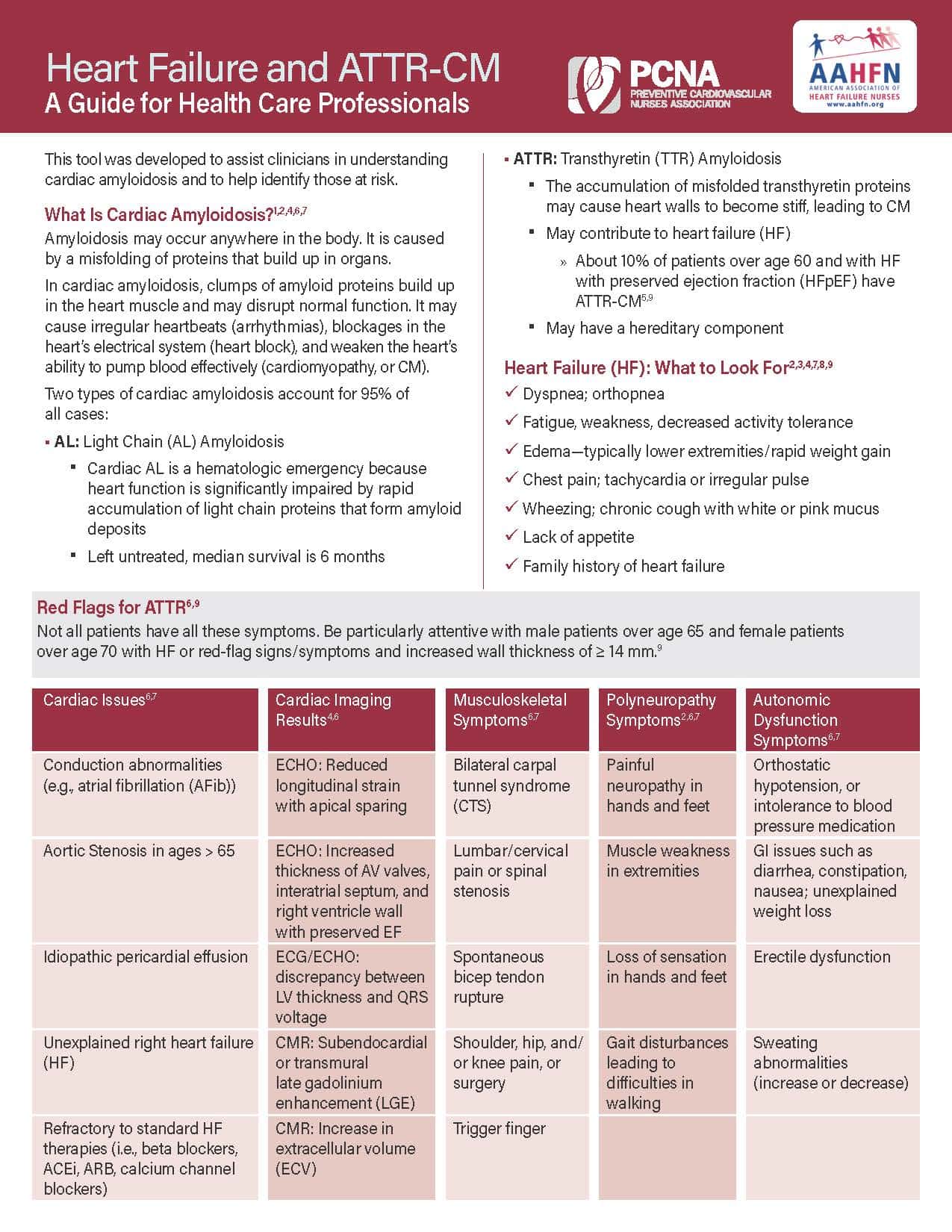
- Heart Failure and ATTR-CM: A Guide for Health Care Professionals
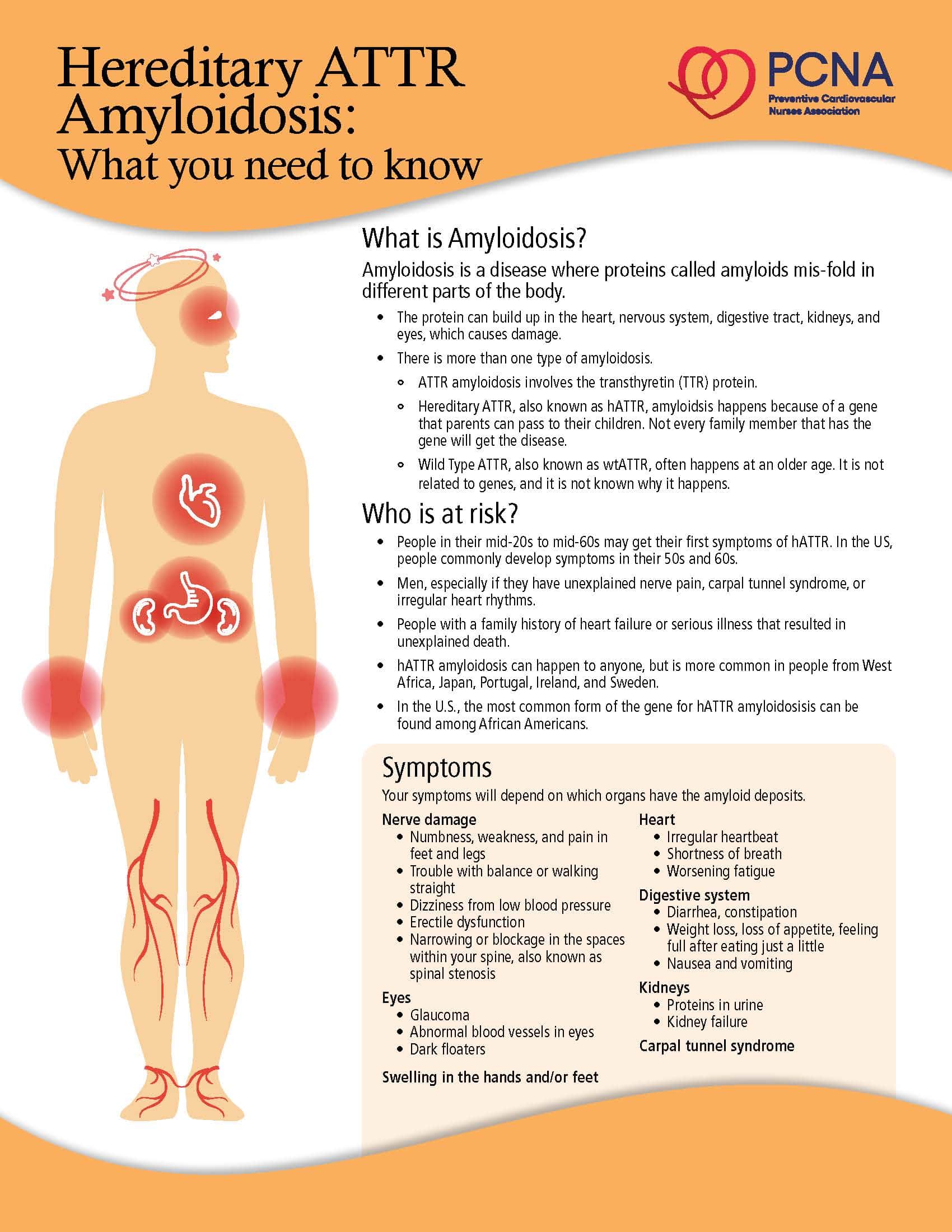
- Hereditary Amyloidosis: What you need to know fact sheet
Related Episode Resources
- CRISPR-Cas9 In Vivo Gene Editing for Transthyretin Amyloidosis (opens in new tab)
- Transthyretin Cardiac Amyloidosis Evaluation and Management: 2025 ACC Concise Clinical Guidance (opens in new tab)
- Changing Patterns of Diagnosis and Survival in Transthyretin Cardiac Amyloidosis: A Multicenter Cohort Study (opens in new tab)
- Outcomes in patients with cardiac amyloidosis undergoing catheter ablation for atrial arrhythmias (opens in new tab)
- Amyloidosis Research Consortium (opens in new tab)
- Heart Failure Society of America (HFSA)(opens in new tab)
Thank you to BridgeBio for their independent medical education support for this podcast episode.

[00:00:00] I’m Yvonne Commodore-Mensah, Board President for PCNA. I’d like to welcome you to Heart to Heart Nurses. PCNA supports your professional journey with accessible continuing education, practical patient resources and a vibrant community that understands the unique challenges and rewards of cardiovascular nursing. Together, we’re advancing the knowledge that defines excellence in cardiac care while celebrating the difference you make every day.
Geralyn Warfield (00:31)
Welcome to today’s episode where we are going to be discussing transthyretin amyloid cardiomyopathy, or ATTR. We’re going to be exploring the science of ATTR management and the optimization of patient outcomes. Today I’m joined by Dana Miller. Dana, would you be willing to introduce yourself to our audience, please?
Dana Miller (00:51)
Hi everyone, my name’s Dana Miller. I’m a heart failure nurse practitioner. I specialize in amyloid patients, primarily cardiac, ATTR amyloid patients, and we also see AL amyloid patients who have cardiac involvement. I work at the University of Kansas Health System. I work with Dr. Zubair Shah. We’ve worked together for many years. We’ve got a large amyloid clinic in the large metro area. We see patients both on the Kansas and Missouri side.
Geralyn Warfield (01:31)
Well, we are so grateful to you for taking time with us and sharing your expertise, and I’m hoping you could start off by providing an overview of ATTR for us.
Dana Miller (01:41)
Well, like I’ll be talking to patients next week in amyloid clin clinic, there’s two main types of amyloid. the first type is AL amyloid or light chain amyloid, and that is a plasma cell dyscrasia in the bone marrow, and that’s primarily seen in the hematology and oncology clinics. Today we’re going to talk about ATTR amyloid. Also known as transthyretin amyloidosis. It’s made in the liver and there are two main types of ATTR amyloid. One is hereditary, previously known as variant or mutant. It’s passed down in the genes. And then the other type that’s most frequently seen is wild type ATTR amyloidosis and that’s seen in patients as they get older, usually 60 and above.
Geralyn Warfield (02:46)
Thank so very much for that nice overview of ATTR and also AL amyloidosis. And at this point I’m hoping we can pivot just slightly and take a deeper dive into the emerging evidence from clinical trials. I’m hoping you could please just walk us through the current landscape of treatment and management options that are available for this patient population.
Dana Miller (03:07)
Well, it is certainly an exciting time in caring for patients with amyloidosis. When I first started working with patients, there were limited treatments available and we have seen this change rapidly. Now there are treatments with stabilizers and silencer therapies and ongoing new clinical trials that give hope to patients with amyloid.
The three main categories of the trials are looking at gene silencing, gene editing, as well as amyloid depleter trials. There is currently a trial called TRITON-CM or Cardiomyopathy. It’s a gene silencing trial that is studying the effect of nucresiran in patients with transthyretin amyloid with cardiomyopathy. It evaluates the efficacy of nucresiran compared to placebo on all-cause mortality and cardiovascular events. Of course, right now there is FDA approval for vutrisiran. It’s an injection that’s every three months. Nucrisceran is an injection sub Q every six months. So the TRITON trial looks to evaluate the efficacy compared to placebo and looking at other assessments including cardiovascular events and/or death, and also looks at patient-reported health status and health-related quality of life.
They did allow stabilizers such as tafamidis or acoramidis in this trial. They are enrolling 1750 patients. The study is five years and it is an event-driven study. And the chance of receiving the study drug is two out of three will get the study drug. It’s sponsored by Alnylam.
It has a separate arm or a separate study called the TRITON-PN that looks at the same medication, nucresiran, as a gene silencer for patients who have hereditary amyloid with polyneuropathy. So comparing the TRITON-CM is the cardiomyopathy study, the TRITON-PN is the polyneuropathy study. All will receive in the TRITON-PN will receive either nucresiran or vutrisiran and there is no placebo in that trial.
There’s two other trials that have some information about the importance of early diagnosis. there was a recent trial called the long-term clinical benefits of acoramidis in patients with transthyretin cardiomyopathy and early heart failure severity and survival benefits regardless of atrial fibrillation or status.
This study was looking at patients with ATTR amyloidosis early, so New York Heart Association Functional Class I or Class II, and looking at whether acoramidis would reduce the likelihood of atrial fibrillation or atrial flutter.
As as we know, a lot of patients with amyloidosis have heart rhythm disturbances, primarily atrial fibrillation, but also heart block. And so this was a trial that was part of the open label extension of the ATTRibute-CM trial. They were randomized two to one to receive either acoramidis or placebo. In the post hoc analysis there was modified intention to treat populations presented with New York Heart Association Functional Class 1 or 2. Time to all cause mortality was evaluated at month 42 in those patients. And they also looked at the presence of atrial fibrillation or flutter at baseline on enrollment. In the results of that study, it was a study of sixty-eight patients, so a small patient patient population.
68 were on acoramidis. Placebo was 17. The patients had New York Heart Association Functional Class I or Class II. And the results showed that acoramidis showed consistent long-term efficacy on all-cause mortality and cardiovascular heart outcomes in participants with early heart failure severity. The effect on all-cause mortality was observed regardless of the diagnosis of a fib or a flutter at baseline, and it reinforced the importance of early diagnosis and treatment for patients with ATTR cardiomyopathy to improve outcomes.
Another trial that was called the ACT-EARLY was a trial of acoramidis sponsored by BridgeBio. This was confirmed gene positive patients that had hereditary amyloid but had no signs or symptoms of cardiomyopathy or peripheral neuropathy. It’s enrolling patients and it assesses whether treatment with acoramidis delays time to develop ATTR cardiomyopathy. They are enrolling patients within 10 years of the predicted age of disease onset. That means if a family member had symptoms of hereditary amyloid at age 50, then they would enroll the person at age 40, so the family member at age forty. Half of the patients will receive acoramidis and half will receive placebo. They are enrolling 587 patients and the study is seven years long.
Another trial that is going on is called the CELOPATTRA trial. It’s kind of a catchy name. The medication is called coramitug and it aims to bind specifically to the transthyretin and help clear abnormal transthyretin proteins while leaving the healthy versions of transthyretin protein alone.
It’s a multinational, double-blind, randomized, placebo-controlled, phase three cardiovascular outcomes trial. They’re enrolling patients 18 and older who are diagnosed with ATTR cardiomyopathy, both wild type and hereditary, who are actively experiencing heart failure symptoms. The duration and design of the trial, participants can either take coramitug or placebo in addition to the standardized stabilizer or silencer therapies. And this study is going on for four years. It involves an IV infusion every four weeks. They’re enrolling 1,280 patients, half will receive placebo. And it’s a double blinded study sponsored by Novo Nordisk.
One study that just came out with some results was the CARDIO-TTRansform trial. And that was a phase three trial that was randomized double-blinded placebo control study that evaluated the efficacy and safety of the investigational drug eplontersan in patients who had
Transthyretin amyloid cardiomyopathy or ATTR cardiomyopathy. Eplontersan already had FDA approval for hereditary amyloidosis with polyneuropathy or the neuropathic signs. The results came out last week. the trial missed its primary endpoint showing that it had no additive cardiovascular benefit in patients who were already taking TTR stabilizer drugs. 57% of the patients were already on stabilizers at the start, and they are calling this a top-line result. The official study results will be coming out at the European Society of Cardiology at the end of August 2026. And so this is not the end of the story, but it is early data. So official results will be coming August 2026. Safety results were the same of the four in ten patients who were not on stabilizers to begin with did show nominally significant results.
The next trial that we’re looking at is the MAGNITUDE trial. This is a gene editing trial. This is CRISPR-Cas9 technology. It was a study to look at whether this gene could be cut out essentially. The study was put on hold as of October 27, 2025. It was paused because there was one participant who had grade four elevations in liver transaminases, meaning very high liver enzymes, and an elevated bilirubin. and this is a single infusion. Now they have added more safety guidelines to this study. New exclusion criteria has been added, and this will be for criteria of liver disease, recent cardiovascular instabilities or an ejection fraction of less than 20%. There’s higher monitoring of liver enzymes. Now that the study is going forward, 67% will receive this next Z, and the study will be going on for five years. It’s a smaller study compared to the previous ones that we’ve talked about. This one is enrolling 765 patients. There’s also a MAGNITUDE 2 trial, and that one looks at the polyneuropathy of hereditary amyloidosis.
This CRISPR-Cas9 technology is designed to knock down or turn off the gene in the liver that makes the transthyretin. And that transthyretin becomes unstable, as we know of how amyloid works, and the unstable amyloid fibrils deposit in the body. And the thought process behind this is by reducing the amount of transthyretin the body produces, the goal is to slow or stop progression of amyloidosis.
Geralyn Warfield (12:37)
Can you describe for us just a little bit more how that CRISPR technology works?
Dana Miller (12:41)
Yeah. It is a genetic engineering tool that pairs a molecular or a scissors type that allows the science to locate, cut, and alter that specific DNA sequence. And thus if that DNA sequence is altered, the theory was that it would reduce the amount of transthyretin the body produces with the goal of slowing or stopping progression of amyloidosis.
Geralyn Warfield (13:22)
Thank you so very much. We are going to take a quick break and we will be right back.
We’re back to continue our discussion about ATTR and I appreciate the current evidence that you shared about all the different kinds of studies that are happening and what’s on the horizon for us. So maybe we could pivot a little bit and talk a little bit more about how quality of life for patients with ATTR is impacted. And in your experience, what kind of stories, what kind of challenges, what kind of barriers have patients shared with you?
Dana Miller (13:53)
So regarding quality of life for patients with ATTR amyloidosis, the barrier most often is the delay in recognition of amyloid. And the delay in recognition also then represents or causes a delay in treatment. The average patient will see between three and five providers before they’re diagnosed with amyloid. And the average time to treatment can be one to two years. In the trials that were approved for all medication HELIOS-B for vutrisiran attribute cardiomyopathy for acoramidis and the ATTR-ACT trial for tafamidis there is higher probability of survival with earlier diagnosis. Clinically what I think we see is in cardiology our questions that we ask patients all pertain to cardiovascular symptoms. And historically I don’t think that we have thought to put together the non-cardiac questions. Like looking at does a patient have carpal tunnel syndrome. Specifically if they have bilateral carpal tunnel that’s a red flag. Do they have neuropathy numbness in their hands or feet. And I’ve started asking more about orthopedic questions, do they have shoulder surgery, have they had a biceps tendon tear or rupture?
Have they had knee surgery, low back pain? That’s pretty common for folks to have low back pain. Unintentional weight loss? Those are the signs and symptoms that we need to start thinking about and asking the question. It doesn’t take that much longer to ask that question.
Geralyn Warfield (16:08)
And beyond that cardiovascular and physical kind of information that you are gathering from patients, family history, those types of things, what other barriers do you find that patients are having when it comes to this disease?
Dana Miller (16:22)
Sure. Other barriers are access to care. It’s I’m sure more difficult in the rural areas where you don’t have specialized treatment for that. That barrier can be overcome with the providers knowing where to refer. They don’t have to figure it all out. They just have to know who to refer to. So that’s a barrier.
For some of the treatments that are injections that are given in an infusion center, distance for travel could be a barrier.
Those are the primary things that we look at as a barrier. Of course, insurance and coverage. we have to make sure that that there is coverage for those medications.
Geralyn Warfield (21:31)
Regarding the metrics around hospitalization rates and mortality, what kind of data and outcomes are being discovered in trials?
Dana Miller (21:38)
I think all of the trials, certainly of the meds that are FDA approved, all of the medications reduced hospitalization and cardiovascular mortality. But yes, they are all the studies that are ongoing now will continue to look at hospitalization rates and mortality.
Geralyn Warfield (22:05)
Dana, I have a final question for you. What would be your top takeaway for our listeners and those that are viewing online about today’s topic of exciting science surrounding ATTR treatment?
Dana Miller (22:18)
Well, it is an exciting time for clinical trials regarding ATTR treatment. There is more information that’s available on triclinicaltrials.gov. Another great resource is Amyloidosis Research Consortium. Another resource is HFSA, Heart Failure Society. They will have lots of information about ongoing clinical trials. And the other thing is, be aware. Look for signs and symptoms that are beyond cardiovascular signs and symptoms. Look at orthopedic issues in your patients. It doesn’t take very long. Refer early for patients that you have a high clinical suspicion and treat early. That has the best outcomes for staying alive and staying out of the hospital. It’s exciting times. Thank you so much for inviting me.
Geralyn Warfield (23:20)
We are incredibly grateful to our guest, Dana Miller, for taking time to share their expertise with us today, and we invite our audience to learn even more on our next episode about turning the tide on ATTR. And also find information in our show notes for this episode and also at pcna.net.
Thank you so much to BridgeBio for their independent medical education support for this podcast episode. This is your host, Geraldyn Warfield, and we will see you next time.
Thank you for joining us for this episode of Heart to Heart Nurses. We invite you to visit pcna.net for education and resources that will empower you to provide preventive cardiovascular care with confidence and expertise.
Topics
- Cardiomyopathy
- Heart Failure
Published on
September 1, 2026
Listen on:
AGPCNP-BC, CHFN
Related Resources