




How long does a replaced aortic valve last? How do you explain the durability and repeatability of a TAVR to your patients? Join guest Misty Theriot, BSN, RN, CPHQ, FACC, to learn the current data and trends in TAVR valve management.
Episode Resources
- VARC 3: Updated Endpoint Definitions for Aortic Valve Clinical Research
- PARTNER 3: Seven-Year Valve Durability
- Evolut Low Risk: Six-Year Outcomes
- NOTION: Transcatheter or Surgical Aortic Valve Implantation: 10-Year Outcomes
- ACC CardioSmart: Choosing TAVR or SAVR Decision Aid
- US Census Bureau: Nation’s Urban and Rural Populations Shift
- Racial, Ethnic, and Socioeconomic Disparities in Access to Transcatheter Aortic Valve Replacement Within Major Metropolitan Areas
- A Health Equity Workflow for Timely TAVR: Making Barriers Visible
Thank you to Edwards Lifesciences for their independent medical education support for this podcast episode.
I’m Yvonne Commodore-Mensah, Board President for PCNA. I’d like to welcome you to Heart to Heart Nurses. PCNA supports your professional journey with accessible continuing education, practical patient resources and a vibrant community that understands the unique challenges and rewards of cardiovascular nursing. Together, we’re advancing the knowledge that defines excellence in cardiac care while celebrating the difference you make every day.
Geralyn Warfield (host) (00:31)
Welcome to today’s episode where our focus is on valve durability in structural heart management. And my guest today is Misty Theriot. And Misty, could you introduce yourself to our audience, please?
Misty Theriot (guest) (00:42)
Thank you so much for having me here today and I’m really honored to the PCNA for allowing me to be on this podcast and also for shedding light on this extremely important topic. As you mentioned, my name is Misty Theriot. I am the Valve Clinic Coordinator, Structural Heart Manager, and TVT Registry Site Manager, all lumped into one at Lake Charles Memorial Health System in Lake Charles, Louisiana.
We are an acute care community hospital that started our structural heart program in 2018. And I’ve had the true luxury and honor of being able to see patients through from the diagnosis stage all the way through long-term follow-up. And I will say some of my favorite parts of my job is really the quality aspect and also the relationship building that we get to have with our team and the patients, really understanding their story and the why behind their outcome and their journey.
Geralyn Warfield (01:38)
Misty, I’d love for us to start our conversation talking about what we mean by the phrase valvular interventions, just so that we’re on the same page. What kind of procedures are we going to be talking about today?
Misty Theriot (01:51)
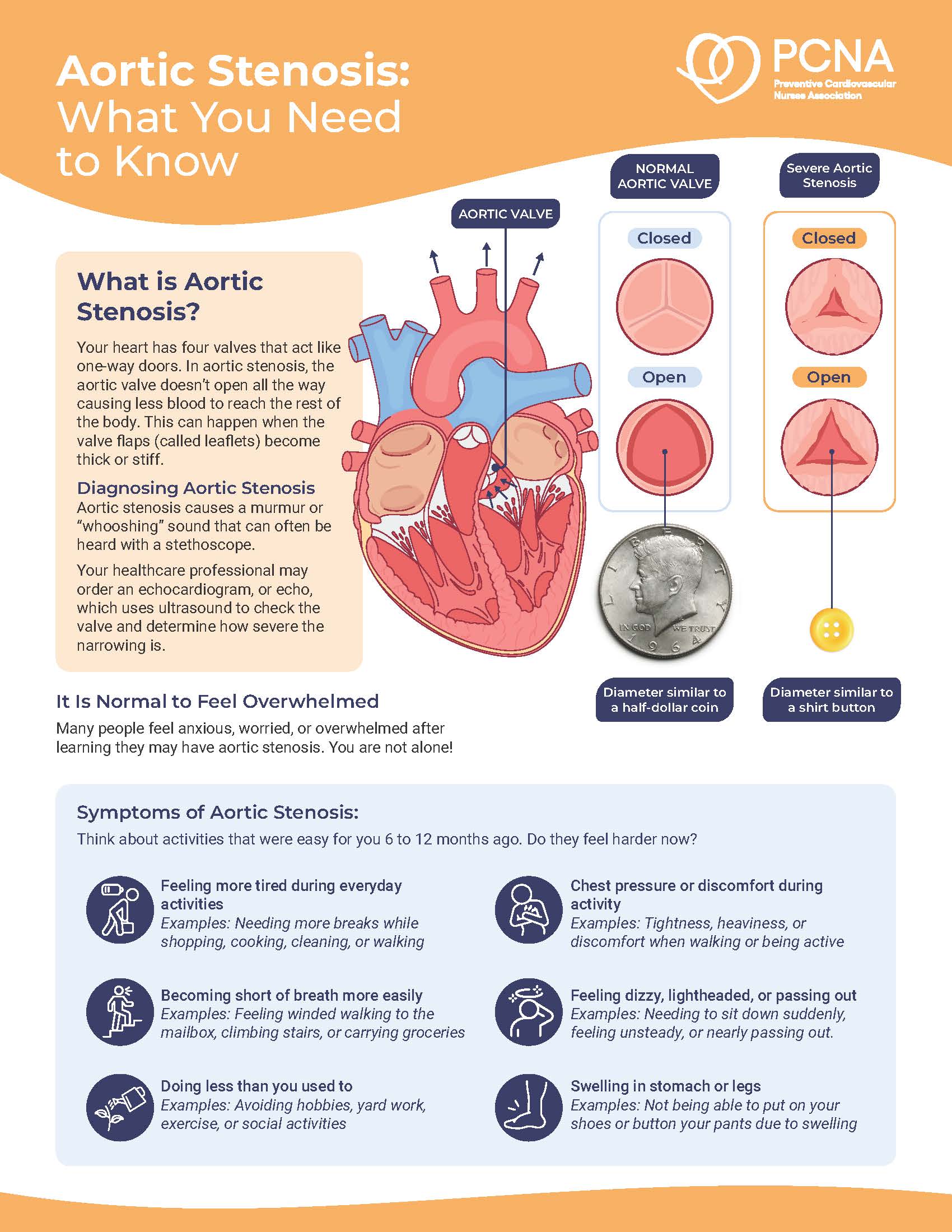
Absolutely. So, in structural heart care, valvular interventions are procedures in which you can repair or replace a heart valve that is affected either by stenosis, regurgitation, or maybe even mixed valve disease. Stenosis is where the leaflets in the valve do not fully open and close, and that’s most often due to calcification buildup. Insufficiency or regurgitation would be where those leaflets become leaky, where there’s not good coaptation or closing with the leaflets, so blood often is flowing backwards. And although valvular interventions can involve the aortic, mitral, tricuspid, and pulmonic valves, today’s discussion is really going to focus on aortic valve replacement for severe aortic stenosis.
This can be completed with two different methods. The first is surgical aortic valve replacement or SAVR. That is where the cardiac surgeon surgically removes the diseased aortic valve and can either replace that valve with a mechanical or a bioprosthetic tissue valve. The other method to do this is through TAVR, that is a transcatheter aortic valve replacement. And it is a different method in which we can deliver a bioprosthetic tissue valve, most commonly through the groin and through a catheter. And the valve types we typically use for that are either a balloon expandable or self-expanding, again, bioprosthetic valve.
Because we’re discussing durability, the focus today is really going to be on bioprosthetic tissue valves. What happens if the valve later on develops stenosis, regurgitation, or another form of dysfunction? And the treatment for that later on may include valve-in valve TAVR for a failed surgical tissue valve, TAVR-in-TAVR for a failed transcatheter valve, or surgical explantation to remove the valve.
The available options really do depend on the patient’s anatomy, the type of valve that was initially implanted, and whether the valve can be placed safely while maintaining adequate blood flow and coronary access.
Geralyn Warfield (04:03)
Thank you so very much for that great overview of the types of activity that are happening in the heart and how we are modifying the valves to try and get blood flow to be what we would like it to be. But what does durability actually mean? You mentioned that in your discussion about the types of valves. What does that mean in terms of valvular interventions?
Misty Theriot (04:25)
Absolutely, and that’s a great question. I feel like one that often comes up when patients come into the clinic as well, because when we see them, they want to know how long is this valve going to last when we’re discussing treatment options with them. So valve durability really describes how well a bioprosthetic valve maintains its structure and function over time. We cannot determine durability only by whether the patient has required another procedure, but also need to consider the changes in the valve tissue, hemodynamic performance, symptoms, and clinical outcomes. A way that we often have this categorized, and the way that researchers really look at this is according to VARC, which stands for Valve Academic Research Consortium. And it helps to provide standardized definitions for valve outcomes. So valve dysfunction and failure can be reported consistently across studies.
When we are hearing the word structural valve deterioration in these studies and when looking at outcomes, that is really when you’re having permanent changes within the valve itself, such as calcification, fibrosis, leaflet thickening, or leaflet tearing. These changes can end up causing stenosis, regurgitation, or both. Another bucket that this dysfunction can fall into is non-structural valve dysfunction. And this would be when a problem is caused not by deterioration of the tissue valve itself, but it could be because of paravalvular regurgitation, which is where there is a leak between the old valve and new valve. Or, patient prosthesis mismatch, which is where the replacement valve is functioning normally, but the effective opening of that valve is too small for the patient’s body size, and that can result in higher gradients, even though the valve itself has not deteriorated.
Another outcome we look at when considering durability is also valve thrombosis. This is where there can be clot formation that can affect the leaflet movement or the valve function. And it’s considered separately because those patients may respond to anticoagulation, and that does not necessarily represent permanent structural deterioration.
Endocarditis is another option, and this is where infection has occurred within the prosthetic valve. And it’s considered separately because its cause, treatment, and clinical implications after really differ from structural deterioration.
Therefore, bioprosthetic valve dysfunction describes the evidence that the valve is not functioning normally. But on the other hand, whenever we hear bioprosthetic valve failure, that is when you have clinically meaningful consequences. Such as severe valve dysfunction, the need for reintervention, or valve-related mortality. Long-term assessment for this really combines serial echo with the patient’s clinical course. And during this, when we’re assessing durability, we’re really looking at the valve gradients, the effective orifice area, which is the amount of space available for blood to flow through the valve during systole, newer progressive regurgitation symptoms and functional changes, as well as a need for another valve intervention. So, a key takeaway to keep in mind here is identifying bioprosthetic valve dysfunction does not automatically mean the patient needs another intervention. Imaging may identify a change in valve function before the patient develops symptoms or clinically significant valve failure. And the findings should prompt careful evaluation and continued surveillance.
Geralyn Warfield (08:12)
It seems like there are a lot of potential complications with some of these valve situations. What kind of triggers would you be looking at from a clinical perspective that would lead you towards additional echoes or other assessments to actually determine whether or not there are issues related to the valve itself or some of the physiology that you had previously described?
Misty Theriot (08:37)
Absolutely, that’s a great question. And I would say really knowing the patient’s symptoms and having that conversation with them is really important because if suddenly, let’s say they had their Tabber procedure, they did great for their 30 day follow-up, and all of a sudden, three to four months later, they’re calling the clinic saying that they’re having sudden shortness of breath or they’re having, you know, significant decrease in their exercise tolerance or significant fatigue or sudden heart failure symptoms, just something out of the norm from what they have been experiencing. I would say that’s an important teaching point for patients, but that should also trigger to be able to look a little bit further into that valve, consider having an echocardiogram completed. And if you’re seeing that all of a sudden those aortic valve gradients are increasing or doubling compared to the last echo, then that should be a trigger to really dive into this a little bit further. That may be with a TEE or that may be with CT angiogram imaging to really look and see if there are thrombosis or thickening occurring on that leaflet.
So I would say typically patient symptoms are often the initial trigger for us, but as well if we’re doing that 30 day echo and we see there’s already a sudden increase in the gradient compared to previous then we are watching that patient extra closely. So really doing the education with them to know what symptoms to look for, I think are really important here.
Geralyn Warfield (10:07)
Thank you so very much for those additional details. And now that we understand more about valve interventions and the process
of durability and assessing that, could you please fill us in on some of the recent data on valve durability?
Misty Theriot (10:20)
All right, that’s really a great question. And I feel like where there is so much movement in this space. And again, I mean, this is really where we look to research, to really see and to help us answer those questions when patients are asking us how long this valve is going to last. One thing I will mention and kind of caution about is longer term TAVR durability data is increasingly assuring, but these studies that we evaluate and look at are not interchangeable. And they’re not really designed for direct comparison because these studies really evaluated different patient populations, valve platforms, generations of technology, follow-up periods. So each study really should be interpreted within its own design and clinical context. So that will be my one little caution as we kind of talk about what some of the newer data is showing.
But I’ll start with really discussing PARTNER 3, which randomized approximately 1,000 patients who had severe aortic stenosis and were at low surgical risk to either balloon expandable SAPIEN 3 valve or SAVR. And the overall seven-year clinical outcomes were released last year, but there has been a focused durability analysis that came out this year. And it really looked to see at seven-year structural deterioration-related valve dysfunction was really equivalent with surgery.
TAVR was about 7.3%, SAVR was 7.6%, and aortic valve reintervention was also similar for both. All-cause mortality was 19.5% after TAVR, 16.8% after surgery. And although mortality was numerically higher with TAVR, the difference was not statistically significant.
Regarding valve-related interventions in PARTNER 3, these were most often related to progressive stenosis. Which could be identified with that surveillance before urgent treatment is required. So that was an interesting sub-analysis that really came out this year that those patients, when they required reintervention, it was more often elective and it was often due to progressive stenosis.
Additionally, with that study, that was evaluating SAPIEN 3 and SAPIEN 3 Ultra Resilia which is a newer valve that is continuing to be monitored. It is where bovine pericardial tissue is treated with an anti-calcification technology to really help decrease that tissue calcification. This tissue has been used in surgical valves for quite some time. In fact, the 10-year data which came out of the COMMENCE trial evaluated this and really showed that there are long-term durable outcomes with that valve.
Shifting gears a little bit, another newer study analysis that came out this year is also the Evolut Low Risk. This study looked at over 1,400 patients with severe aortic stenosis who had low risk for either TAVR with a self-expanding valve or with surgery. And the six-year outcomes of that study were released this year.
Geralyn Warfield (13:34)
That’s a lot of great information about that particular study and a lot of details that we will make sure that we put into the show notes so people don’t have to have this memorized by the time they’re done with this particular episode. But I know there’s even more data that’s available from some other studies, and I think it was the Evolut Low Risk that you wanted to cover next. Is that correct?
Misty Theriot (13:51)
Mm-hmm. Absolutely. So Evolut Low Risk randomized over 1400 patients who had severe aortic stenosis and they were also at low surgical risk. And these patients received TAVR with a self-expanding supraannular valve or SAVR. So different valve platform compared to PARTNER 3 that we just reviewed.
And the six-year analysis was released this year from that initial Evolut trial. And this was really looking to see death and disabling stroke, but we were also able to get a glimpse into the seven-year outcomes, which really examined reintervention and the reason that another valve procedure was required. And that’s a point that I really just wanted to highlight here. So
at six years, death or disabling stroke was not significantly different between TAVR or SAVR, and in the available seven year data, reintervention was 9.8% after TAVR and 6% after SAVR. The difference was driven primarily by regurgitation related reintervention, while stenosis related reintervention was similar.
So again, we’re looking at different valve platforms here, but had different reintervention reasons. And follow-up beyond six years was also not complete for all patients. So the seven-year reintervention finding should be interpreted with that limitation. And again, I’ll mention the mode of dysfunction really matters clinically because stenosis may progress gradually while significant regurgitation may cause a more abrupt clinical change and require prompt evaluation.
Geralyn Warfield (15:34)
And what kind of data did we see from the NOTION trial? I think that was with older adults as I d if my memory serves.
Misty Theriot (15:42)
That’s right. And this was also another trial that was looking at again lower surgical risk patients. These patients had an average age of 79, and these patients were randomized either to a self-expanding core valve or SAVR. And we have 10-year analysis from this, which really helped to look at clinical outcomes, structural valve deterioration, bioprosthetic failure, and reintervention.
Severe structural valve deterioration was reported in 1.5% of TAVR patients, 10% of surgical patients, with no difference in the major composite clinical outcome. So it does help provide some of the longest randomized TAVR follow-up, but it is a small sample, older population, earlier valve limit. And one thing I’ll mention as well, whenever we’re talking about these studies, patients that are randomized to SAVR, that is not one particular SAVR valve. There are a multitude of different valves that are included when patients are randomized to that arm. So that’s another important context to keep in mind.
Geralyn Warfield (16:46)
Any specific considerations when we’re considering bioprosthetic valves?
Misty Theriot (16:51)
Absolutely. So just as I kind of mentioned with PARTNER 3, those patients who had a balloon expandable, those were with bovine tissue, the self-expanding valve with the Evolut that is with a porcine tissue. And it’s important to really look at and acknowledge the fact that those valves do not degenerate the same. So porcine valves more commonly demonstrate leaflet tears and regurgitation, while those bovine valves typically may have calcification and stenosis.
And this has been evaluated in a couple of studies. There was one that I know that we’ll link in here. It was a 2023 study that evaluated close to 300 patients who had surgically explanted valves that were either porcine or bovine. So the important thing to really be aware of there is tissue factors that really do end up being involved with that.
So when we look at histology images between porcine and bovine tissue, it really can help you understand the difference between those tissues. And higher collagen fiber density is what we typically see in the bovine tissue compared with porcine tissue. So that is just something to keep in mind as well whenever we’re considering the difference with those platforms and the way they may end up requiring reintervention over time. And again, the other point to kind of keep in mind is the way that those patients do present. And so those that do have stenosis with that bioprosthetic valve, typically it may be more an elective, as it is more of a gradual progression. But those that do have regurgitation with that bioprosthetic valve, it’s typically more of an urgent presentation for those patients.
Geralyn Warfield (18:35)
Right before we started our conversation recording today, we talked a little bit about Navitor. Would you be able to explain about that to our audience?
Misty Theriot (18:43)
Absolutely. So that is a self-expanding intra-annular transcatheter valve that is using bovine pericardial tissue. So a little bit different than what we’re seeing with Evolut that uses the porcine. This particular valve has bovine tissue. And the Navitor IDE study evaluated patients with severe aortic stenosis who were at high or extreme surgical risk. And this year we were able to see the five-year outcomes and the analysis of that.
It was 120 patients, so that’s something to keep in mind. It was a prospective multi-center single arm study. So those patients in that study were not randomized to SAVR. It was strictly evaluating the outcomes of this valve. And at five years, there was a low mean gradient. There was a large effective orifice area for those patients, and the valve deterioration was 5.9%. There were no reported cases of the patients having to undergo reintervention. So that is encouraging, but it should not be directly compared with PARTNER 3 or Evolut.
And I think the nursing takeaway with these studies is really again that these studies provide different pieces of a durability picture and none of them can exactly predict how long an individual patient’s valve will last. So really for nurses understanding the valve that’s implanted and its potential for what can end up happening or degenerating over time is really important context to keep in mind.
Geralyn Warfield (20:16)
We are going to take a quick break and we will be right back.
We are back with our continued conversation about valve durability with Misty Theriot. And I wonder if you could expand for us just a little bit more about the durability for TAVR specifically, because you mentioned both the options for SAVR and TAVR.
How do we help patients understand which path they can choose?
Misty Theriot (20:40)
I think that’s a great and fabulous question and one that does often come up in the clinic when we’re discussing with patients and we are really explaining all of the treatment options to them. So one thing that I will say is, you know, with SAVR, it’s been around for a very long time, but there’s been multiple valve iterations over time as well.
And with TAVR, it really has had a microscope on it since it’s been approved and since it’s been able to be performed in the US. It really has had a microscope, really making sure that over time patients are doing well with it. And so I think it’s difficult in a way when we’re having those conversations with patients to really have a crystal ball and try to predict how long it’s going to last for them. But we can use the general information that we have from these studies and to really help them understand going into it. Yes, with SAVR, we know we have long term data for that. With TAVR, we are starting to see that. We’re monitoring it closely. And just really having that explicit conversation with them that we do have this data that’s available. But it can be very difficult for us to truly predict or kind of give them a time frame of how long we think it may last. Yes, often I feel like you may hear a blanket term of you know 10, 12 years when discussing this with patients, but again it’s difficult for the reasons we just mentioned and that durability piece when looking at all of the study and the nuances.
One thing here as well to keep in mind and one thing that we can really extrapolate from the studies that just mentioned were, you know, with the PARTNER 3 trial when we had patients randomized that were low risk to either TAVR or SAVR and the mortality outcomes were very similar between both treatment arms. And so really making sure that patients are aware of that piece I think is an extremely important takeaway as well.
Geralyn Warfield (22:31)
Well, there’s a lot of data to sift through, both from a prof healthcare professional standpoint, but also for patients. So what does this look like in clinical settings when we are considering durability and repeatability, how do we frame these shared decision making opportunities with our patients to make sure that we are effectively communicating?
Misty Theriot (22:52)
Absolutely. And I will say shared decision making is one of my favorite parts of being involved in structural heart. I feel like it’s one of the pieces that can be the most rewarding because it is really where you’re able to bring together the team and the patient and how that really intersects and comes together. So there’s a lot of considerations here. You know, whenever we’re discussing valve durability and longevity with patients, it’s important to consider their life expectancy. And also their anatomy that they have, their comorbidities, their functional status, and the likelihood of outliving the first prosthetic valve. And really explaining to patients how closely the available evidence can reflect their age, anatomy, and clinical circumstances.
So the seven or ten year data that we have does not mean the patient’s valve may last that long. It could last longer. And it really can be difficult or really an important point to have that open and honest conversation with them. So when we’re discussing with patients, trying to decide on that first valve for them, it’s important to really explain the valve type, you know, looking at the valve design, implant position, all of that can really affect future options for patients to be able to have valve in valve procedures, to be able to still have coronary access, what their residual gradients may be, and the amount of space available for that blood flow. So those are all important heart team considerations that should be able to be translated to the patient as well.
And another catheter-based procedure may be possible, and I think that’s one thing that’s always important to explain to patients that we know valve and valve TAVR can be done, but sometimes based on how that initial valve is implanted and other factors with the patient, it may not be possible longer term, or that may not be an option for them when they get to that point. So being able to have that candid conversation with them as well and not guaranteeing that I think is an important piece as well.
And again, as I mentioned when reviewing the durability studies, the mode of dysfunction is important to be aware of and include in those conversations. So that way the patient knows really what to be watching for.
With all of that, at the end of the day, shared decision making is really about bringing together the patient’s preference as well and taking time to understand what matters to them, what is their goal in care, what is their treatment preference, and why. I know there may be times that we may have a 65-year-old patient that comes in the clinic that could easily be suitable for TAVR or SAVR, and they may be adamant that they want TAVR, and it’s important to understand the why behind their preference in that choice, and oftentimes it may be something that is a social or personal aspect, or needing, you know, to be able to get back to work financially. And so taking the time to really understand that to patients and not just present all the treatment options, but really take time to understand the why behind it, I think is a really important piece of this.
And this is something we incorporate in our heart team discussions because when we have the patient come in for the meeting with our CT surgeon, we have a smart phrase we use in our EMR, and it’s to document and capture that shared decision making piece. We use the CardioSmart resources, which I know will be linked for all of you. And that is an important piece that we take time to go through with the patients to make sure they truly understand what SAVR is, what that recovery looks like, what the outcomes could look like long term versus TAVR.
And then another bucket to consider as well is those that may be better suited for palliative care. Maybe TAVR or SAVR would not really help them in the long term. Maybe they have significant functional capacity limitations and their projected life expectancy is not greater than a year. And so having those true honest conversations with patients, I think, is extremely important. But being able to document that in the EMR as well is equally important.
That way there is visibility across teams, so that way they can understand what was discussed with the patient, what did the patient want, and what was their goal of care. So shared decision making is multifaceted, but it really does involve having those true and honest conversations with patients, making sure that information from the patient is relayed to the heart team, and that way you do have a closed loop of communication there.
Geralyn Warfield (27:34)
I can see in what you’ve just described the pivotal role that nurses can play across this
scenario. And I’m wondering based on your experience, if you could just describe a little bit more about how crucial that role is for nurses. And also maybe provide some examples from your perspective.
Misty Theriot (27:54)
Absolutely. I cannot stress enough how important the coordinator and the nurse role is in Structural Heart, but the nursing role in general when it comes time to be able to have these conversations with patients, really equipping you with the knowledge and the evidence base that is out there, being able to translate that to patients, I think is such an important, special trait that nurses have. And in this question that you were asking with you know the patient’s decision process, I think again it really goes back to taking time to understand what is important to them but also being able to have those early conversations about lifetime management. That is also an important role that the nurse can play.
Because again, kind of going back to that 65-year-old patient that comes in adamant demanding they they really want TAVR, being able to have that true conversation with them of, okay, let’s say we can do TAVR now. What about whenever you’re 75 or 80? Yes, potentially we could do a valve in valve. What about the third time? And I think that’s where a lot of heart teams are really having to have those honest conversations with patients, but oftentimes it is the nurse as well that is having these conversations with patients, really kind of having them starting to think longer term about their care and have being able to be an active participant in that.
So I think as well, being able to translate the evidence that we discussed from the trials that are out there, but be able to translate that in a way that is tangible and digestible for the patient and really letting them know that, you know, the next intervention is really all based on how perfect the result is from the first time, and that really does allow for other interventions potentially in the future, like valve and valve and the coronary access, or needing a surgical explant, like we mentioned. So I think as well, explaining to them why that mode of deterioration matters is an important education piece for our the nurse. being able to explain okay, if you get this bovine tissue, these valves over time may have more progressive stenosis, and that is really important that we have this long-term surveillance and it echocardiographic imaging for them over time so they know that that’s an important expectation from their point to be able to get that routine surveillance. But also conversely, if they have a porcine valve, let them know that the evidence that we have that’s available, these valves may end up having more regurgitation over time and it may be more sudden. And so again, making sure that they know that there is a regular cadence that they have with the cardiology clinic and being able to get that follow-up that they need.
So again, one point that I always go to as far as considering the nurse’s role is, you know, the physicians may be meeting with the patients in the clinic and they come out saying, okay, they want TAVR. A lot of times they may not have the time to truly understand that why behind it. And I think that’s where the nurses really come in and have an important role here to really understand what is driving that preference. And it may be due to the recovery or fear of surgery or assuming again that another TAVR is always possible for them. So being able to acknowledge that uncertainty, be clear with the evidence that we have. And being able to use the teach-back method is one that I think is really, really helpful when you’re asking for examples. So I like to go through that CardioSmart resource with them and have them tell me what exactly the treatment that we just talked about means to them and how did they interpret it. So being able to hear it from the patient’s perspective is another really important way because you may think you’re communicating something completely clear, and it may come across to them as clear as mud, as we say in the south. And so just making sure that they’re understanding the information being given to them and asking them to repeat that back can be very helpful here.
Geralyn Warfield (32:03)
We know that structural heart interventions are not available to every patient, and I’m hoping you can share a little bit more information about that topic as well as some specific practical strategies that we might use to address these barriers.
Misty Theriot (32:17)
Absolutely. So equally, just as I am very passionate about shared decision making, health equity and access to care is another extremely important point to me and to our community. As I mentioned, we are a community hospital. We service five parishes around our facility, and patients have to travel from long distances. And whenever people think about access to care, it’s not automatically always just transportation that may be a barrier.
It could be financial, as I mentioned earlier, when the patient’s trying to decide a treatment option for them, they may have financial constraints where they’re the sole provider for their family and needing to get back to work. Or they may have to choose between buying food and buying medications. And so whenever we think about access and you know equitable access to structural procedures, it’s really important to understand what that patient is being asked to overcome to complete the treatment we’re recommending for them. And I think that’s one point that is always really personal to me. So we want to make sure that we’re acknowledging these barriers.
And one thing that we’ve done at our center is we screen all of our structural heart patients. We do a social driver of health questionnaire with them as soon as we get a referral. So as soon as I get a referral, I’m calling them and we are going through these questions to ask: do you have difficulty with transportation? Are you able to get your medications? Do you have social support? Really addressing that earlier on. And we actually published this work in JACC a couple of weeks ago, really highlighting and going through this health equity access and how it can be in integrated in structural hard and should be. And it was really interesting. We found that by doing this screening earlier and connecting pa patients with resources they needed within the community. And that could have been through gas cards, a lot of work with our foundation at our facility, I will say, was a huge driver in this with linking us with these community resources. But being able to help make sure that they were able to get to and from appointments or use our satellite clinics when possible to help decrease that transportation burden for them.
As well as with financial needs, being able to connect them with financial grants that are available or financial counseling, connecting them with their case managers or social workers, depending on what their need is. And we found that by doing that earlier in the pathway, we were able to get patients treated much quicker.
One other pain point that I’ll acknowledge here that really goes into access is you know, the average age of patients we treat with TAVR was 78. So it’s an elderly population, most have Medicare, and they may not all have dental coverage. And so really trying to decrease that endocarditis risk later on is an important topic, but it can be difficult when you have these patients who are already having all of these challenges faced and expect them to be able to go to a dentist as well and have the funds to be able to do that. So we were able to work with our local foundation and local dental offices to form partnerships to get this care for patients when needed. So I think this is really where nurses again play a pivotal role of really thinking outside of the box and getting creative with how exactly can we make sure those patients in our community are getting the care they need and getting the best possible outcome.
Geralyn Warfield (35:52)
We have covered a lot of content about valve durability today, and I’m hoping you could identify for us your top takeaway for our audience.
Misty Theriot (36:02)
I think nurses should see themselves as active contributors in this pathway and in the process in structural heart. They play an integral role of being able to translate information to the heart team, translate information to the patient in a way that they can understand. And it is very important to be aware of again the updated data that’s out there so you can have these honest conversations when patients are asking you how long this valve is going to last. And so really making sure nurses are actively involved in that education piece and that they really are able to have those lifetime management conversations with patients and being able to relay that information to the heart team.
Geralyn Warfield (36:50)
Misty Theriot, we are so incredibly grateful to you for sharing your time and expertise with us today. We have learned a lot about valve durability, so thank you. As we’ve discussed throughout our conversation, you can find additional information and resources in the show notes for this particular episode and also at pcna.net. We’d like to thank Edwards LifeSciences for their independent medical education support for this episode.
This is your host, Gerald Warfield, and we will see you next time.
Thank you for joining us for this episode of Heart to Heart Nurses. We invite you to visit pcna.net for education and resources that will empower you to provide preventive cardiovascular care with confidence and expertise.
Topics
- Diagnostics and Devices
- Structural Heart Disease
Published on
November 17, 2026
Listen on:
BSN, RN, CPHQ, FACC
Related Resources