






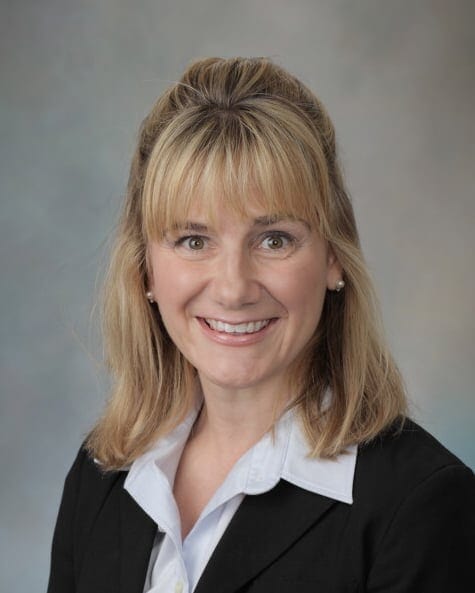
Review the latest clinical guidelines on LDL-C reduction, especially for your patients with diabetes. Guest Susan Halli Demeter, DNP, CNP, NP, also reflects on how engaging patients in shared decision-making aids in treatment adherence and identifies potential barriers to address, including polypharmacy, access, and other issues.
Episode Resources
- PCNA Lipid resources for providers and patients
- PCNA Diabetes resources for providers and patients
- CARDS trial
- IMPROVE-IT trial
- FOURIER trial
- ODYSSEY trial
- VESALIUS-CV trial
Thank you to Amgen for their support of this episode.
[00:00:00] I’m Erin Ferranti, board president for PCNA, and I’d like to welcome you to this episode of the Heart to Heart Nurses Podcast. PCNA is the proud home of cardiovascular nurses and one of the leading figures in the fight against cardiovascular disease. We have the resources you need for your day-to-day practice or to follow your passion to new areas of learning and growth.
Geralyn Warfield (host): (00:19)
Welcome to today’s episode, the 3rd of a 3-part series that explores the connection between LDL-C and diabetes. Our previous episodes focused on pathophysiology of LDL-C and the impacts of diabetes, and also treatment guidelines for these conditions.
Today, we’re joined by Susan Halli Demeter. And Susan, could you introduce yourself to our audience, please?
Susan Halli Demeter (guest): (00:39)
Yes. Thank you for inviting me today. And I am Susan Halli Demeter. I am a nurse practitioner and clinical lipid specialist at Mayo Clinic in Arizona. I’ve worked here 18 years. I do primarily lipid management here and run a lipid clinic with some colleagues of mine. And we just try to help achieve the best outcomes for our patients.
I’m also very involved with PCNA and was one of the Past Presidents.
Geralyn Warfield (host): (01:09)
Well, thank you again so much for being here to share your expertise and your perspectives on this particular topic. So let’s dive in and talk a little bit about what the latest clinical evidence, such as recent trials, tell us about the outcomes for patients that have both diabetes and cardiovascular disease.
Susan Halli Demeter (guest): (01:26)
Sure, yes. And I was asked if I would talk about, you know, five key trials, one being CARDS, another IMPROVE-IT, FOURIER, ODYSSEY, and the latest, VESALIUS-CV.
So, I’ll start with CARDS. That’s actually not a real recent trial. It was published around 2004, but it looked at around 2,800 patients, mostly white males, age 40-75 with type 2 diabetes and LDLs of 160 or lower, triglycerides of 600 or lower, and had either retinopathy, albuminuria, smoking or hypertension.
And these patients were randomized to atorvastatin 10 mg daily or placebo. The primary endpoint was time-to-first-event such as acute coronary syndrome, coronary revascularization, or stroke. The efficacy endpoints were met, and the trial actually ended two years earlier than expected with a median follow-up of 3.9 years.
The group treated with the atorvastatin actually had a 37% reduction in less events versus placebo. There was a 36% reduction in coronary syndrome, a 31% reduction in coronary revascularization, and the one that I think is most impressive, a 48% reduction in stroke, which I find so significant because when you think about the costs that can accrue with long-term care following a stroke, that’s huge findings.
The death rate in the atorvastatin group was reduced by 27% and there was no increase in adverse events reported. The LDL improved to about 108 in the patients and like I said, they started in like the 160s.
Then I’m going to move on to the IMPROVE-IT trial, which was a trial that compared the combination of ezetimibe 10 mg with simvastatin 40 mg versus placebo, and simvastatin 40 mg, in patients who had had an acute coronary syndrome. Their LDLs were 50-125 mg/dL pre-treatment. And there are about almost 5,000 diabetics in this study, out of the 18,000 patients that were studied. The primary endpoint was cardiovascular death, major coronary events, and stroke.
The diabetic patients tended to be older and female with a history of non-ST elevation MI versus the non-diabetic patients that were studied. The average LDL in the ezetimibe-simvastatin arm was 49. In the placebo simvastatin arm, the average LDL was 67. And the results found that in patients with diabetes, ezetimibe with simvastatin reduced the 7-year primary endpoint rate by 5.5%, versus 0.7% in patients who did not have diabetes.
So, the largest relative reduction was in diabetics, and it was 24% for MI and 39% for ischemic stroke.
There was no difference in safety outcomes for either group, and participants under the age of 75 with diabetes actually had greater benefit with the addition of ezetimibe versus those who did not have diabetes, which supported the conclusion that adding ezetimibe to a statin improved outcomes for our diabetic patients.
The ODYSSEY Outcomes Trial included over 5,400 patients with diabetes who were 1-12 months status post-acute coronary syndrome, and they were on high-intensity statin randomized to either alirocumab or placebo. LDLs got down to 25-50 mg/dL in the alirocumab group.
The diabetic group on placebo had a higher incidence of the primary endpoint, which was death from coronary heart disease, non-fatal MI, fatal or non-fatal ischemic stroke, or unstable angina requiring hospitalization.
But moreover, the diabetic participants on alirocumab had twice the absolute reduction of the primary endpoint versus those with normal glucose levels.
The FOURIER trial, that one included 11,000 patients with diabetes, age 40-85, with ASCVD, and they were on moderate- to high-intensity statin. Some were also on ezetimibe. And they were randomized to evolocumab versus placebo. The primary endpoint was a composite of CV death, MI, or stroke. Additionally, the impact on A1C was assessed.
Evolocumab lowered the LDL by 57% in the diabetic arm at 48 weeks. Absolute risk reductions in the primary endpoint was greater with the diabetics on evolocumab over a 3-year period. The number needed to treat was 37 in the diabetic group versus 62 in those who did not have diabetes, with absolute greater risk reductions and revascularization.
It also showed that adding evolocumab did not cause significant changes in the A1C.
And then lastly, the VESALIUS-CV trial was a 5-year study that was presented at the AHA Scientific Sessions in November 2025 and looked at over 12,000 patients who did not have a history of MI or stroke, but had increased risk for ASCVD, such as those with evidence of atherosclerosis on testing, or high-risk diabetes. Participants had to have an LDL of 90 or greater, a non-HDL of 120 or greater, or an apolipoprotein B level of 80 mg/dL or greater on maximally tolerated lipid-lowering regimen.
They were randomized to receive evolocumab 140 mg subcutaneous every two weeks versus placebo. Primary endpoint of 3-point MACE was effect of evalocumab on CHD death, MI or ischemic stroke. And then it also looked at evalocumab with 4-point MACE, which was CHD death, MI, ischemic stroke, or ischemia-driven arterial revascularization.
The median age of the patient was 66. Median LDL was 115 mg/dL and evolocumab reduced the LDL to around 45 mg/dL. The findings showed a 25% relative risk reduction in 3-point MACE and a 19% relative risk reduction in 4-point MACE. There were also reductions in all-cause death, and a 27% reduction in cardiovascular death, MI or ischemic stroke, and a 36% reduction in MI.
These findings then supported aggressive lipid-lowering with adding a non-statin therapy option such as evolocumab to the medication regimen in high-risk patients, especially those with diabetes, and to also consider lowering LDLs to less than 40 mg/dL in our patients with extreme risk.
Geralyn Warfield (host): (08:25)
Thank you so very much for covering all of those great research findings for us, and thanks to all the researchers and the patients and anybody who was involved in those particular research studies as well. I’m wondering, actually before I go on, I wanted to remind our audience that we will have links to each of those studies in our show notes, so you don’t have to have all that memorized. Though, if you do, great. But there are a lot of tidbits there for us to take in and actually use in clinical practice.
So, Susan, how would a clinician, how would somebody who’s in practice, actually be able to identify which of those types of treatments would be best for the patients that are there sitting in front of?
Susan Halli Demeter (guest): (09:05)
I think what we’ve seen with studies such as these, that we’ve been looking at over time here, and years and years we’ve been using these medications in practice, is that lower LDL in high-risk patients—such as those with diabetes—have reduced adverse events such as MI and stroke.
And so, whether it’s starting with the ezetimibe and sometimes looking at what the insurance prefers, and depending where the LDL is at and how much lowering you need to achieve optimal outcomes, adding on ezetimibe, adding on a PCSK9 inhibitor to a maximally-tolerated statin when indicated, will make big differences and hopefully better outcomes for your patients.
Unfortunately, the Family Heart Foundation, they have a database that actually looked at prescribing patterns of clinicians and found that 80% of clinicians do not actually prescribe these combination lipid-lowering therapies, even though the guidelines recommend them.
So, it’s definitely something that as clinicians we need to work on and get the word and message out. And why I’m so glad you invited me today to present on this topic, because it’s so important that we try to achieve the best outcome for our patients.
Geralyn Warfield (host): (10:28)
We have been talking about clinical implications for patients with diabetes and cardiovascular disease. We’re going to take a quick break, and we will be right back.
Geralyn Warfield (host):
We are back with our conversation with Susan Halli Demeter.
And we are going to switch gears just a little bit and learn a little bit more about how to take that data-driven research and apply it in clinical practice in terms of making that a patient-centric kind of conversation in regards to trying to improve patient outcomes.
So, no matter what disease state we’re working with, we’re always looking at ways to try and make that application of research into practice as seamless as possible and making it as easy for our patients, families, and caregivers to understand what’s going on and be part of that conversation.
So, with that in mind, Susan, how would you specifically share with our audience any strategies that you might in terms of communicating with these groups, with our patients, with our family members, with those caregivers, about barriers that they might be facing for LDL-C lowering and then linking that to diabetes care.
Susan Halli Demeter (guest): (11:47)
Yeah, I think a lot of it, and where I’d like to start is that, using shared decision-making and having a team to work with to help work with the patient is really key because I think part of it, too, is sometimes patients don’t feel empowered in the decision-making process. And when you use shared decision-making and they feel they’re included and can make the right decision for themselves, I think that’s really key.
I think also, one thing that really helps too is being transparent. So when we’re talking about treatments, or things aren’t optimal and should we add on treatments, I like to lay out all the options that are available, how each medication works, their benefits, kind of in layman’s terms of what the studies have shown, any potential side effects, so that we’re addressing any of those concerns together.
And also, they come in with a lot of misinformation. And it’s really interesting when you ask them where they’ve heard this, or where they’ve read it, or who told them it, and trying to dispel any of that misinformation that’s out there. So, you can have a really good conversation where they can feel like they’re making an informed decision.
With regard to the team-based approach, sometimes pulling in a pharmacy colleague, especially when there’s questions or concerns about cost or how to obtain a medication, that can be beneficial. I also like to rely on my support nursing staff, because they kind of reiterate the data that was provided and can answer questions for patients when I’m in clinic. I think that’s really key.
The other thing to address during the visit, too, are the social determinants of health. And then identifying any of those factors that could have an impact on the care plan. So, an example, their education level, and health literacy, and making sure that what information we’re providing is at a level they understand. So, that’s one key thing.
Also, looking at economic stability and can patients afford the medication options we’re discussing? Do they have insurance that covers it? Can they afford the food on their table? So, there’s a lot of things you have to look at there.
Also, just their transportation, housing, the environment they live in, can they make it to appointments for follow-up labs or testing? Do they have a good support system around them? So those are a lot of, I think, key things.
And sometimes there are some barriers there where we have to include social services, case managers, to kind of help if there are any barriers there outside of just what we cover in the visit.
Geralyn Warfield (host): (14:41)
So, there are lot of factors that are affecting those patients. And have you experienced any issues with the patients not taking their recommended medications?
Susan Halli Demeter (guest): (14:51)
Yes. Short answer, yes. You know, I find addressing medication adherence, and reviewing the patient’s medication list at each visit, those things are essential to ensure that they are taking the prescribed regimen.
And you can easily address medication adherence by just asking a couple of key questions like one, in the last 14 days or two weeks, did you miss a dose of your medication? And two, if any doses were missed, what was the reason? Is there a barrier there that we can work out? Maybe timing of it, just their travel plan, or schedule, or where they keep their medicines, just maybe addressing some of those issues that they could have, or barriers, so they can be more compliant.
Also, addressing any potential side effects they feel they may be experiencing from the medication, exploring any concerns they have.
Especially if they come back three months later and you’re hoping to assess the response, and you learn they did not start it. Sometimes that happens. Or they stopped it and didn’t inform you, and for whatever reason they discontinued taking the medication.
Another issue can be polypharmacy. So, the quantity of medications they’re taking for a specific condition and how frequently they have to take those medications. And you know, especially with our diabetic patients, which we’re focusing on today, they’re on multiple medications, not only for their diabetes, but sometimes also for their hypertension or their hyperlipidemia. And, you know, if they can be on regimens that are daily and can be taken together, or if they’re on some of the injectable options, if they’re affordable, that they can take those once a week.
Or, with some of the lipid dosing medications, they’re every two weeks or some even less often injectable options. They can help so that the patients don’t feel like they have this whole laundry list of pills they have to take every day.
Cost is another concern. So, a lot of times looking at any financial assistance that is available out there, whether they’re talking with their insurance plan, we’re talking with pharmacy, we’re looking on the website for the medication to see, there any patient assistance that’s offered? Is there any possibility of a grant anymore that can be offered?
Addressing any of that is key and might help better, too, with adherence and compliance.
Geralyn Warfield (host): (17:22)
We have covered a lot of ground today when it comes to lipid-lowering and diabetes, and I’m wondering if you have one key takeaway that you would like to leave with our audience.
Susan Halli Demeter (guest): (17:31)
Yeah, I probably have a couple of that’s okay. I’d say first, personally, from my experience is building a trust and rapport with your patient is key.
Discussing any concerns using shared decision-making I think is also essential. And it really can go a long way and lead to a positive outcome with their care with adhering to the regimen, and with seeing a reduction in adverse outcomes for them.
The other thing too, I’d say is key, especially based on what we’ve seen with clinician prescribing patterns and data that’s been collected, is do not hesitate to go forward with adding on some of these newer, or not even that new anymore, therapies that can optimize patient care and prevent a future cardiovascular event, which has been shown in studies.
It’ll be providing a good service to your patient moving forward.
Geralyn Warfield (host): (18:33)
We are so grateful to you, Susan Halli Demeter, for being with us today and for sharing your expertise and for sharing all the data that you did, and those clinical pearls in terms of how to apply that in what we do each and every day.
As I mentioned at the top of our recording, this is the 3rd of a 3-part series on LDL-C and diabetes. We encourage you to check out the other two episodes and also check out the show notes for more details.
We’d like to thank Amgen for their support of this episode and this mini-series.
This is your host, Geralyn Warfield, and we will see you next time
Thank you for listening to Heart to Heart Nurses. Visit PCNA.net for clinical resources, continuing education, and much more.
Topics
- Atherosclerotic Cardiovascular Disease (ASCVD)
- Diabetes
- Lipid Management
- Risk Assessment and Management
Published on
February 3, 2026
Listen on:
DNP, CNP, NP
Related Resources