






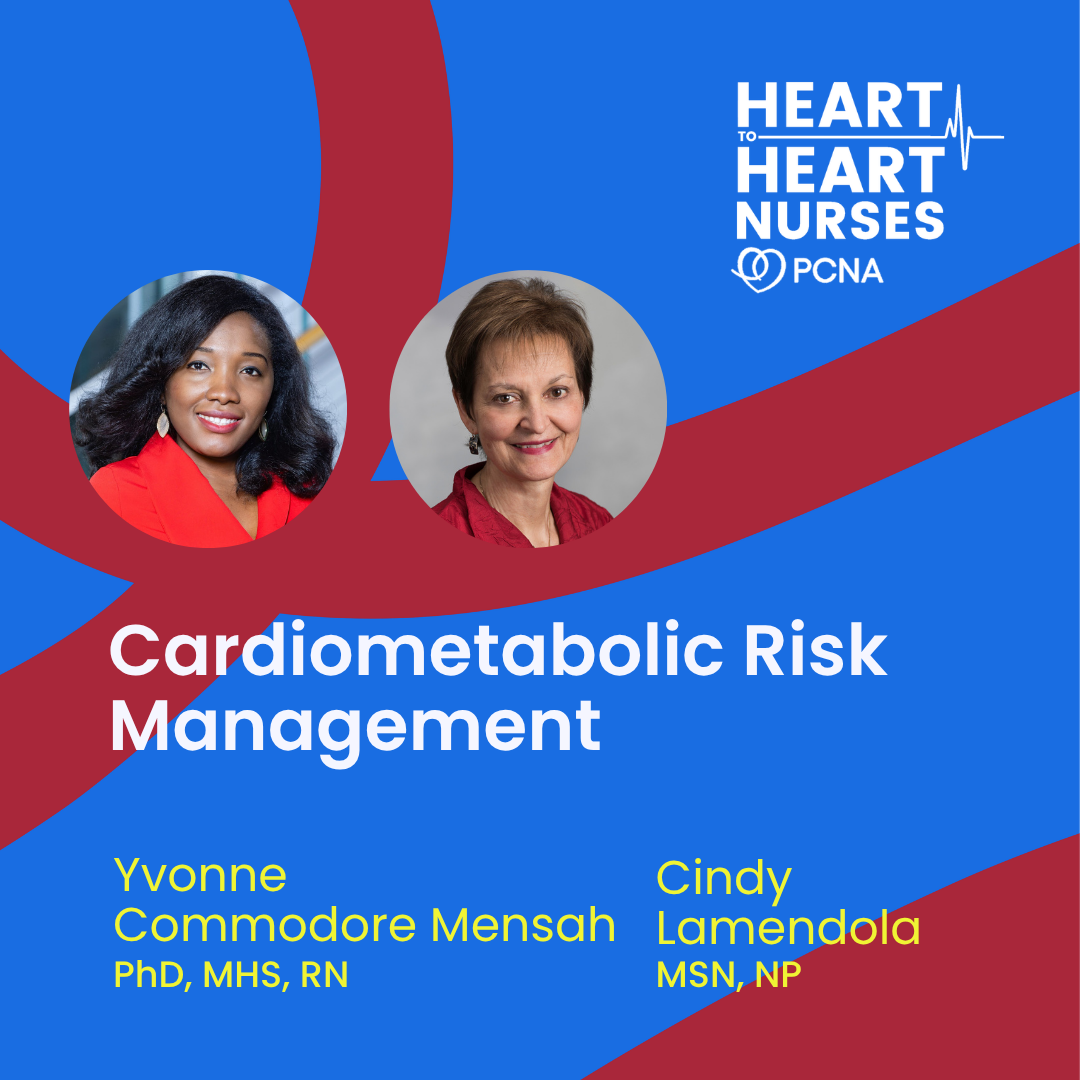
This episode equips nurses with practical tools to assess and manage patients with cardiometabolic risks like obesity, hypertension, and diabetes. Guests Yvonne Commodore-Mensah, PhD, MHS, RN, and Cindy Lamendola, MSN, NP, dive into the power of lifestyle changes to reduce these risks, while also breaking down the latest clinical guidelines and pharmacotherapies to keep your practice current and effective.
Episode Resources
I’m Yvonne Commodore-Mensah, Board President for PCNA. I’d like to welcome you to Heart to Heart Nurses. PCNA supports your professional journey with accessible continuing education, practical patient resources, and a vibrant community that understands the unique challenges and rewards of cardiovascular nursing. Together, we’re advancing the knowledge that defines excellence in cardiac care while celebrating the difference you make every day.
Geralyn Warfield (host) (00:32)
Welcome to today’s episode, Cardiometabolic Risk Management. Today we’re going to be discussing cardiometabolic assessments, risk factors, and current guideline-directed therapies. Today my guests are Yvonne Commodore-Mensah and Cindy Lamendola, and I’m going to have them introduce themselves to you. Cindy, could you start, please?
Cindy Lamendola (guest) (00:51)
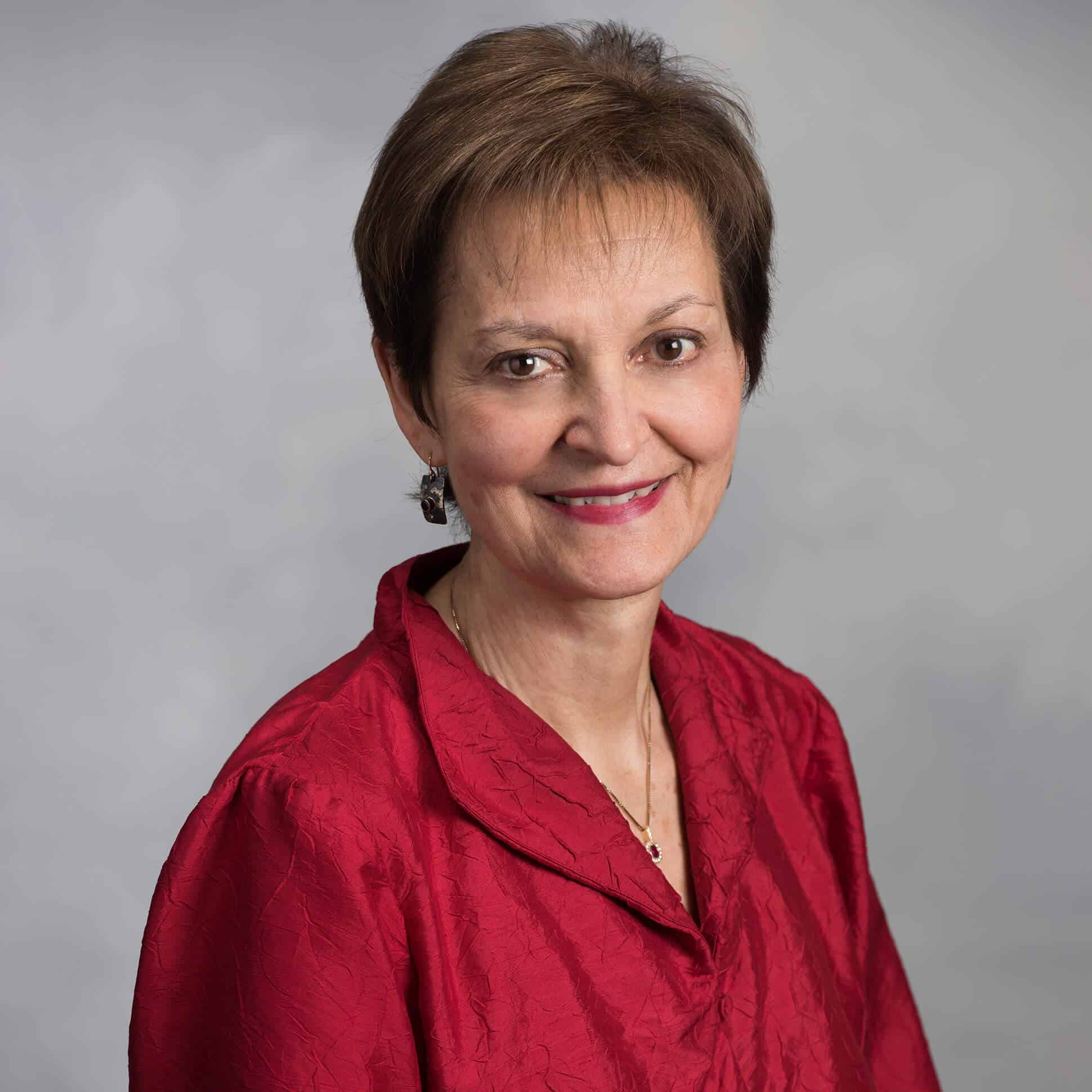
Yes, thank you, Geralyn, and the pleasure and a fun time to be with you and Yvonne today. So I’m Cindy Lamendola. I’m a nurse practitioner. I’m also a founding board member of PCNA. I currently have been at Stanford University and Stanford HealthCare for too long to tell you about. But I have a clinical practice in cardiovascular medicine focusing on actually risk factor management, a lot in lipids and a lot in some of the newer therapies for weight loss. And then I do clinical research, have done years of research in insulin resistance and metabolic syndrome and doing a lot now in lipid management, not lipid management, but some of the newer trials for currently right now for lipoprotein A lowering.
Geralyn Warfield (host) (01:40)
Thank so much, Cindy. Yvonne, could you share a little bit about yourself?
Yvonne Commodore-Mensah (guest) (01:44)
Thank you so much for having me, Geralyn. It’s a pleasure to be here. My name is Yvonne Commodore-Mensah. I’m a cardiovascular nurse, epidemiologist, and professor at the Johns Hopkins School of Nursing and the Bloomberg School of Public Health. I’m also a board member for PCNA, and my work focuses on cardiovascular health equity, really understanding and addressing the disproportionate burden of Hypertension and Cardiovascular Disease risk factors locally and globally. I also served as one of the co-authors of the 2025 Hypertension Guidelines, and I also chair the American Heart Association Global Cardiovascular and Kidney and Metabolic Health Committee as well. So these conversations are near and dear to my heart, and I’m so happy to be here.
Geralyn Warfield (host) (02:36)
Well, again, thank you both so very much for being here and sharing your expertise with our audience. Let’s begin thinking about what happens when we see a patient, whether that’s in a clinical setting, whether that’s in a community setting. We are seeing them with cardiometabolic risk factors, perhaps obesity. What kinds of assessments are essential at that first interaction, at that first visit? And the second part of my question is, how do tools like the ASCVD risk calculators influence your decision making in these circumstances when patients have multiple cardiometabolic risk factors? I’m not sure which of you would like to start, but we are so excited to dive into this topic.
Cindy Lamendola (guest) (03:15)
We’re diving right in. I just wanted to start first Yvonne, if you don’t mind, just to kind of give us the lay of the land in terms of the prevalence, which we all know that we won’t ever be out of work probably ever. These are from the hot-off-the-press 2026 Heart Disease and Stroke Statistics. And you have to, pardon me, I’m going to have to read some of this so I’ll be looking down. And I’m just going to glance on cardiovascular, obesity and diabetes.
You know, these are always a look back at what we’ve done. And this is from 2021 to 2023. We still have 130 million adults with some form of cardiovascular disease, and that’s almost 50%. And then if we look at 2021 and 23, in terms of there’s 59, almost 60 % of non-Hispanic Black females and 63 % of non-Hispanic black males have some form of cardiovascular disease. And this race category has the highest prevalence of cardiovascular disease.
We don’t want to forget about stroke. One out of every 19 deaths in the United States is attributed to stroke. And we all know that obesity is a huge issue, or we hope we’re starting to begin with some great medications to tackle this problem. So about 39 % of males and 41 % of females in the United States are obese. And the other astounding thing is that from children two to 19, we’re talking around 21%.
And then finally in terms of diabetes and pre-diabetes, no surprise, almost 30 million US adults have diagnosed diabetes, another 10 million undiagnosed, and then another like 10 almost 10 million in terms of pre-diabetes. So I’ll let you go ahead with that but that’s just kind of gives us a status count in terms of what we’ve done and where we are right now.
Yvonne Commodore-Mensah (guest) (05:15)
So as you alluded to, Geralyn, we know that often most adults don’t just have hypertension or don’t just have diabetes, they may have multiple risk factors for cardiovascular disease. And that’s why it’s important to think about this issue holistically. So tools like the ASCVD risk calculator allows us to think more holistically about an individual’s risk for ASCVD in the next 10 years or 30 years. So these risk calculators are critically important, but they are only a starting point.
I think we’ve come a long way from using the Framingham risk score. We’ve also used the Pooled Cohort equation. These risk equations have served us well, but we know that some of these risk equations were largely derived from populations that may not reflect the rich diversity of the US. And so newer risk calculators like the PREVENT equation includes populations that have been historically underrepresented, including black adults, Latinos and other groups as well. The other thing that I think is unique about the PREVENT calculator is that it incorporates social deprivation indices. Previous risk calculators only looked at traditional risk factors, so whether someone had hypertension, had a history of smoking, or their cholesterol levels. But the PREVENT equation acknowledges that when we think about risk for cardiovascular disease, there are other factors such as someone’s built environment, access to healthy foods that may affect their overall cardiovascular disease risk, but it also includes kidney function, right? Which also reflects our understanding now about the cardiovascular kidney metabolic syndrome nexus, right? So we are looking at all of these risk factors more holistically.
And it also extends how we think about estimating risk beyond just 10 years to also what, a 30 year risk because we know that now there are cardiovascular events in young adults, right? So we used to think that people in their sixties and seventies only had these cardiovascular events, but some of these cardiometabolic risk factors are showing up even earlier because of the growing burden of obesity in our nation. So we are seeing higher rates of pre-diabetes, but also earlier hypertension and dyslipidemia in young adults.
So I think that in my practice and my practices in the community, so I do a lot of work on engaging faith-based organizations and community members and increasing awareness of cardiovascular disease. So what does these calculators do is help us to start a conversation. So for instance, if you have someone who has pre-diabetes and a BMI of, let’s say, we can talk about the risk for cardiovascular disease in the next 10 years versus 30 years. And that helps to frame the urgency of action, right? It shifts us from, we’ll wait and see to if we don’t intervene, your risk of developing cardiovascular disease in the next 10 years is X. But another thing that’s unique is that sometimes people don’t understand some of these risk scores. And so it may be also helpful to communicate something like a heart age.
For instance, even though you may be 40 years old, you have the heart of a 50 year old because of the risk factors you have, whether it’s hypertension, diabetes, et cetera. So I think it’s always important to keep in mind that these risk calculators don’t replace clinical judgment. So if the calculator provides a number, we still need to have a conversation with the individual to really understand what is their housing condition? What is their access to healthy food? Do they have health insurance? So some of these things may not be captured in a calculator, but may be captured in a conversation. And it’s important to have that conversation and have a more holistic view of an individual’s risk for heart disease.
Cindy Lamendola (guest) (09:32)
And I’d like to add on that, thank you, that was excellent to give that overview picture of how looking at the entire patient. And then maybe you’re still kind of in this intermediate stage and you think, well, you know, I feel like they’re really at high risk. And as you said, Yvonne, you can look at their 30 year risk, you can also go and look at a lifetime risk to help you make a decision. And you can look at enhancing biomarkers. So you could look at their family history. You could look at if they had just for women gestational diabetes. Do they have chronic inflammatory issues with rheumatoid arthritis or psoriasis? Was it a woman that had a premature menopause? And then I think some things that don’t, when we think about lipids a lot, we think about LDL, but also hypertriglyceridemia is really important in this patient population. So we want to look at that too. So some more ideas, LP(a), although not necessarily higher in this population at all, but another risk factor that could then say to us, we really need to, we want to do a lifestyle, lifestyle corner of prevention for everything, but we might want to begin as you say, maybe a conversation and possibly hopefully some medication if we need it to lower those risk factors.
Geralyn Warfield (host) (10:51)
Cindy, I appreciate the fact that you have brought us to our next point, which is we have now this way for us to assess risk, but the next step is addressing that risk. And lifestyle is the kind of the undercurrent, the baseline for all of the things that we’re asking our patients to do in our conversations with them. So I’m hoping we could talk a little bit more about the types of dietary patterns and physical activity routines that have the strongest evidence for reducing cardiometabolic risk.
And along with that, how do we individualize that for patients? Because each patient has a different perspective when they come in, has a different motivation when they come in, and might have different results when we see them. So how might we go about identifying what those patterns and activity routines might be?
Cindy Lamendola (guest) (11:38)
I can give you just, think I’ll give you a start, give you just an overview of how they can affect the risk factors. And I’ll mention some things and I know that Yvonne will have much more to add, but if we’re looking at some of the tools, it would be the heart healthy diet we want to look at. We want to look again at physical activity and that would be recommending both aerobic and weight resistant training, and then weight loss, and then of course smoking cessation. And then one thing I didn’t add earlier was we’re now switching over to alcohol cessation too, or certainly a decrease in alcohol intake. So we do know that the DASH diet can decrease blood pressure by 7 to 11 millimeters of mercury. So that’s pretty good, right? It can reduce triglycerides and it can reduce glucose. The same thing with physical activity. You can get a two to five millimeter reduction in systolic blood pressure. And then depending on your amount of exercise, you can get a decrease maybe in triglycerides. I always try to say to patients, you know, there’s three key things that can really be impacted by physical activity, weight loss and diet and those would be glucose, trigylcerides and blood pressure. And I’m not stealing your thunder, Yvonne, you can talk more about blood pressure. And the same goes for glucose. But these are just giving us some numbers that if we can even give a few numbers, I think maybe our patients will perk up a little bit and say, okay, maybe I can do that. And then I know Yvonne will talk about like, how can we engage them and how can we squeeze out of them like what do they like to do and how confident they are that they’re going to start doing that.
Yvonne Commodore-Mensah (guest) (13:34)
So just to build on what Cindy just shared, I think the evidence base is quite strong and consistent across dietary patterns. And people like to use the term diets, right? But we have the DASH, DASH standing for Dietary Approaches to Stop Hypertension Dietary Pattern. We also have the Mediterranean Dietary Pattern. People talk about plant-based eating patterns as well. And all of these show meaningful improvements in blood pressure, cholesterol, if people adhere to them. And so that is one of the challenges in terms of lifestyle. And we have to acknowledge that it’s hard. And so when we’re having these conversations with patients, it’s important to stress that the evidence is strong and provides support in terms of adhering to these recommendations.
So the challenge I see is that when we talk about, for instance, the Mediterranean diet, I’ll disclose that recently my primary care provider told me my cholesterol had increased. And she sent me a note in my chart or my patient portal. And the message said, adopt a Mediterranean diet. And that’s what she said to me. And being a health care professional, I knew exactly what that meant.
But what she didn’t know is that I was born in Africa. My diet reflects my cultural background. So what does the Mediterranean diet mean to an African or an Indian or a Japanese person? So when we talk about dietary modifications, it’s important to really honor people’s cultural food traditions. So for instance, one of our trials, we have worked with an African dietitian to support African immigrants in the US to change their diet, people who had pre-diabetes, who had obesity, they were able to have meaningful reduction in their weight, their blood pressure. And it was because we didn’t just find any dietician. We actually hired someone who was a certified dietician, but also understood sort of the African diet and was able to tailor the education to meet their needs. So I can’t say enough about really making sure that we understand who our patients are, where they’re coming from, and also referring them to see a dietitian and acknowledging or honoring their food traditions as well.
And Cindy talked about physical activity. We know exercise is medicine, and it’s one of the ways that we can improve cardiometabolic health. And the recommendations have now shifted from, you have to you know, get 150 minutes of moderate intensity or 75 minutes of vigorous intensity to getting some physical activity is better than nothing. And I think that can be very empowering when we talk to patients because there are days when most of us sit all day behind computers. and you can feel very defeated when you don’t meet those guidelines, but the new recommendations highlight the importance of some physical activity. So if you get 10 minutes it’s better than nothing, right. And walking can be the simplest and healthiest form of physical activity. And now one thing I’ll say about physical activity is that apart from weight loss, which helps to or reduce cardiovascular disease risk, physical activity also improves insulin sensitivity. So when we educate our patients about the benefits of exercise and when we say it’s medicine, it’s good in terms of helping you to reduce your weight if you have obesity, but it also helps your body respond better to insulin that your body generates. And it can also seem intimidating to sign up for a gym membership. For many people, they work two jobs and that’s not going to work. So how do we think about exercise prescriptions that fit people’s individual lifestyles as well?
Cindy Lamendola (guest) (17:35)
And I’d like to add on to that because that’s exactly right. You must ask the person what in terms of it, we focus just on exercise. What do you like to do? I mean, I’m not going to tell somebody to like to be on a treadmill and they go, I hate the treadmill. I like swimming. OK, great. So you start with that conversation. Like, what do you like to do? And then I usually try to spend as you, Yvonne, I do spend more time on engaging and coaching a little bit and then asking them about their barriers and asking them about buddy systems if they don’t want to join an organization, the gym, the YMCA, whatever. Obviously, cardiac rehab comes up in front for anybody that has either very high risk or cardiovascular disease.
But so when you can talk to your patients and get them involved and get them to answer questions, what do you like and I also do recommend people that don’t seem to have any, urgent need to do anything. It’s like, well, how about you can get up, get up off your seat either three times for 10 minutes or two times for 15 minutes. Just walk around or walk and talk to somebody and they, you know, they perk up a little bit and they go, I can, I can do that. I can do that. Then we try to negotiate a day when they’ll start.
And then I think following up with you, Yvonne, I think follow up with these patients is very, very important. If you want people to make behavioral changes, you need to follow up with them. A phone call, another visit, you can’t see the patient in a year and expect them to get to really accomplish the goals that they really do want it. But as you said, if you’re working two jobs or you’re working at work and home and you’re exhausted and you have a family and all those other obligations. It’s difficult to make these changes.
And then one last thing, I agree 100 % about dietary, it’s just kind of amazing, but changes. And I try to tell people, I say diet, I’m just talking about healthy eating. It’s not a diet. It’s not a diet. And we’ll work out something that, you know, works the food you like and, even though I like pasta, I don’t want to give up my pasta. Other people like rice. I’m thinking, you don’t have to give it up. We just like do a little less and put lots of vegetables on top. So it’s always just coming from what does the patient want? What can they do? And how we can help them achieve it. And don’t get discouraged as providers because it takes a long time.
Geralyn Warfield (host) (20:17)
As we’re talking about the importance of lifestyle interventions, is there any difference in outcomes when we have these lifestyle interventions emphasized before medication or when they are emphasized together with medications? Is there any difference there in terms of outcomes?
Yvonne Commodore-Mensah (guest) (20:35)
Yeah, Geralyn, this is a very important question. And I think the field has evolved significantly. For decades, we had this tendency to try lifestyle for three to six months before initiating pharmacotherapy. And I think we are learning that they should be complementary because for some reason clinicians can be very optimistic, but also that’s not to negate the importance of lifestyle modification. But if you see someone who comes in with a blood pressure of 150 over 90 and they’ve had a pattern of, you know, having elevated blood pressure, they have a strong family history of cardiovascular disease risk. They have other underlying risk factors. It’s insufficient to say, let’s do lifestyle for another three to six months because for that person, that time that we wait, this person can experience a cardiovascular event. So it depends.
But I think that framing has shifted to lifestyle and medications as being complimentary, not competing approaches. And I think that it also depends on the individual. As I alluded to, if someone has a pretty high risk of cardiovascular disease risk, we should talk about lifestyle and ensure that they are on the appropriate, you know, guideline directed therapy and make sure that as they work on making these changes to their lifestyle that they are getting appropriate therapy medications to lower their risk of experiencing a cardiovascular event.
And the good news is that over time, if they are successful in this lifestyle change, modifications can be made to their therapy. So for instance, if you start with two blood pressure lowering agents, because the blood pressure is high and you see that the patient has lost 10 to 15 pounds, right? And blood pressure has improved, there’s the opportunity to maybe lower the number of pills that they’re taking and they may end up taking just one pill. But I’m very mindful of this conversation in terms of waiting and seeing, because in some cases we wait and we never see this person again. And the next time you may see them is when they may have experienced a cardiovascular event.
Cindy Lamendola (guest) (22:55)
Right. And I definitely agree with that 100%. So we do have some data. One of the biggest trials we had was the diabetes prevention trial where basically they had very intense lifestyle. So I think people need to be clear about that. But those that lost between five and 7 % of their body weight as well as intense physical activity and very good nutrition decreased their risk from going on to get diabetes. So we know it works, that we know it’s very, very difficult. We have other studies even in secondary and even with people with diabetes. So we have to do it together and not separately, but we can, we have that opportunity for people that are, they’ve come in because they’re worried about themselves. They know they have a family history. We look at their risk factors and just for maybe we can negotiate because a lot of people, as we all know, don’t really want to take medicine. So we say, okay, we can give you some time because your risk is low right now. And then we can really even focus more on what they can do. And again, the follow up is very important. We don’t want them coming back a year later with nothing done and their risk now is higher. So I wanted to just add that in.
Geralyn Warfield (host) (24:14)
We’ve been discussing individuals that have multiple comorbidities in much of our conversation today. And how do you as a practice, as a health care professional who’s providing care for individuals with multiple things going on? How do you individualize guidelines based care for them?
Yvonne Commodore-Mensah (guest) (24:32)
I’ll start off by talking about the 2025 hypertension guidelines, which I had the privilege of contributing to and sort of the broader cardiovascular kidney metabolic framework from the American Heart Association, which actually represents a paradigm shift because historically we’ve sort of looked at these risk factors very separately and the way we provide healthcare has also treated them very separately. So if you have hypertension, you may go to a hypertension specialist, go to an endocrinologist if you’re dealing with diabetes, if you have kidney disease, someone else, you go to an nephrologist and not acknowledging that for many patients, they may have a lot of comorbidities as you suggested.
We’re no longer just treating one condition, but really treating a syndrome, right? One interconnected syndrome that includes cardiovascular, kidney and metabolic health. So in thinking about individualization, I think there’s been a lot of innovation when it comes to therapies, right? To treat or manage a cardiometabolic disease of risk. So for instance, on GLP-1 receptor agonists and SGLT2 inhibitors are remarkable in this regard. So we know that these agents provide cardio protection, there are metabolic benefits, but also, kidney protection as well. And all of this in one agent, which is quite remarkable.
So, for the right person or the right patient, that’s more aligned with precision medicine where we are also reducing pill burden. So it’s amazing the innovation that has occurred in this space. And it makes me also think about treatment burden. So when you have patients with multiple chronic conditions, if they want to see different providers, they are often like juggling keeping different appointments and that makes things even harder for them. So I think that’s an opportunity for us as a healthcare system to think about how we make managing multiple chronic conditions more convenient for the average person who can only take so much time off for healthcare.
So also thinking about, we talked about lifestyle, but what does lifestyle change look like in the context of also guideline-directed care, but also access. It’s something we haven’t talked about yet, but these wonderful therapies are powerful, they work, but access may not be equal. So that’s an opportunity as we think about individualization to also think about how we may promote access to these therapies as well.
Cindy Lamendola (guest) (27:22)
So I would add to that that I want to say that I think nurses and advanced practice nurses really make a difference here in this realm. I think that being able to start people on some of these medications and being able to follow them, being able to not just say, okay, you’re going to do this with your diet, but give them handouts. We know that PCNA has many tools that can help the provider and the patient. So we want to give them healthy eating, follow them up closely. Some people get very discouraged, make changes when they need to be changed. it’s absolutely those, the two classes of medications, the SGLT-2s and the GLP-1s and the GLP-1 and the GIP are something that we haven’t seen since we saw the statins back in the 1980s.
And it’s not just the endocrinologist or the nephrologist, but it’s also the cardiologist. Everybody’s putting them on, so that’s kind of nice. And it can be done in the community and in our offices. And as you said, Yvonne, it doesn’t just mean weight loss. It means lowering blood pressure, lowering diabetes risk. We want to do it in a way that they lose weight slowly so they don’t lose much muscle mass and eat healthy. But this could be a game changer in terms of changing, well, if we look at our statistics, let’s say in the next 10 years, they might be so much different, we’d be so happy. But the number one thing as you say they have to be available to everybody. They have to be available to everybody that needs them. And that’ll be something that hopefully PCNA continues to take on and other providers and other health care organizations. Because I think these two medications address so many diseases. And we didn’t talk about also heart failure, that it could make a big difference in the future for all of our patients.
Yvonne Commodore-Mensah (guest) (29:25)
So building on what you just said, Cindy, I think it’s wonderful that we have guidelines that reflect the best evidence that we have on managing cardiovascular disease, kidney disease, reducing risk for complications from diabetes, et cetera. But we’ve also made progress when it comes to acknowledging that it’s not enough to have a guideline that does not consider some of the structural barriers when it comes to drivers of cardiometabolic risk. So thankfully, the PREVENT calculator includes social deprivation, which is a concrete step towards thinking about an equity-informed approach to risk assessment. And these are important advances, but they’re persistent gaps.
So we know that the guidelines for how we should be managing cardiovascular disease risk. However, there are occasions when people don’t get prescribed medications, even when they have, for instance, pre-diabetes. So estimates suggest that 80% of patients with pre-diabetes receive no treatment. And they receive no treatment for a number of reasons. It’s not all related to the healthcare provider. It may be related to the patient and your preference. It may also be related to the healthcare system as well. So I think that we need to address some of this systemic factors in terms of improving access to treatment in the context of some of these innovative therapies. Prior authorization is a challenge that a lot of clinicians grapple with even when a patient may meet the criteria and have underlying cardiovascular disease risk factors, they have to go through these processes to get approval to prescribe these medications that are supposed to improve their cardiometabolic health. This requires that we stay engaged in advocacy efforts to ensure that all our patients who qualify or are eligible for therapies receive them appropriately.
The guidelines are great, but they’re also not entirely prescriptive. It’s important to have conversations with patients and understand their unique context. And when appropriate, if they need to be prescribed any of these innovative therapies, we need to ensure that ⁓ we’re practicing team-based care and bringing the right people into our team to help us overcome some of these systemic barriers that may limit their access to these therapies.
Geralyn Warfield (host) (32:03)
We will be right back after this break.
We are back for our discussion with Cindy Lamendola and Yvonne Commodore-Mensa about cardiometabolic risk management. And I’d like to turn the tables just slightly towards being more patient-facing. And how can we help our patients be more adherent with their medication by effectively discussing the benefits and risks of the medications that we are suggesting for them?
What are some strategies that you could offer for our audience?
Cindy Lamendola (guest) (32:35)
Well, I think it’s important to have the trust of your patient. So communicating with them, for me, either through myself and appointments or through our nurse team and our physicians, to let them know that we care and we are there to help them make these changes. Or referring them out to a rehab program or another program that you know that will also tag on and help them to make some initial changes. I find that a lot of people are resistant to taking medication. I mean Yvonne when you talked about the pre diabetes population or patients with pre diabetes I think about many people that don’t want to go on something like metformin which has been around for over 60 years and they don’t necessarily have a reason, they just somehow think that medications are detrimental to them for some reason.
So I think we then have to educate them again with research, with the tools, maybe some handouts, some education. I also try to point them to if they’re going to use the computer to look up things. I try to point them to using the medical-directed information and not Dr. Google per se, but I feel like they like that. But I think it’s difficult. I think you’ve talked about two important problems. One, things aren’t getting addressed and they’re not getting started on it. Or two, they might be bringing it up, but then the person says no. I think we have to say that’s okay. We’ll bring them back and we’ll do it again because sometimes people need it two or three times before they’re going to agree to it.
And I, that’s my approach, in general. I think we can’t get discouraged again. We have to, I think a lot of people, if they trust us and if they trust the science, they’ll eventually go with the medication. And some people again, don’t have access, can’t afford it. That can be another issue too. They’re already on five to seven medications and then you want to add another one. And if someone said to me, well, you may not think $20 a month is a lot, but $20 a month for one medication times 10 or by seven, that’s a lot of money. So there’s a lot of barriers, I would say. So I think we can start talking to the patients about their barriers. Like what is your barrier to taking the medication? How confident are you that you’re going to be able to do this? And you can give them a scale and they’re less than seven.
You can be pretty sure they’re not going to take their medication even if they pick it up. So those would be some of the tools. think this is a, the other thing we can use as providers, can maybe work with in our institutions. Some of them have goal-directed medical therapy that pops up when someone has heart failure and then it’s listed as medications that they should be on. The thing of it is if they’ve been in the hospital, they’re put on them, but when they go home, they’re not taking them, they couldn’t get them, they’re too expensive. So again, got to do follow up on those people and then find out what the barriers are and how you can hopefully overcome them.
Yvonne Commodore-Mensah (guest) (35:43)
And maybe I’ll add to what you just said, Cindy. I love what you said about trust. It’s important that as clinicians, our patients trust us. It’s also important to acknowledge that managing chronic conditions can be very challenging because these are often medications people have to take for the rest of their lives. So adherence may seem simple to a clinician and you may think, just take your medicines as prescribed. But we have to start by acknowledging that it can be hard. And so not having a judgmental attitude when we’re talking to our patients about times when they may forget, they may skip their medication because they had too much fun over the weekend, right? It’s important that they know that we acknowledge that they’re human, we’re human, and sometimes we forget.
But when we think about how we communicate or convey risk for cardiovascular disease, it could be very easy to say, well, if you take your medications as prescribed you’re lowering your risk of having a cardiovascular disease event by 10% in the next 10 years. For a lot of people that goes way over their heads, it doesn’t reach them. That message does not reach them in the same way as asking a question, asking them what they care about. So for instance, if someone says that, they want to be around for their grandchild’s graduation, right? You’ve provided an anchor, something that they can look forward to and talk about how for instance, adhering to the regimen may help them not to just live longer, but live a healthier life, a life free of stroke, a life free of kidney disease that will result in, for instance, dialysis three times a week, right? These are all things that may take them away from their loved ones.
The last thing I’ll say is that we also have to acknowledge that in the context of cardiometabolic risk, the regimens can be very complex. And I think, Cindy, you already said it. If you’re taking four or five medications, it’s a lot. And so what can we as clinicians do to simplify regimens whenever possible? Can we prescribe single pill combination therapy instead of making them take medications in the morning, afternoon, evening, reducing it to morning and evening may seem simple, but for a lot of patients, it may make it easier for them to be adherent to therapy. But we should ask good questions. And one of the questions we can ask is, what gets in the way of you taking your medications or adhering to some of these lifestyle recommendations, and listen when they answer. Talk about how you can partner with them or bring other members of the healthcare team to work with them to partner to improve their cardiometabolic health.
Cindy Lamendola (guest) (38:37)
I think that’s great. Yeah, I’m always trying to ask people, how do you remember to take your medications? And, you know, if there’s no real good answer, maybe trying to work with them and offer some ideas or ask them what are the ways it will make it easier, as you said, for you to be able to take these? It’s just it’s an ongoing conversation and you have to have it every time. You can’t assume just because one time they said they got them all.
And I’m with you, I mean, sometimes it’s very evident they didn’t take something based on their lab results, but I just wait for them to say, hi, I was on a holiday and I was having a good time. And I say, yeah, okay, it’s time to get back on the wagon, it’s okay. Everybody does it, everybody does it. Making it more human.
Geralyn Warfield (host) (39:24)
I have a final question for each of you. And that is if you could give healthcare professionals one takeaway for improving, I should say cardio metabolic risk management, what would that one thing be? Yvonne, I’m going to start with you.
Yvonne Commodore-Mensah (guest) (39:40)
For me, I’ll say think earlier and more holistically. I think the cardio metabolic risk journey starts way earlier than or before when someone experiences a myocardial infarction event or has a diabetes diagnosis. It often starts with insulin resistance. It starts with overweight, then obesity, right?
So we need to be intervening much earlier than we historically have. And instead of adopting a wait and see approach when it comes to improving health, we need to be having these conversations much earlier. If you have a 30 year old and you’re talking with them about their health, it’s important to not just talk about their 10 year risk, but 30 year risk that if we continue down this path, if we don’t control your blood pressure, if we don’t control your cholesterol, in 30 years, your risk of developing an event might be X. So I think we’re not having these conversations early enough and we need to focus on prevention. And that’s why it’s an honor to be a member of the Preventive Cardiovascular Nurses Association where we are spreading the message in terms of prevention of cardiovascular disease. And so we need to think earlier and think more holistically about prevention as well.
Cindy Lamendola (guest) (41:04)
That was great. I would add, which is our tagline, is across the lifespan. So there’s so many important things to say, but I think remembering also about the patient’s family. So when you start with them, then you can start asking them about their children. And that may help actually bring them in to realize it could be a team effort. You know, you can help your children eat better, exercise together, those kinds of things, because we know that as Yvonne has pointed out, and we know that this disease starts early, and we need to start early, and you can never start early enough, right? So think that will be my takeaway message right now. So when you’re thinking about your patient, move out and think about their family. And it could be their siblings also or their cousins, I think their children, they make a big impact when you’re asking them about their children and have they had their height, blood pressure checked, have they had their lipids checked, what are their weights, and I think they kind of buy in. And I guess I would say again, as I think both of us have said, ask the patient about them. Find things that they like. Make a connection with them and develop a trust. Follow up. Don’t wait a year to see your next patient. It’s going to be too late.
Geralyn Warfield (host) (42:25)
Thank you so very much for being a trusted presence for PCNA in this particular podcast episode and in everything that you do. We appreciate you sharing your expertise about cardiometabolic risk management and how to address that with our patients. We’d also like to thank our sponsors Medtronic and Merck. And this is your host, Warfield, and we will see you next time.
(42:45)
Thank you for joining us for this episode of Heart to Heart Nurses. We invite you to visit PCNA.net for education and resources that will empower you to provide preventive cardiovascular care with confidence and expertise.
Topics
- Diabetes
- Risk Assessment and Management
Published on
June 15, 2026
Listen on:

PhD, MHS, RN, FAAN, FAHA, FPCNA
MSN, NP, FAHA, FPCNA
Related Resources