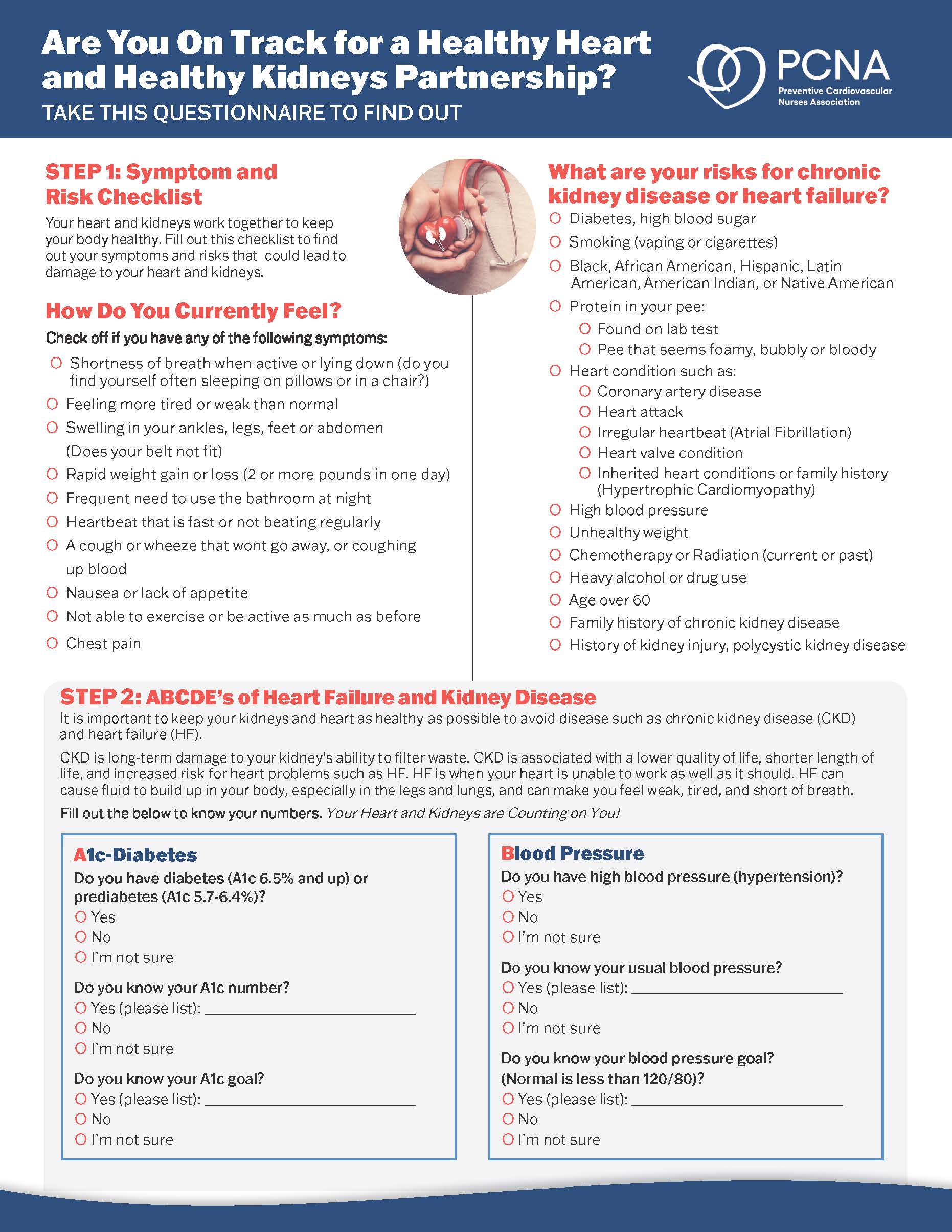





Cardiac-kidney-metabolic syndrome and liver health are inextricably linked, and early treatment reduces the risk of cardiovascular and other diseases. Guest Sun Kim, MD, MS, addresses the interrelationship of these systems, treatment possibilities, and the issue of muscle mass loss in weight loss.
Episode Resources
- CE course (complimentary): Beyond the Scale: Cardiometabolic Strategies for the Heart of the Matter
- Patient Education Sheet: Cardiovascular-Kidney-Metabolic Syndrome: What You Need to Know
- Podcast Episode: CKM & Early Intervention
- PCNA Education and Resources on Chronic Kidney Disease

[00:00:00] I’m Yvonne Commodore-Mensah, Board President for PCNA. I’d like to welcome you to Heart to Heart Nurses. PCNA supports your professional journey with accessible continuing education, practical patient resources and a vibrant community that understands the unique challenges and rewards of cardiovascular nursing. Together, we’re advancing the knowledge that defines excellence in cardiac care while celebrating the difference you make every day.
Geralyn Warfield (host): (00:31)
I’d like to welcome our audience to today’s episode where we are going to be speaking about cardio-kidney-metabolic disease with our guest, Sun Kim. And Sun, could you introduce yourself to our audience, please?
Sun Kim (guest): (00:42)
Sure. So, I am an associate professor at Stanford University. I’m an endocrinologist. My clinical focus is predominantly on caring for patients with type 2 diabetes, obesity, and a disorder called PCOS, polycystic ovarian syndrome. My research focus is really on looking at new technology, new medications to help enrich the lives of these patients.
Geralyn Warfield (host): (01:12)
Well, one of the things about these patients is there is often a lot going on. And to provide high quality care, we really need to be looking at them holistically and not piecemeal. And I’m wondering if you could describe for us what that looks like in practice and what we should be doing perhaps.
Sun Kim (guest): (01:27)
So interesting. There are certain buzz terms that come up, and they get so popular. Like for instance, longevity is super popular. Like we never cared about living a long time before. So, I think the buzz word right now, you mentioned one, holistic, integrative, comprehensive, precision.
But I think it’s really important for our patients with metabolic diseases because they really have a shared pathophysiology. I said I take care of patients with type 2 diabetes, but many patients with type 2 diabetes have dyslipidemia, hypertension, they have kidney disease, they have liver disease, and neurodegenerative diseases. And they all sort of start from the same root. And I call it like this common soil that leads to these diseases.
And we should be focusing less on the end results, which obviously we need to take care of patients with the greatest complications, but really starting early at the root to sort of prevent end stages of disease.
Geralyn Warfield (host): (02:35)
It’s not always easy to do because those endpoints that you’ve described seem so far in the future. Maybe I can’t feel that my cholesterol is high, so I don’t really have the impetus to treat. But all of those strategies that we put into place earlier really do have those long-term effects. And are there strategies that you might consider sharing with our audience that really have been successful for you in working with patients so that they understand the holistic view or the integrative view?
Sun Kim (guest): (03:03)
There are so many great examples. Recently, I saw a patient, and she was in her middle ages and thought she was healthy, but she was blindsided because her sister was found to have very severe coronary disease. She underwent, because of symptoms, coronary catheterization, and she is now scheduled to have bypass surgery.
So, because of that, this patient wanted to get further testing for herself and found that her coronary artery calcium scoring was very high. And she was very blindsided and thought, you know, why didn’t I ever know about this? And it just came out of left field. But when I traced back her history, this was the first time I was meeting her, she was diagnosed with hypertension fairly early. Then dyslipidemia, which was noted but never treated. So, she had this common soil.
But I think, right now, we think of diseases in isolation. And sometimes we’re not aggressive enough, because we think, blood pressure’s a little high. Let’s check back in a few months. And then a few months goes two years.
Today at this conference, which really resonates with me and which I try to do with my patients as well, is I’m very aggressive about blood pressure. I want it under 130 over 80, but you know what I see all the time is, you know, the blood pressure will be 138 and because prior guidelines are less than 140, people are very lackadaisical about really being proactive about treating these underlying issues that can grow and go on to subclinical and clinical disease.
Geralyn Warfield (host): (04:59)
And I think that’s true of a number of diseases, even dyslipidemia, where we try to encourage lifestyle modifications to try and help. And like the example that you gave with hypertension, where you were going to recheck in a few months, it then becomes a few years, then they forget, they’ve moved, they’ve changed providers, whatever the case is, then the follow-up kind of gets missed too. And so that’s one of the challenges as well, isn’t it?
Sun Kim (guest): (05:22)
So, I think there’s, be inertia on all ends. But then again, sometimes I think when you’re in earlier stages in your life and something comes up, you think, well, is it really that important? Or maybe you’re scared of it actually, and you don’t want to know, or you already know in your head, I need to do some lifestyle changes. I will readdress it when I’m better.
But I think you can treat it right then and still work on lifestyle. And if it improves, then you can go down on the medications. But I feel like an ad, but time is now to be more aggressive. And I think that’s the mindset I have. I have that for my patients. I don’t let the 130s go.
And actually, last week in clinic, I had so many patients in that zone. And it frustrates me when I’m trying to be more aggressive and then one of their other doctors will say, yeah, that’s okay, we’ll just follow up. So, I think we need better messaging for the public as well as us, in helping these patients.
Geralyn Warfield (host): (06:41)
And there’s something about cardiometabolic disease that is kind of a hidden or unthought about part of this equation, and that has to do with the liver. And I’m hoping you could address that for us.
Sun Kim (guest): (06:53)
Yes, okay, I’m so happy you brought up the liver. And I hope this goes viral because the American Heart Association came out with an elaborated vision of metabolic syndrome and they call it CKM syndrome, cardiovascular-kidney-metabolic syndrome. But I think it was a miss not to add the liver as well.
And the reason for that is many patients with the cardiac-kidney-metabolic also have liver issues, metabolic liver disease. Now, people may or may not know that the names for the liver disease have evolved over time. They used to be called NAFLD, non-alcoholic fatty liver disease, but it’s really transitioned to metabolic dysfunction-associated steatotic liver disease—wow, that’s a mouthful—MASLD.
And especially patients with type 2 diabetes, 70% have increased steatosis (fat) in the liver. But what’s more important, that fat can go on to scarring fibrosis. And individuals with more advanced fibrosis, F2 and F3, are at high risk for developing cirrhosis, which is the final stage of fibrosis. In addition, increases risk for hepatocellular cancer.
And the reason I actually got really excited about the liver early on was that we did this population study and individuals that had increased liver fat, it actually doubled the risk for developing type 2 diabetes. So, after adjusting all known risk factors, just the presence of the liver fat. So, the liver fat isn’t a stagnant thing. It actually can be a window to your metabolic health.
And individuals with metabolic liver disease not only increase risk for diabetes, increase cardiovascular risk, all the other metabolic issues that we discussed. So, it’s not just a liver disease. The things actually that individuals with MASLD liver disease die from, it’s actually really cardiovascular disease. And so I think it’s important to add the ‘L’ to CKM syndrome.
Geralyn Warfield (host): (09:12)
We’re going to take a quick break and we will be right back.
Geralyn Warfield (host):
And we’re back with our discussion about cardiometabolic disease with Sun Kim. And Sun, I’m hoping you could talk a little bit about some of the treatment options that are there as far as medications.
Sun Kim (guest): (09:25)
Right. So, this is a very good time to be a physician in my world because I joke, but I feel sometimes like a superhero because some of the medications are, I even say they’re extraordinary. I think the advent of GLP-1 receptor agonists, the SGLT-2 inhibitors, have really changed the landscape of how we approach patients with obesity, with diabetes and the CKLM syndrome.
And maybe focusing mostly on GLP-1 receptor agonists, they are now indicated. So initially, they were approved for type 2 diabetes, then weight management, but they have a reduction in cardiovascular disease indication. They also have an indication for reducing sleep apnea in individuals with moderate to severe disease. They can also be helpful for type 2 diabetes with chronic kidney disease. And the latest indication at the end of last year was on MASH, or metabolic dysfunction associated steatohepatitis.
So, these drugs are indicated for a gamut of metabolic diseases. And I think having these drugs is also propelling us to identify individuals because sometimes you have a disease so you develop treatment for it. But if you have a disease and there is no treatment, then people often ask what’s the point of finding that disease if there is no treatment for it?
But I think that was the case with MASH because we’re going to work on lifestyle, but there’s no actual treatments for it. So, a lot of people are very deep in this space to discover new therapies.
But now we have two.
We have a GLP-1 receptor agonist semiglutide and another drug that works as a thyroid agonist, a thyroid receptor beta agonist. And both have been approved for individuals with MASH with F2, F3 fibrosis. So, I think it’s exciting to have these tools in our toolkit.
And those are just two, GLP-1 and SGLT-2 inhibitors, but there are increasing interest in the mineralocorticoid receptor antagonists. We always had the steroidal, like spironolactone, which is commonly used in patients, especially with heart failure. But now we have this non-steroidal, finerenone, which is approved for chronic kidney disease in patients with diabetes, with proteinuria, but also individuals with heart failure with ejection fraction of 40 or greater.
So, I think we’re going to see a lot more medications in this space, which also means that we should identify people who would be most likely to benefit.
Geralyn Warfield (host): (12:35)
Right before we started recording, you and I were talking about the kinds of questions that you’re getting about GLP-1s. Do you want to talk a little bit about some of the most common?
Sun Kim (guest): (12:42)
Sure, It’s interesting because everyone knows about the gastrointestinal side effects. So that’s nausea. Apparently nausea is the worst symptom for patients. And I guess we’ve all experienced nausea. No one wants to be nauseous. The other ones include diarrhea or constipation, or some people end up having both. But the question recently that I get the most is about muscle loss.
So, everyone, actually, doesn’t matter patients to clinicians. It’s at the top of everyone’s mind. These medications cause ton of muscle loss. And I need to kind of reel people back in and discuss what muscle loss means in the context of weight loss.
So, when we lose weight, especially in individuals with obesity who have excess fat, everyone’s goal is to decrease that fat. But as you’re losing weight, doesn’t matter what the intervention is, you are going to lose fat-free mass as well because the fat-free mass also supports the fat and half of that fat-free mass is muscle. So, there’s no way anyone’s going to lose weight and not lose some muscle.
But we’ve really honed in on the muscle loss. Let me give you an example of a patient who often does his body composition studies. And the sad thing is in medicine, body composition studies are not reimbursed. You cannot order it clinically. So, people pay out of pocket to get these done. And a lot of my patients do that. This patient had great weight loss changes. He lost 30% of his body fat. Actually, he lost 30% of his body weight and over 30% of his fat.
And when you look at his body composition after weight loss on GLP, it’s greatly improved. Decreased fat, increased lean mass. Because your body composition is really only made of fat, fat-free mass, half of its muscle, and bone. So, if you decrease fat, the other composition in proportion is going to go up.
But then if I started off this conversation and said, well, he did lose 27% of his muscle, everyone would be like, Oh my God, he lost 27 of his muscle. But, I would just say it’s collateral to all the great benefits that happen. And I’m not sure it’s a harm to the patient because that patient now is exercising almost every day. He feels great. He feels stronger. So at the end of the day, it’s about your function. What can you do after the weight loss versus an arbitrary number related to your muscle loss?
So, I guess my message here is any intervention for weight loss, you are going to lose both fat and muscle. But the important key is what is your functional capacity after that degree of change in your body composition?
But I don’t want to say that it is not important at all. I do think when people are losing weight, we emphasize the diet greatly. We want it to be of high-quality foods because most people have decreased appetite, so they’re not eating as much. So, we want to make sure their nutrient status is the best it can be. But I will tell you honestly, in the United States, even before the protein craze, people were doing a ton of protein.
So, my message is more, can you add strength training? Eat the best foods, which include proteins, but really incorporate the exercise so that you can keep most of your muscle that you can. And then having great diet, including protein, is important. But that’s not the main piece of this puzzle.
Geralyn Warfield (host): (16:46)
So, there are a lot of components to helping patients manage these complex diseases. And we’ve talked about a lot of different things today. Do you have one key takeaway that you would like to leave with our audience?
Sun Kim (guest): (17:00)
My takeaway: so, I am super excited about all the new cardio-kidney-liver-metabolic diseases that we have in our toolbox. But the thing that my patients know and I want to leave you with is I do think the lifestyle changes, especially your diet and exercise, is foundational. You really want that. You want these medications to help you to be able to do that lifelong, especially strength training. So, if any of my patients are listening, I’m still talking to you about strength training.
Geralyn Warfield (host): (17:37)
That is perfect. Thank you so very much, Sun, for being here today to talk to us about cardiometabolic disease and what the options are out there and all the questions that you get.
Sun Kim (guest): (17:46)
Thanks for having me.
Geralyn Warfield (host):
It’s been great having you here. This is Geralyn Warfield, your host, and we will see you next time.
Thank you for joining us for this episode of Heart to Heart Nurses. We invite you to visit pcna.net for education and resources that will empower you to provide preventive cardiovascular care with confidence and expertise.
Topics
- Diabetes
- Kidney Disease
- Obesity Management
Published on
November 3, 2026
Listen on:

MD, MS
Related Resources
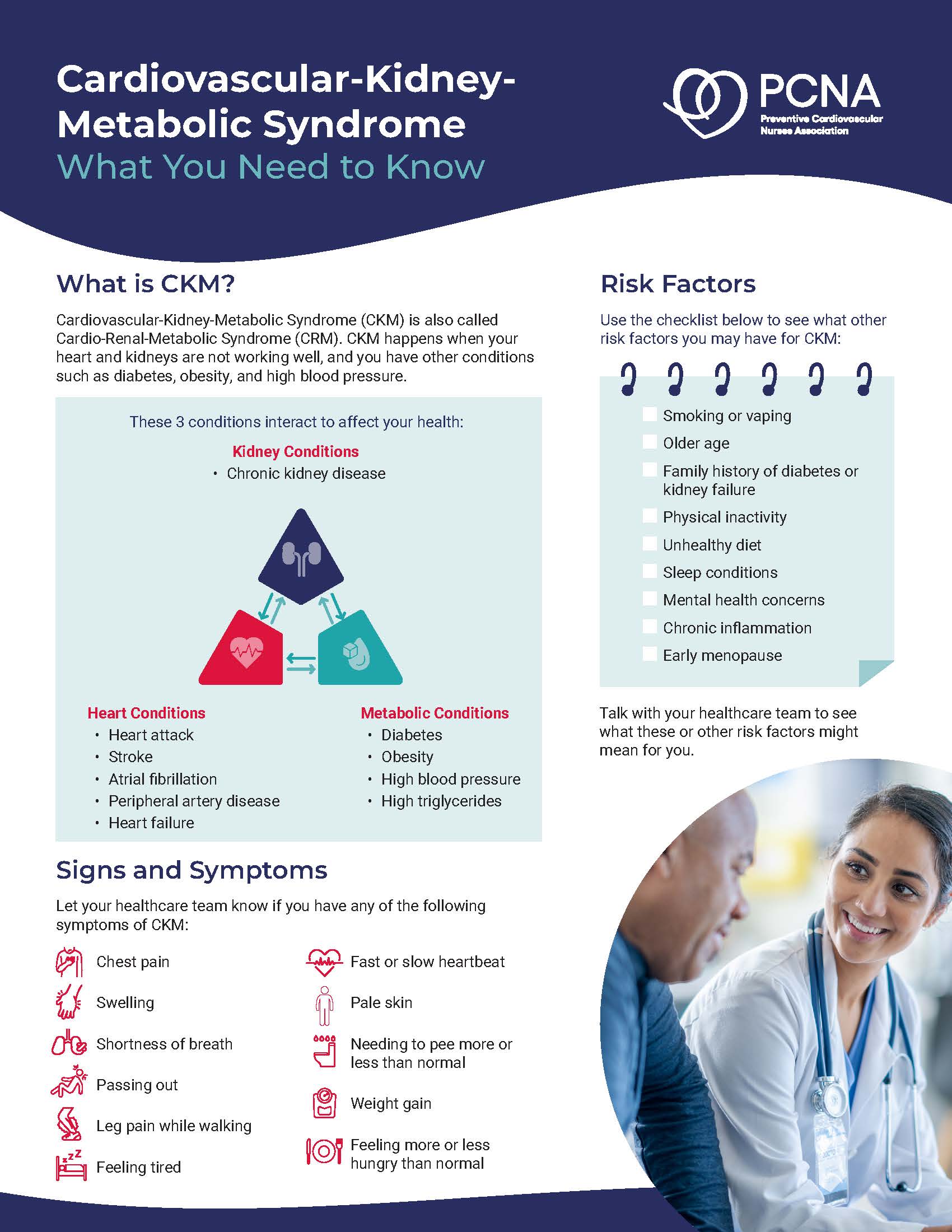
Patient Education Handouts
Cardiovascular-Kidney-Metabolic Syndrome: What You Need to Know
May 11, 2026