




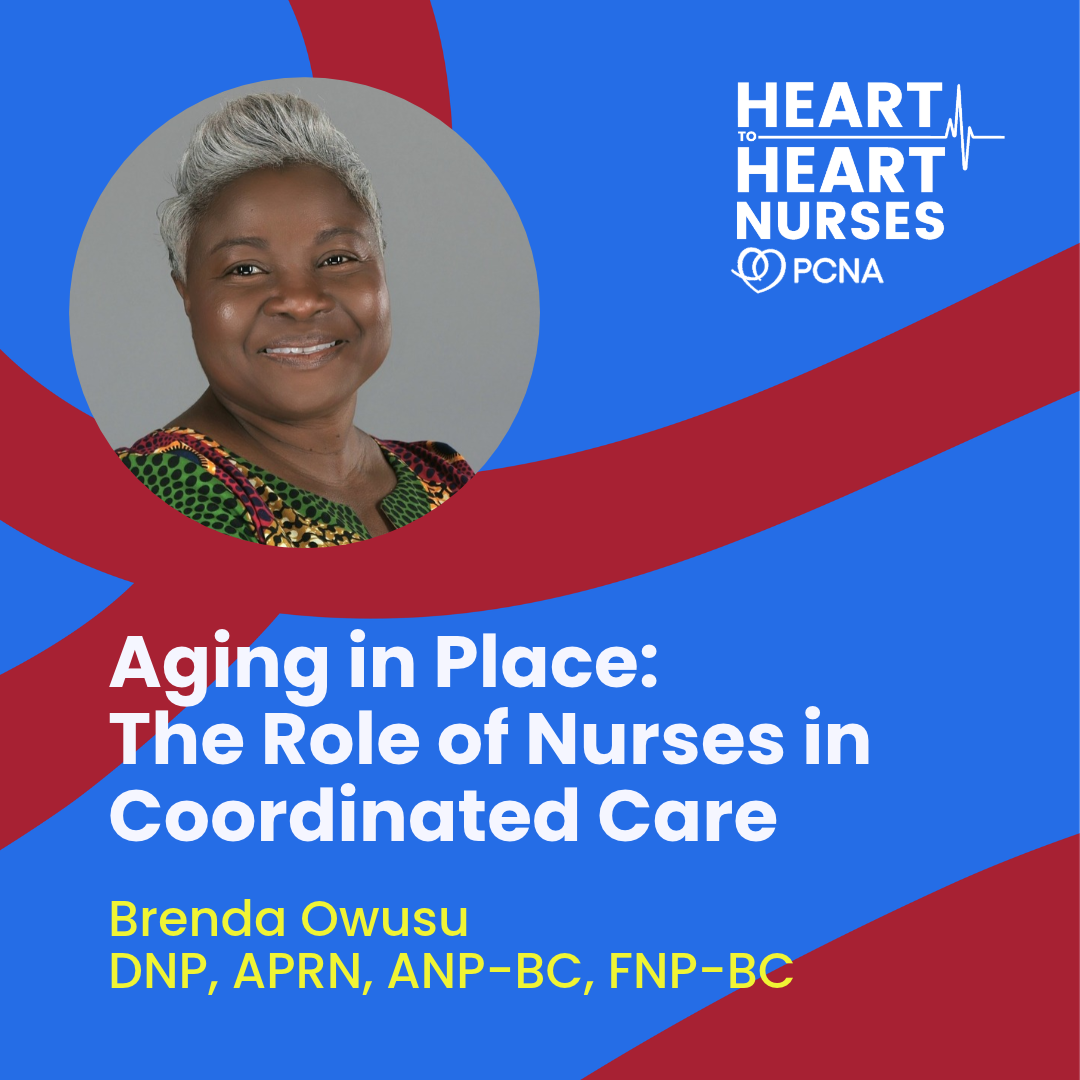
Aging in place requires that patients have the skills and support to maintain their health, function, and quality of life. Guest Brenda Owusu, DNP, APRN, ANP-BC, FNP-BC, describes how nurse navigators and other healthcare professionals from various settings can support individuals in successfully managing medication, activity, and other needs.
Related Resources
- Article: Hidden Triggers of CVD in Older Adults: Emerging Risk Factors Beyond Age
- Article: Aging in Place and Equity in Community Aging Care: Implications for Nursing Leadership(opens in new tab)
- Article: Aging in Place: Programs, challenges and opportunities for promoting healthy aging for older adults(opens in new tab)
[00:00:00] I’m Yvonne Commodore-Mensah, Board President for PCNA. I’d like to welcome you to Heart to Heart Nurses. PCNA supports your professional journey with accessible continuing education, practical patient resources and a vibrant community that understands the unique challenges and rewards of cardiovascular nursing. Together, we’re advancing the knowledge that defines excellence in cardiac care while celebrating the difference you make every day.
Geralyn Warfield (host): (00:31)
Welcome to today’s episode. We have the great pleasure of having Brenda Owusu here with us today. Brenda, could you introduce yourself to our audience, please?
Brenda Owusu (guest): (00:38)
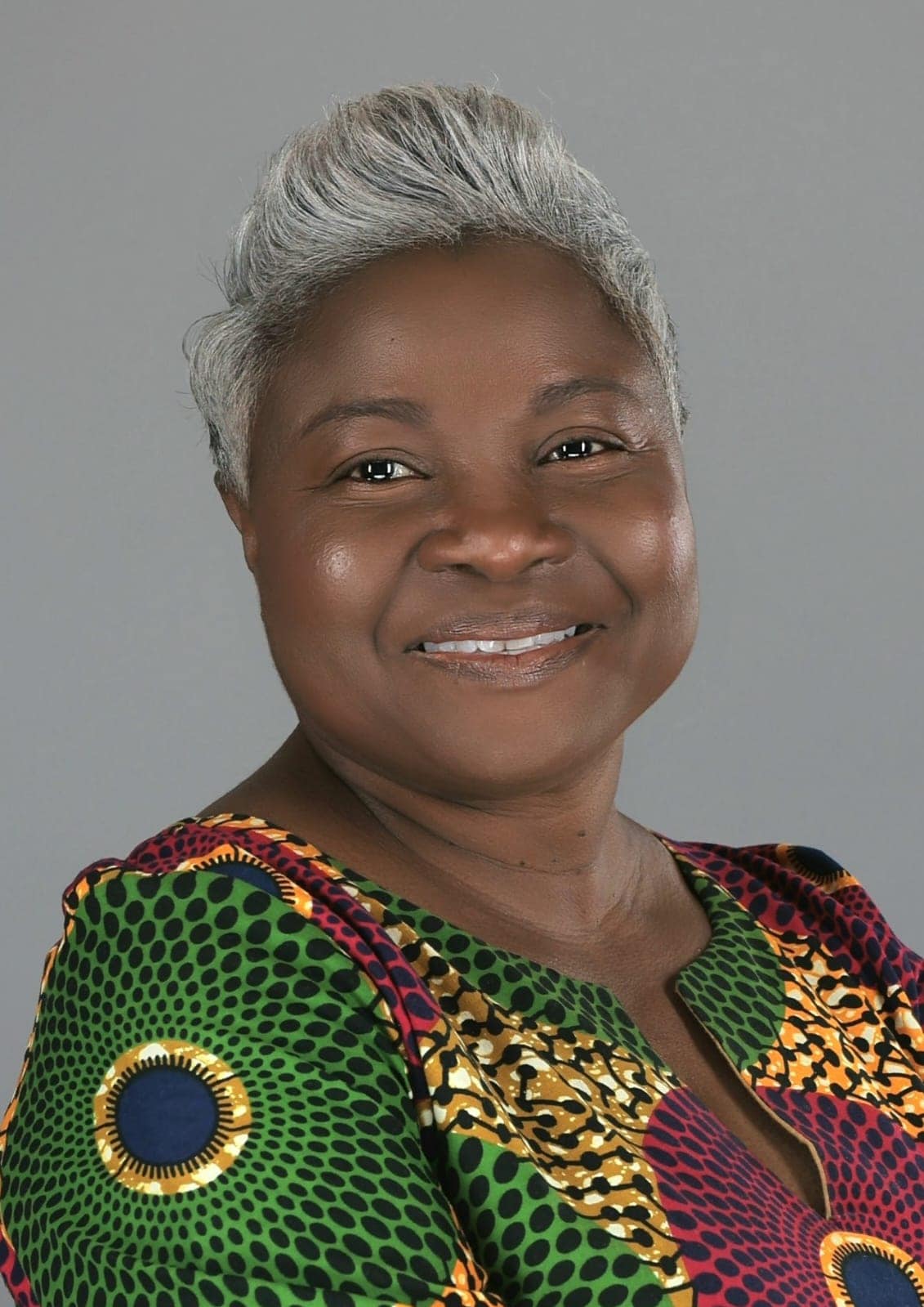
My name is Brenda Owusu. I’m a nurse scientist. I’m an associate professor at the University of Miami School of Nursing and Health Studies. And my area of research is looking at equity-centered aging and cardiometabolic care
Geralyn Warfield (host): (00:55)
Well, we have a lot to talk about today. And maybe you could talk to us just a little bit about what that means. I’m going to actually read it to make sure I get it correct: advancing aging in place through using an equity lens.
Brenda Owusu (guest): (01:08)
Yes, looking at the equity lens. Aging in place really means someone who has the ability to live at home as they age, live in their own community, and have support to maintain their health, their function, and quality of life.
With the equity lens, we want that not just to be a model for some, but for all persons, underserved population, who are the ones who are most disadvantaged.
Equity-centered is that, say you have two patients. Both have hypertension. One comes in, they have access to fresh food, they have access to transportation, they have access to support.
And you have another patient who does not have access to fresh food because it’s limited based on where they live. They don’t have access to transportation, they have to catch public transportation.
You cannot treat both persons the same in the clinical setting.
Nursing is the connection for the infrastructure to see how we can connect care to the other person. One, you can give them their medication, they go home, they’re able to take care of themselves. The other will have difficulty in terms we have to connect them to the resources that they need. And that’s what I mean by equity-focused care.
Geralyn Warfield (host): (02:33)
And I really appreciate the fact that you are looking at people’s circumstances where they are, and learning about them as a whole person, and understanding what barriers they may have towards aging in place easily right now versus who might need some resources to help them still age in place, but they’re going to need some more support.
Now, I also know that you’ve come up with a model for this. Could you talk a little bit more about that?
Brenda Owusu (guest): (03:00)
Right. The model is called, I’ve developed this model, it’s called Aging in Place Nursing Equity Model. And that aging in place equity model is one where the nurse is at the center of the model, where they are the ones who are coordinating the care. Because care is so fragmented, patients are seen across multiple settings.
And having that care coordinated, sometimes that can help prevent their risk, prevent avoidable complications. And if the patient does not have those care coordinated and the nurse is the piece that will be able to pull everything together and connect them to what they need in order for them to get help or care.
Geralyn Warfield (host): (03:50)
So, I suspect one of the key parts of making this model work is the support that they get from family or caregivers as well as the community. Is that accurate?
Brenda Owusu (guest): 04:00)
From family, from the nurse, from the clinic, because care for the person to avoid risk must extend beyond the clinic. It must extend into the patient’s daily lives, into their home, into their community. In terms of providing—even if it’s telehealth—checking on them, making sure that they have what they need, any resource that is missing, the nurse will connect them to it. And that is the nursing equities portion.
Geralyn Warfield (host): (04:33)
I understand about the nurse being the coordinator of care, but where is this nurse based? Are they in primary care? Could they be in the cardiovascular office? Where might they be housed?
Brenda Owusu (guest): (04:42)
It could be anywhere, because nurses work across settings. And because they are across settings, they are in interaction with the patients. The patient need, regardless of what that need may be, the nurse is the one who will be able to connect them to whatever resources or whatever barriers or challenges that they have that will prevent them from maintaining their health.
Geralyn Warfield (host): (05:08)
And so, is one of the roles of this nurse navigator position to actually coordinate with other healthcare team members?
Brenda Owusu (guest): (05:15)
With other healthcare teams, with a social worker, with community health, and so forth, different resources.
Geralyn Warfield (host): (05:23)
Great. We’re going to take a quick break and we will be right back.
Geralyn Warfield (host):
We’re back for a further discussion about aging in place and how to do that effectively using this model that Brenda was describing earlier. What kind of implications do you see for cardiovascular prevention and also for nursing leadership when we’re thinking about aging in place?
Brenda Owusu (guest): (05:41)
When we’re thinking about aging in place, especially for older adults, their risk is higher. Say two persons who have hypertension, and I think I gave you an example earlier.
But say, I had a patient who had hypertension, but she did understand her medications. But even though she understood her medications, she had some challenges. The environment where she lived was not safe, so she cannot go and exercise.
There’s no fresh food. It’s limited in that environment. And she also had long hours that she was working.
In a cardiovascular perspective, you may think, okay, this is clinical care and so forth, but it goes beyond clinical care. As the nurse within that facility, you have to look at where the patient is at and try to meet them at that level and connect them with resources. And that is what I mean by the cardiovascular perspective in clinical care. So, care extends beyond the clinic. Prevention beyond the clinic. We have to go in their homes and help to see how it can be prevented by checking on the patient. If they’re aging in place ⁓ without support, it’s isolation. So we need to go beyond the clinic and take it to their homes and help patients.
Geralyn Warfield (host): (07:06)
Did you have one key takeaway you would like to leave with our audience?
Brenda Owusu (guest): (07:10)
The key takeaway is that nurses are already doing some of the work, but they are the ones that need to lead it. They are in the unique position to lead, to be the expert, and they have the reach to take care of these patients.
Geralyn Warfield (host): (07:25)
Brenda, thank you so very much for being here and talking with us about aging in place. As our globe gets a little bit older every year, with more adults who are entering their elder years. We have a lot of opportunities to make a big impact now, don’t we?
Brenda Owusu (guest): (07:40)
Yes, we do.
Geralyn Warfield (host)
Thank you again for being here. This is Geralyn Warfield, your host, and we will see you next time.
Thank you for joining us for this episode of Heart to Heart Nurses. We invite you to visit pcna.net for education and resources that will empower you to provide preventive cardiovascular care with confidence and expertise.
Topics
- Health Equity
- Risk Assessment and Management
Published on
October 20, 2026
Listen on:
DNP, APRN, ANP-BC, FNP-BC
Related Resources

Patient Education Handouts
Understanding Your Risk for Heart Disease and Stroke Booklet
January 02, 2026