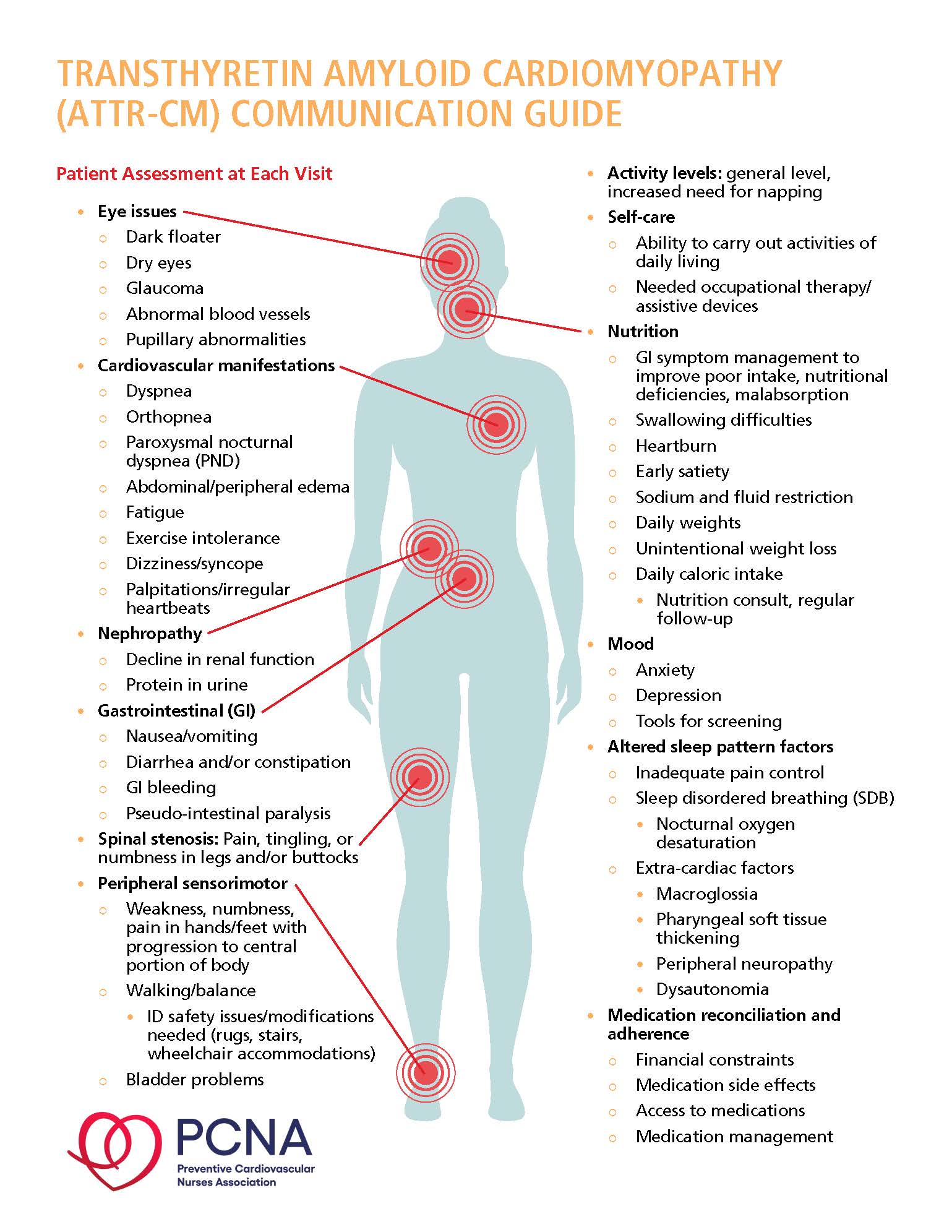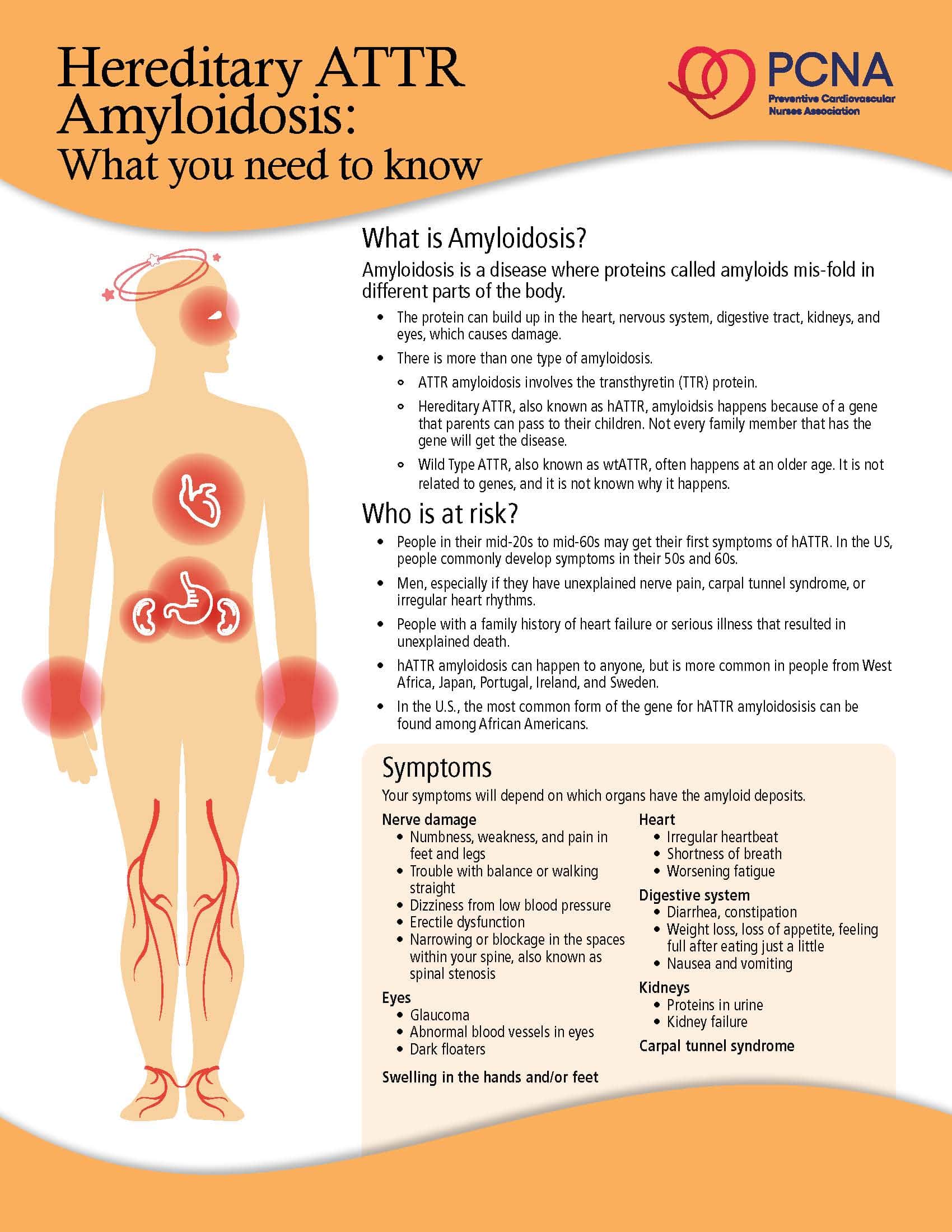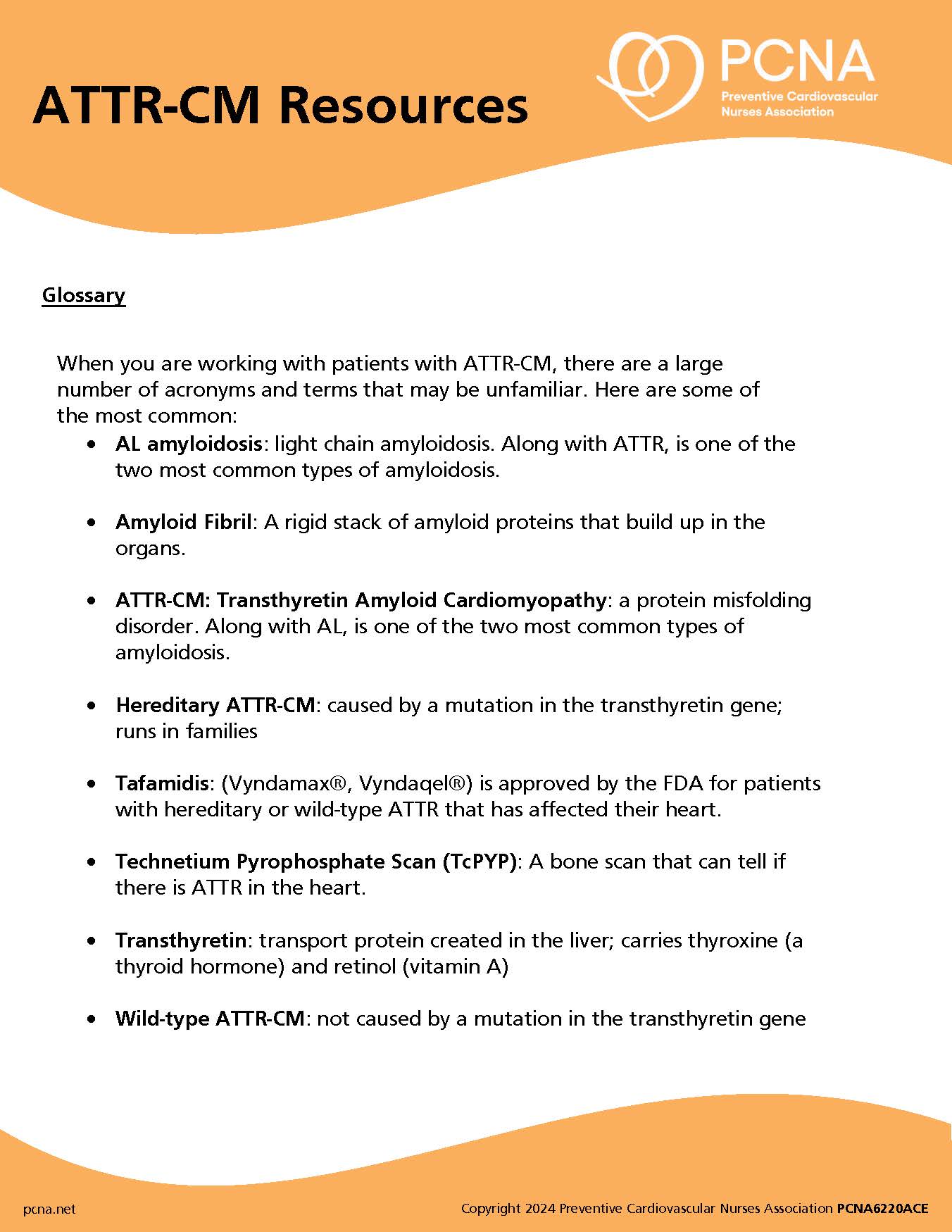






It is possible that in your work setting, patients with transthyretin amyloid cardiomyopathy (ATTR-CM) may be hiding in plain sight.
An estimated 50,000 to 150,000 people in the US have ATTR-CM,1 but this may be substantially underestimated. Symptoms mimic those of other diseases, and not all healthcare professionals are aware of the disease.2
How can cardiovascular nurses and other healthcare professionals lead and support the processes for effective diagnosis and management?
What is ATTR-CM?
ATTR-CM is caused by misfolded transthyretin (TTR) proteins that deposit in the myocardium as amyloid fibrils. This stiffens the heart muscle, particularly in the left ventricle, and may lead to heart failure with preserved ejection fraction (HFpEF) and conduction issues.
There are two general types of ATTR-CM: one is genetic, and the other, ‘wild-type’, is typically found in older adults with no genetic origins.
Not all healthcare professionals are familiar with ATTR-CM, and the symptoms can mimic other diseases, which may lead to missed or delayed diagnosis. These lost opportunities can lead to patients experiencing more advanced disease at the time of treatment initiation; greater disease burden, including irregular heartbeats, conduction blocks, and ventricular wall thickening; increased risk for heart failure hospitalizations; higher healthcare costs; and increased mortality rates.3
More information about ATTR-CM is available in the resources listed at the end of this article.
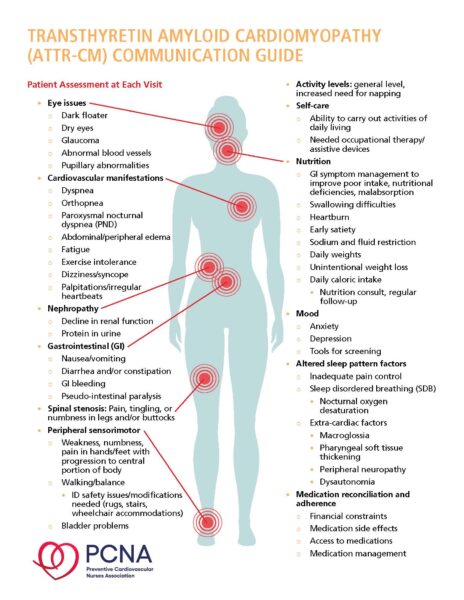
Page one of PCNA’s Transthyretin Amyloid Cardiomyopathy (ATTR-CM) Communication Guide
Early Differential Diagnosis: Critical but Uncommon
Until about 2019, there was little clinical incentive to pursue a differential diagnosis even when red-flag symptoms were identified (see chart below). The diagnostic process was complicated and included biopsies, and patients who were definitively diagnosed had little recourse other than attempting symptom management while the disease continued to progress. Now, less-invasive diagnostics allow for increased levels of diagnosis at earlier stages of the disease.
Diagnosis is further complicated by fragmented care across primary care and multiple specialties, including cardiology, neurology, genetics, and gastroenterology, with communication and coordination often limited among providers. Referral to an amyloid center early in the diagnostic process allows for more coordinated assessments and comprehensive care if ATTR-CM is confirmed.3
A targeted literature review found that 34-57% of patients with ATTR-CM were initially misdiagnosed, most commonly with hypertensive heart disease or hypertrophic cardiomyopathy.4
In general, even with modern, non-invasive diagnostic tools, studies demonstrate that for those with an initial diagnosis of heart failure, it takes 1.3 to 2.5 years to a confirmed diagnosis of ATTR-CM.5 The impact of timely diagnosis cannot be overstated; if left untreated, the disease may significantly impact mobility, leading to patients being unable to stand for hours, run, or work.6 Patients with delayed diagnosis may be more likely to experience decreased cardiac function, higher rates of heart failure, and an increased risk of arrhythmias.3
Red Flags for ATTR18,19,20,21,22
What Are the New Treatments That Slow ATTR-CM Progression?
While there is still no cure currently available, healthcare professionals and patients now benefit from new medications that can slow disease progression. The FDA has recently approved two broad categories of medications for ATTR-CM disease modification:
- stabilizer agent medications help hold together the TTR protein which decrease its ability to misfold and form new amyloid deposits
- TTR silencers reduce the production of the TTR proteins thus decreasing the amount available to the body to form new amyloid deposits.
Ensuring that patients have access to treatments continues to be an important goal in reducing treatment burden. Treatment rates have plateaued at a rate of 38-40% from 2024-2026 despite new therapies and the 2022 guideline update.7
Disparities: Black Populations
The perception of ATTR-CM as a rare disease of older men has led to gaps in diagnosis and treatment in other populations, particularly women and individuals who are Black. Some of the misconceptions relate to the misunderstanding of disease parameters, and to long-term gaps in clinical trial design and recruitment.
As genetic studies and testing have improved and become more cost effective over the years, more people have been tested and diagnosed. It is important to note that Black patients are disproportionately affected by ATTR-CM, with one of the genetic variants (V122I) being carried by an estimated 1.5 million Americans of African or Afro-Caribbean ancestry.8
Black patients with ATTR-CM are more frequently hospitalized for heart failure than their white counterparts, and experience higher rates of mortality at 5 years; low socioeconomic status impact further increases risk of underdiagnosis and adverse outcomes.9
As with other cardiovascular diseases and health issues, mistrust of healthcare professionals and the healthcare system based on historical medical misconduct has been identified as one of the reasons for missed diagnosis of ATTR-CM in the Black community.10 Other possible reasons for misdiagnosis comes from interviews with patients themselves; some deny their own health risks, fear the unknown, and identify cultural norms within Black families such as the lack of information-sharing as contributing to the issue.10
Disparities: Women
Women with ATTR-CM are typically diagnosed later in life than their male counterparts. They frequently have other diseases whose symptoms may obscure those of ATTR-CM, and may have more advanced symptoms such as shorter 6-minute walking distance, higher NT-proBNP, and higher NYHA functional class.11
The prevalence of ATTR-COM in women has long been underestimated, but the sex gap is narrowing, and more women are receiving an accurate diagnosis.12 There is still much room for improvement by addressing issues such as the validation of existing diagnostic tools which has focused largely on male populations, anatomical differences in wall thickening and remodeling patterns in women and men, and the inaccurate attribution of women’s symptoms to nonspecific diagnoses.13
There is a marked difference in left ventricular septal wall thickness in men and women.14 Typically, left ventricular wall thickness ≥12 mm has been used as a marker for ATTR-CM, yet women have a smaller cardiac anatomy and may not meet this threshold even when significant myocardial involvement is present.14 In one study, 7% of women with ATTR-CM had a septal thickness of <12mm compared to 2% of men,14 and another study demonstrated a rate of 14.7% of women and 6.8% of men missing the 12mm cutoff.15 To avoid misdiagnosis based on septal wall thickness, some have suggested sex-adapted criteria that include the use of left ventricular mass ≥95 g/m2 for women.16
It is also imperative that treatments be available to all appropriate patients. Women are prescribed treatments less often than men; in one multicenter cohort 50% of women received tafamadis versus 70% of their male counterparts.11
Practice Implications for Cardiovascular Nurses
- ATTR-CM prevalence increased from 2010 to 2023 to a level between 11.3 and 95.8 per 100,000 individuals,17 meaning the disease is likely present in patients in just about every cardiovascular setting.
- Keep ATTR-CM in mind, particularly in patients with red flag symptoms. Help identify, document, and share information to help detect ATTR-CM in patients as early as possible to facilitate prompt treatment initiation.
- Cardiovascular nurses are part of a collaborative team engaged in diagnosis and treatment of these patients. Effective communication and multidisciplinary care are required for this complex and multi-organ disease as it progresses.18
- Advocate for equitable screening and therapy, particularly for women and patients who are Black. Where possible, lean on the expertise of ATTR-CM specialty clinics to provide effective diagnosis and treatment.
- In planning and implementing ATTR-CM clinical trials, improve inclusion of women and underserved populations.
- Use clear language to communicate with patients and families. Early treatment is better, and genetic tests for family members can help save lives and improve quality of life.
ATTR Resources
- Healthcare professional tools on ATTR-CM from PCNA
- Patient education tools on ATTR from PCNA
- ATTR-CM podcast episodes from Heart to Heart Nurses
- American College of Cardiology Concise Clinical Guidance report on ATTR-CM Evaluation and Management(opens in new tab)
- Amyloidosis Foundation(opens in new tab)
- Amyloidosis Research Consortium(opens in new tab)
References
- Jain A, Zahra F. Transthyretin Amyloid Cardiomyopathy (ATTR-CM). In: StatPearls [Internet]. Treasure Island (FL): StatPearls Publishing; 2023. 10.1001/jama.2024.0442
- Ruberg FL, Maurer MS. Cardiac amyloidosis due to transthyretin protein: A review. JAMA. 2024;331(9):778-91. doi: 10.1001/jama.2024.0442.
- Nativi‐Nicolau J, Fine NM, Ortiz‐Pérez JT, et al. Clinical manifestations and healthcare utilization before diagnosis of transthyretin amyloidosis. J Comp Eff Res. 2022;11:1031–1044.
- Rozenbaum MH, Large S, Bhambri R, et al. Impact of Delayed Diagnosis and Misdiagnosis for Patients with Transthyretin Amyloid Cardiomyopathy (ATTR-CM): A Targeted Literature Review. Cardiol Ther 10, 141–159 (2021). Doi: 10.1007/s40119-021-00219-5(opens in new tab)
- Goldber R. Factors Delaying Transthyretin Cardiac Amyloidosis Diagnosis(opens in new tab). June 10, 2026. Cardiology Advisor. Accessed Oct. 21, 2026.
- Mallus MT, Rizzello V. Treatment of amyloidosis: Present and future. European heart journal supplements : Journal of the European Society of Cardiology. April 21, 2023. Accessed August 7, 2024. doi: 10.1093/eurheartjsupp/suad082(opens in new tab)
- Menda J, Stern LK, Alkhatib DA, et al. The ATTR-CM Treatment Gap: National Trends and Disparities in Transthyretin-Directed Therapy(opens in new tab). Journal of Cardiac Failure. 2026 (in press).
- Spencer-Bonilla G, Njoroge JN, Pearson K, et al. Racial and Ethnic Disparities in Transthyretin Cardiac Amyloidosis. Curr Cardiovasc Risk Rep. 2021 Apr 4;15(6):8. doi: 10.1007/s12170-021-00670-y(opens in new tab)
- Shankar B, Yanek L, Jefferson A, et al. Race and Socioeconomic Status Impact Diagnosis and Clinical Outcomes in Transthyretin Cardiac Amyloidosis. JACC:CardioOncology. 2024;6(3). Doi: 0.1016/j.jaccao.2024.05.001(opens in new tab)
- Hagerty KJ, Rsen AR, Heyward A, et al. Factors contributing to the underdiagnosis of hereditary transthyretin amyloidosis (hATTR) in Black patients. J Community Genet. 2026 Jun 17;17(4):77. doi: 10.1007/s12687-026-00910-x(opens in new tab)
- Ciocca N, Fuentes Artiles R, Suder Bruengger A, et al. Sex Differences in Presentation and Outcomes of Transthyretin Amyloid Cardiomyopathy(opens in new tab). JACC Advances. 28 July 2026;5(8).
- Coppi F, Pagnoni G, Grossule F, et al. Gender-Specific Differences in Diastolic Dysfunction and HFpEF: Pathophysiology, Diagnosis, and Therapeutic Strategies. J Cardiovasc Dev Dis. 2025;12(6):213. Doi: 10.3390/jcdd12060213(opens in new tab)
- Lousada I. American Heart Month: Are We Missing ATTR-CM in Women?(opens in new tab) Amyloidosis Research Consortium. Feb. 3, 2026. Accessed October 26, 2026.
- Madhani A, Ancha B, Alexander KM, Vaishnav J. Transthyretin Amyloid Cardiomyopathy in Women: Epidemiology, Diagnostic Delay, and Clinical Implications. Cardiol Ther. 2026 Aug 10;15(3):463–479. doi: 10.1007/s40119-026-00463-7(opens in new tab)
- Vogel J, Jura S, Settelmeier S, et al. Sex-specific differences in cardiac transthyretin amyloidosis: addressing the diagnostic gap in women. Eur Heart J Open. 2025 Dec 26;6(1):oeaf175. doi: 10.1093/ehjopen/oeaf175(opens in new tab)
- Nardi E, Gagliardo CM, Noto D, et al. Echocardiographic Red Flags in Wild-Type Transthyretin Amyloidosis: Sex-Specific Gaps for Wall Thickness and Left Ventricular Mass. Life (Basel). 2026 Feb 1;16(2):237. doi: 10.3390/life16020237(opens in new tab)
- Alexander KM, Dasgupta NR, Mathisen J, et al. Temporal Trends in Incidence and Prevalence of Transthyretin Amyloid Cardiomyopathy in the United States. JAHA. 2026;15(13). Doi: 10.1161/JAHA.125.047135(opens in new tab)
- Kittleson MM, Ruberg FL, Ambardekar AV, et al. 2023 ACC expert consensus decision pathway on comprehensive multidisciplinary care for the patient with cardiac amyloidosis(opens in new tab). Journal of the American College of Cardiology. 2023;81(11):1076-1126.
- American Heart Association. Transthyretin Amyloid Cardiomyopathy(opens in new tab). 2021. Accessed Oct. 2, 2023.
- Dorbala S, Ando Y, Bokhari S. ASNC/AHA/ASE/EANM/HFSA/ISA/SCMR/SNMMI Expert Consensus Recommendations for Multimodality Imaging in Cardiac Amyloidosis. Circ: Cardiovascular Imaging. 2021;14(7). doi: 10.1161/HCI.0000000000000029.
- Garcia-Pavia P, Rapezzi C, Adler Y, et al. Diagnosis and treatment of cardiac amyloidosis: a position statement of the ECC Working Group on Myocardial and Pericardial Disease(opens in new tab). European Heart Journal. 2021;42(16):1554-2568.
- Witteles RM, Bokhari S, Damy T, et al. Screening for Transthyretin Amyloid Cardiomyopathy in Everyday Practice. JACC Heart Fail. 2019 Aug;7(8):709-716. doi: 10.1016/j.jchf.2019.04.010.
Related Resources