




What Cardiovascular Nurses Need to Know About the 2026 CKM Guideline
The 2026 American Heart Association (AHA), American College of Cardiology (ACC), American Diabetes Association (ADA), and American Society of Nephrology (ASN) Guideline for the Prevention, Detection, Evaluation, and Management of Cardiovascular-Kidney-Metabolic (CKM) Syndrome introduces a unified approach to cardiovascular prevention that recognizes cardiovascular disease, chronic kidney disease, obesity, diabetes, and metabolic dysfunction as interconnected conditions rather than isolated diseases.1 For cardiovascular nurses, the guideline reinforces the importance of early risk identification, coordinated care, lifestyle counseling, and evidence-based therapies that improve outcomes across the CKM continuum.
2026 Cardiovascular Kidney Metabolic Syndrome Guideline
The 2026 CKM guideline represents a significant shift in cardiovascular prevention by recognizing the close relationship among cardiovascular disease (CVD), chronic kidney disease (CKD), obesity, type 2 diabetes, and metabolic dysfunction.1 Rather than managing these conditions independently, the guideline encourages clinicians to identify CKM syndrome early and intervene before irreversible organ damage develops.
The guideline emphasizes comprehensive cardiovascular risk assessment, a new CKM staging framework, multidisciplinary care, lifestyle modification, and evidence-based pharmacologic therapies that provide cardiovascular, kidney, and metabolic benefits.1,2 Cardiovascular nurses play a central role in translating these recommendations into practice through risk assessment, patient education, medication counseling, and care coordination.
Why the 2026 CKM Guideline Matters
Cardiovascular disease remains the leading cause of death worldwide despite advances in prevention and treatment.1 Obesity, type 2 diabetes, and chronic kidney disease continue to increase and frequently interact, accelerating cardiovascular complications and worsening outcomes.
The 2026 CKM guideline introduces a unified clinical framework that encourages clinicians to evaluate cardiovascular, kidney, and metabolic health together rather than as isolated conditions.1 Cardiovascular nurses are uniquely positioned to recognize CKM risk factors, review laboratory trends, reinforce lifestyle recommendations, and educate patients about disease prevention.
Understanding Cardiovascular Kidney Metabolic Syndrome
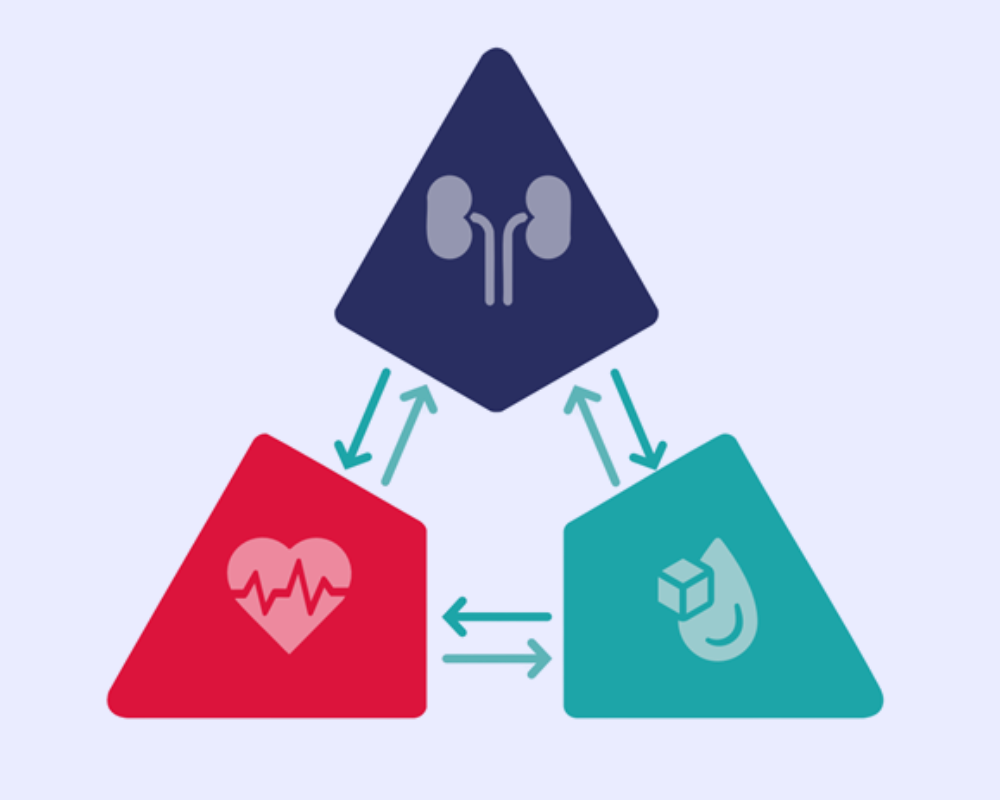
CKM syndrome recognizes the biologic relationship among cardiovascular disease, chronic kidney disease, obesity, insulin resistance, type 2 diabetes, hypertension, and dyslipidemia. Dysfunction in one organ system contributes to progressive injury in another, creating a cycle of worsening cardiovascular risk.1
Viewing patients through the CKM framework encourages earlier screening, multidisciplinary management, and comprehensive prevention before irreversible organ damage occurs.
What’s New in the 2026 CKM Guideline
The guideline recognizes CKM syndrome as a unified clinical framework and emphasizes earlier risk identification, comprehensive assessment, lifestyle intervention, multidisciplinary management, and evidence-based therapies.1
Recommended assessments include blood pressure, BMI, waist circumference when appropriate, blood glucose or hemoglobin A1c, lipid profile, eGFR, and urine albumin-to-creatinine ratio (UACR).
A New Staging System
- Stage 0: No CKM risk factors; maintain lifelong cardiovascular health.
- Stage 1: Excess adiposity increases future CKM risk.
- Stage 2: Hypertension, diabetes/prediabetes, CKD, or elevated cardiovascular risk without clinical CVD.
- Stages 3–4: Subclinical or established CVD with metabolic dysfunction and/or CKD requiring comprehensive management.
Lifestyle Modification
Lifestyle modification remains the foundation of CKM prevention. The guideline emphasizes heart-healthy eating, regular physical activity, weight management, tobacco cessation, adequate sleep, and stress reduction.1
Evidence-Based Pharmacologic Therapy
SGLT2 inhibitors and GLP-1 receptor agonists provide cardiovascular, renal, and metabolic benefits beyond glycemic control and should be considered for appropriate patients.1
Multidisciplinary Care
Optimal CKM management requires collaboration among cardiology, nephrology, endocrinology, primary care, nursing, pharmacy, dietetics, and rehabilitation. Cardiovascular nurses play a key role in coordinating care and improving continuity.1
Translating the Guideline Into Practice
Cardiovascular nurses can identify CKM risk factors, review laboratory trends, reinforce evidence-based therapies, educate patients, and coordinate interdisciplinary care across the disease continuum.
Patient education should explain the purpose of newer therapies, expected benefits, adverse effects, self-monitoring, and the importance of lifestyle modification alongside medication therapy.
Looking Ahead
The CKM framework shifts cardiovascular prevention from treating isolated diseases to managing the whole patient. Cardiovascular nurses remain central to prevention, health literacy, interdisciplinary collaboration, and patient-centered care.1
Key Takeaways
- Recognize CKM syndrome as an interconnected disease continuum.
- Screen early using cardiovascular, kidney, and metabolic risk measures.
- Promote lifestyle modification throughout every stage of care.
- Support evidence-based pharmacologic therapy when indicated.
- Coordinate interdisciplinary care and reinforce patient education.
References
- Ndumele CE, Rodriguez F, Dixon DL, et al. 2026 AHA/ACC/ADA/ASN guideline for the prevention, detection, evaluation, and management of cardiovascular-kidney-metabolic syndrome: a report of the American College of Cardiology/American Heart Association Joint Committee on Clinical Practice Guidelines(opens in new tab). Circulation. Published online June 9, 2026. doi:10.1161/CIR.0000000000001363
- Panjrath GS, Cibotti-Sun M, Moore MM, et al. 2026 ACC cardiovascular-kidney-metabolic syndrome guideline-at-a-glance(opens in new tab). J Am Coll Cardiol. Published online June 9, 2026. doi:10.1016/j.jacc.2026.05.008

Related Resources
Patient Education Handouts
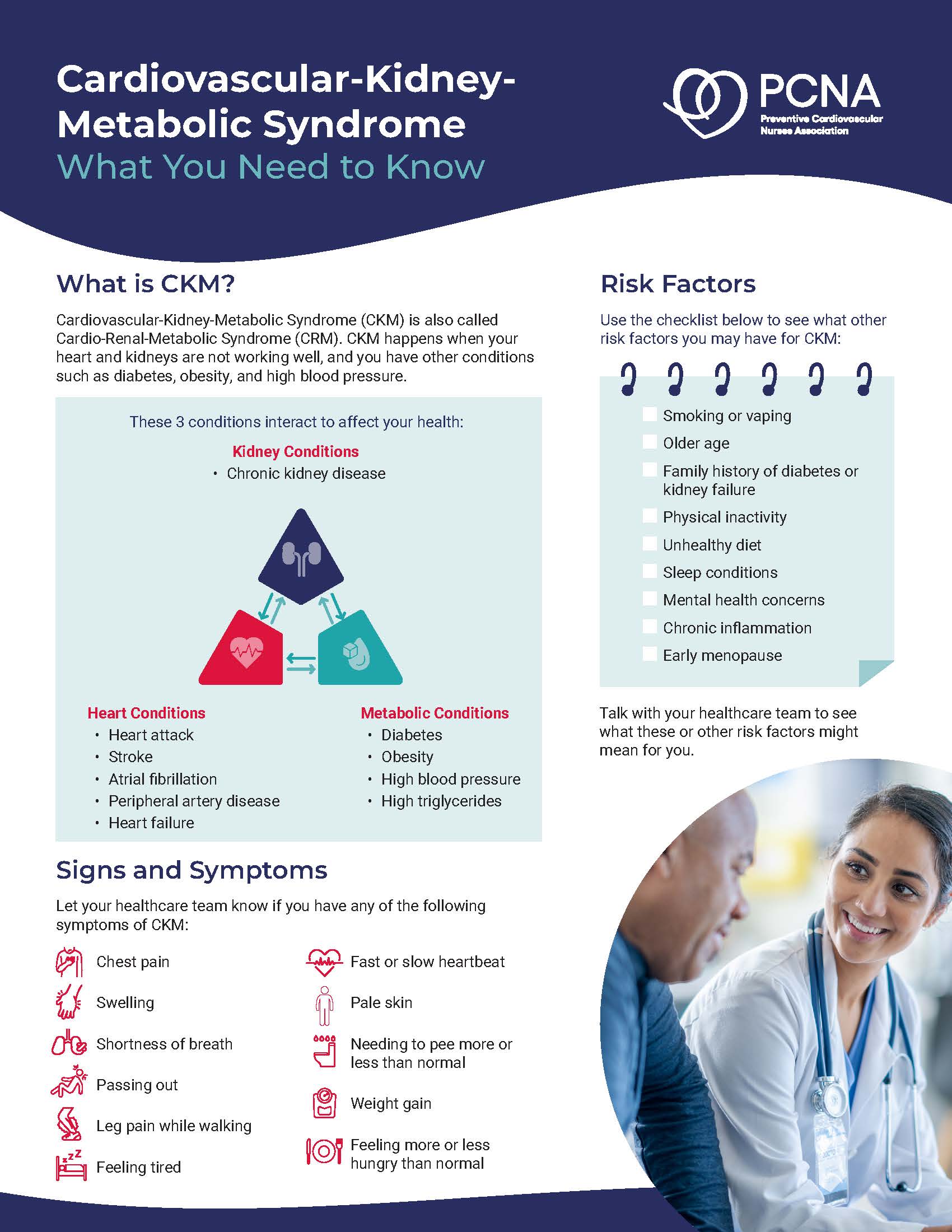
Cardiovascular-Kidney-Metabolic Syndrome: What You Need to Know
May 11, 2026